
About Kim Ki-rim
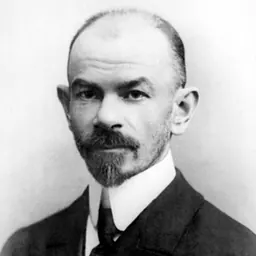
Lived 1908 – 2000. Kim Ki-rim was a South Korean poet.
Kim Kirim (; May 11, 1908 – 2000) was a Korean poet and literary critic who represented Korean modernist literature in the 1930s. Kim wrote monumental poems such as “The Weather Chart”, “Wind Speed of the Sun” (1939), and “The Sea and the Butterfly” (1939) during the Japanese colonial period. In pursuing a new spirit of poetry, he criticized sentimental romanticism in the 1920s and the movement of the Korean Artists’ Proletarian Federation (Korea Artista Proleta Federacio; KAPF), which based its literary theory and practice on left-wing ideologies.
Kim was one of the first intellectualists who introduced modernism to the Korean literary circle and emphasized rationality by means of the compressibility of poetry.
Being active as a literary critic, he introduced great Korean writers such as Yi Sang, Baek Seok, and Jeong Ji-yong to the literary world through his critique and papers.
Early life and education Kim was born in Haksung, North Hamgyeong Province in 1908. Kim went to Immyeong Primary School in 1914, and his childhood name was known as In-son Kim, his art name being Pyeonseokchon. In 1921, Kim quit Posung Middle School in Seoul and transferred to Rikkyo Middle School in Tokyo to continue his studies. In 1930, he graduated from Nihon University with a bachelor's degree in literary arts. In 1931, he temporarily returned to his hometown and concentrated on his writing while cultivating an orchard called Moogokwon.
Career In September 1933, he participated in the foundation of the League of Nine (Guinhoe), a literary association located in Seoul, with famous Korean writers such as Yi Sang, Lee Hyo-seok, Park Taewon, and Kim Yujung. In this light, the post-liberation era was the right time for Kim to put his conviction into practice, encouraging the poets to speak for the public in the community life. This poem is included in the Korean Middle and High Schools’ literature textbooks to show the representative work of intellectualism. The poem illustrates both the longing and frustration for the new world by the contrast of two colors, blue and white. Also, the poem introduces two concepts that do not match with one another: the sea and the butterfly. The former represents the cruel and eerie reality of the colonial era or the new civilization of the times while the latter symbolizes the fragile intellectuals who are unable to put up with the external world. The poem shows a type of pictorial modernism, which was a new attempt in the Korean literary world at the time.
Because nobody told her how deep the water is,
The white butterfly is never afraid of the sea.
She descents, thinking it is a blue radish farm,
Then jadedly returns like a princess
With her callow wings soaked by the waves.
A blue crescent moon is chilly at the waist of the butterfly
Who is sad because the March sea hasn't bloomed.
바다와 나비
아무도 그에게 수심(水深)을 일러 준 일이 없기에
흰나비는 도무지 바다가 무섭지 않다.
청(靑)무우 밭인가 해서 내려갔다가는
어린 날개가 물결에 절어서
공주(公主)처럼 지쳐서 돌아온다.
삼월(三月)달 바다가 꽃이 피지 않아서 서글픈
나비 허리에 새파란 초생달이 시리다.
Criticism Influenced by the writers and theorists such as T. S. Eliot, T. E. Hulme, and I. A. Richards, Kim is considered to have learned the literary theory of Western modernism relatively accurately in early days. However, since he did not have a clear understanding of the cultural basis and philosophical foundation of modernism, his first collection of poems, The Weather Chart (1936), is criticized as experimental, which lacks a clear, unified theme. It is said that The Weather Chart reveals some problems regarding the form. Critics state that there is a lack of awareness in the rhythm and musicality of the language. It is assumed that Kim inadvertently disregarded these elements while he attempted to convey visual impressions through the language.
The Weather Chart, however, was believed to be successful in integrating ideas and senses and criticizing the modern capitalist civilization. In addition, Kim's last collection of poems, The New Song (1948), was recognized for its suggestion of a new direction in establishing a national identity, but was evaluated as lacking maturity as a work of art.
Don’t just read it —
keep it.
Full-length biographies made to live with: read them, listen on the way to work, watch them tonight.
- E-book
- Audio
- Video
Instant download · yours to keep · every purchase keeps this site free
Important facts
People in Kim Ki-rim's life
Named in this biography and alive at the same time




Related people
Same field, nearest in time



Contemporaries
People whose lives overlapped Kim Ki-rim's


Frequently asked questions
Who was Kim Ki-rim?
South Korean poet
When was Kim Ki-rim born?
Kim Ki-rim was born on 11 May 1908 in Hamgyeongbuk-do, Korean Empire.
When did Kim Ki-rim die?
Kim Ki-rim died in 2000 in North Korea.
What was Kim Ki-rim's occupation?
Kim Ki-rim was a poet.
What nationality was Kim Ki-rim?
Kim Ki-rim was South Korean.
Sources & further reading
Cite this page
APA: Biography.guide. (2026). Kim Ki-rim. https://biography.guide/kim-ki-rim/
MLA: "Kim Ki-rim." Biography.guide, https://biography.guide/kim-ki-rim/.
Chicago: "Kim Ki-rim." Biography.guide. https://biography.guide/kim-ki-rim/.
Data last updated: 2026-09-20 · Spot an error? Report a correction.
Page generated 2026-09-27 05:24 UTC