
About Baek Seok
Lived 1912 – 1996 (aged 83–84). Baek Seok was a North Korean writer, poet, shepherd and translator.
Paek Ki-haeng (; 1 July 1912 – 7 January 1996), known by his art name Paek Sŏk was a North Korean poet.
He was born in Chŏngju in North Pyongan Province, and started his journalist career at The Chosun Ilbo in 1934. He published his first poem "Chŏngju Fortress" (정주성, Jeongjuseong) on 31 August 1935 issue of Chosun Ilbo. On 20 January next year, he published a collection of the poems he had written entitled Deer (사슴, Sasŭm). Even though Deer contained 33 poems, many of which were new, seven of them were already published in magazines or newspapers in slightly different forms. Until 1948, he published about 60 more pieces, but is not believed to have produced another poetry book.
In South Korea, the publication of his works was strictly prohibited for a while because he was labelled as a North Korean poet and a communist. However, since 1987 when a collection of his works (poems and essays) were first introduced after the Korean War, he has been widely re-evaluated by scholars and critics. He is now regarded as having opened a new face of Korean socialist modernism with a group of literary writers. In 2007, he was listed by the Korean Poets' Association among the ten most important modern Korean poets.
Name His real name is Paek Ki-haeng, and his nickname is Paek Ki-yŏn in 1915. After the defeat of the Japanese Empire in 1945 and the liberation of Korea, he changed his name to Paek Sŏk, and his main residence was Suwon. The name Seok is known to have been used because he loved the beginning of Takuboku Ishikawa, a Japanese poet.
Biography Early life Paek Sŏk was born named Paek Ki-haeng in Chongju, North Pyongan on 1 July 1912, the son of Paek Si-bak and Yi Pong-wu (李鳳宇). His father worked at The Chosun Ilbo as a photographer. Paek Si-bak was not wealthy, but he participated in raising building funds for Osan school. Yi Pong-wu was known as a neat and good cook. In 1918, Paek Sŏk entered Osan elementary school (founded in 1907) and his brother, Hyeob-haeng, was born. In 1919 Osan school was entirely burned down by Japanese military police for reasons that led to the March First Movement. Cho Man-sik, who was the principal of Osan school, was arrested and the school had to be closed for a year and a half. In 1924, Paek graduated from Osan elementary school and entered Osan middle and high school. He admired Kim So-wol, who was six years his senior, and got interested in literature. He was a top-scoring student, but he could not enter university because of financial difficulties. In January 1930, he won the first prize with his first novel The Mother and Son in a literary contest hosted by Chosun Ilbo. That made him able to study at Aoyama Gakuin University with a scholarship funded by Chosun Ilbo.
Adult years In 1934, he entered The Chosun Ilbo publishing department, having graduated from the university. He edited a sister magazine Feminine (여성, Yeoseong) and translated foreign works and papers. He started to work officially as a writer and a translator releasing an essay "Earrings" (이설 귀고리, Iseol Guigori) on 16 May 1934. Translating D. S. Mirsky's paper made him think about how valuable the Korean language is and how to preserve it with poetry. On 31 August 1935, he made public his first poem "Chongju Fortress". Deer consisted of seven poems which were already published and the others new. On 29 January, a gathering to commemorate the publication of Deer was held at Taeseogwan and eleven people including Kim Kirim and Shin Hyun-jung got involved as proposers.
This year, he resigned from the company and started for his new post as an English teacher in Yeongsaeng high school in Hamhung. In Hamhung, he fell in love with Kim Jin-hyang, a kisaeng, and named her Jaya. In 1938, he proposed to her that they leave for Manchuria and live free there. But, she refused proposal fearing that she would stand in his way. She left for Keijō alone. Then, he wrote Me, Natasha and a White Donkey (나와 나타샤와 흰 당나귀, ). In January 1939, he returned to Keijō and met Jaya again.
Work
Paek Sŏk utilized not only Pyongan dialect and archaic words but also language from other provinces. He tried to preserve Korean rural culture and language by listing traditional plays and foods in his poems. To emphasize this, he used to set a narrator as a child. His poems are generally based on nostalgia for his home. In his poetry, home is described as a place that has no material affluence but embodies spiritual values. "The Folks in Fox-Lurking Village" (여우난 곬족, Yeounan goljok) shows such features.
Deer: This is a collection of poems published on 20 January 1936. A total of 33 poems are divided into four parts in Deer. Part 1, "The Spirit of the Early Child", includes six, "Gazrangjip," "The Fox Nanjwa," "Hobang," "The Bonfire," "Goya," and "The Duckling Rabbit". The second part of "Water in Dolder-gu" contains nine, "Cho Dong-il," "Hadab," "Jumak," "Jeokgyeong," "Beauty" and "Out of Castle," and nine films including "Sanbi," "The Lonely Road," "Murru Bam," and "Noru.". The fourth part, "Beyond the National Allowance," contains nine episodes, including "The Story of the Day," "The Place called Ogeum Dung," "Jung Ju-seong," and "Tongyeong.". The upper copyright of the Deer is marked as "100 copies of the Poetry Deer Limited Edition at KRW 2". At the bottom of it, it says, "Copy and publisher Paekseok." "Me, Natasha and the White Donkey": A poem published in 1938 that transcends reality and sings of the will and desire for love. "Seohaeng Sicho": Paek Sŏk, who re-entered the Chosun Ilbo in 1939, announced it four times during his trip to his hometown of Pyeongan-do. Parwon (八院) : the a slow beginning, The Sidae (西行詩抄) the third a poet "parwon", The Sidae while traveling on the automobile for passengers of 'young a girl' on the car. Japanese occupation to see tragic life of Korean people living and come up with imagery information. It describes the situation inside and outside of the van in a realistic yet symbolic way. Namhaeng Sicho (South Haengshicho): This is a four-time annual publication published in the Chosun Ilbo that was published during a trip to Tongyeong, Goseong, Changwon and Sacheon in Gyeongsangnam-do.
Academic background
Graduated from Osan Normal School in Jungju, North Pyongan Province Graduated from Osan High School in Jungju, North Pyongan Province Gakuin Aoyama, Japan Graduated
Related books
a collection of poems written in the original book of Paekseok. Read immediately on white stone Korean Poets Read Again-Imhwa, Oh Jang-hwan, Lee Yong-ak, Paek Sŏk Paekseok's Pyeonjeon
Don’t just read it —
keep it.
Full-length biographies made to live with: read them, listen on the way to work, watch them tonight.
- E-book
- Audio
- Video
Instant download · yours to keep · every purchase keeps this site free
Important facts
People in Baek Seok's life
Named in this biography and alive at the same time
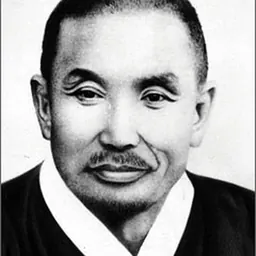
Related people
Same field, nearest in time



Contemporaries
People whose lives overlapped Baek Seok's






Frequently asked questions
Who was Baek Seok?
North Korean poet
When was Baek Seok born?
Baek Seok was born on 1 July 1912 in North Korea.
When did Baek Seok die?
Baek Seok died in 1996.
What was Baek Seok's occupation?
Baek Seok was a writer, poet, shepherd and translator.
What nationality was Baek Seok?
Baek Seok was North Korean.
Sources & further reading
Cite this page
APA: Biography.guide. (2026). Baek Seok. https://biography.guide/baek-seok/
MLA: "Baek Seok." Biography.guide, https://biography.guide/baek-seok/.
Chicago: "Baek Seok." Biography.guide. https://biography.guide/baek-seok/.
Data last updated: 2026-09-20 · Spot an error? Report a correction.
Page generated 2026-09-27 05:25 UTC