
Yevhen Konovalets
Military commander of the UNR army and political leader of the Ukrainian nationalist movement
About Yevhen Konovalets
Lived 1891 – 1938 (aged 46). Yevhen Konovalets was a Ukrainian politician, military personnel, soldier and ukrainian Military Organization.
Yevhen Mykhailovych Konovalets (14 June 1891 – 23 May 1938) was a Ukrainian military commander and political leader of the Ukrainian nationalist movement. He is best known for his role in the Ukrainian War of Independence as leader of the Sich Riflemen and as the leader of the Organisation of Ukrainian Nationalists (OUN) from its foundation in 1929 to his assassination in 1938 by the NKVD. Konovalets was also a veteran of the First World War and cofounded the OUN's predecessor, the Ukrainian Military Organisation, in 1920, assuming leadership of the organisation.
Early life and education Konovalets was born 14 June 1891 in the village of Zashkiv in Austro-Hungarian Galicia; today the village is in Lviv Raion, Lviv Oblast, Ukraine. In 1910, he participated in a protest demanding a Ukrainian university in Lviv, during which he was arrested and at least one person was killed. From 1909–1912, he gave lectures and developed the local Prosvita and Sokol societies.
In 1912, he became secretary of Prosvita's Lviv department, retaining the position though he was later drafted into the Austro-Hungarian Army where he spent a year in officers' training and rose to the rank of second lieutenant. In 1913, he became a leader of the local student movement. He was greatly influenced by the nationalist ideology and rhetoric of the prominent Ukrainian thinkers Ivan Bobersky, Myroslav Sichynsky , and Dmytro Dontsov, having become acquainted with the latter two at the Second All-Ukrainian Student Congress that year.
As a result of the 1917 February Revolution and the abdication of Tsar Nicholas II, the Central Rada was established in Ukraine, thus starting the Ukrainian War of Independence, though it was initially reluctant to form a regular army and, out of fear of being accused of Austrophilism, refused to accept former Austrian soldiers from Galicia into Ukrainian ranks.
In the internment camp, Konovalets founded the 'Tsaritsyn Ukrainian Council' that organised social work, preparing reports and essays on current socio-political topics and even organising a theatre group. Together with Andriy Melnyk in the Dubovka camp, Konovalets organised a Ukrainised kurin with a staff of around a 1,000 people within the Tsaritsyn camp. With a group of his fellow prisoners-of-war, Konovalets escaped and arrived in Kyiv in July, remaining there from September.
Ukrainian War of Independence (1917-1920)
Konovalets established ties with the Galician-Bukovinian Committee and advocated for the creation of a West Ukrainian military unit. From September Konovalets worked with the Galician-Bukovinian Committee to organise the Galician-Bukovinian Kurin of the Sich Riflemen , which was officially sanctioned on 12 November. He sent word to the prisoners-of-war in the Dubovka camp and assumed command of the unit in late 1917, formally presenting as such at a meeting on 8 January 1918 where the unit was reformed and centralised. Amid a lack of coordination among nationalist forces, Konovalets and Melnyk developed an operation plan to quell the Kyiv Arsenal January Uprising in which the Sich Riflemen distinguished themselves and played a key role in liberating the city.
In January 1919, at a conference in Kyiv consisting of pro-independence parties, the Riflemen delegation put forward a proposal to reform the government into a temporary triumvirate military dictatorship consisting of Petliura, Konovalets, and Melnyk in order to better meet the demands of the state-building process though this was rejected by the other parties present, including Petliura and the Directorate. The dissolution of the Austro-Hungarian Empire the preceding November had seen the Polish-Ukrainian War break out for control of Western Ukraine, with Konovalets becoming Commander of the Eastern Front from 23 January 1919. Kyiv was captured by the Bolsheviks in February and that autumn the Ukrainian People's Army (UNA) found itself caught in a 'death triangle' between the Bolsheviks, the Whites, and the Poles, with no supply lines to the anti-Bolshevik Entente powers. In early December, and as a result of a meeting of UPR military leaders, Konovalets demobilised his military formations with UNA soldiers given the choice of departing south or participating in the guerilla-fought First Winter Campaign. Later that month he was taken prisoner and interned in a Polish prisoner-of-war camp in Lutsk.
Leader of the UVO and exile (1920-1929) Recognising that the battle for independence was lost, Konovalets together with former members of the Sich Riflemen and the Ukrainian Galician Army set up a new organisation capable of clandestine activities on the lands claimed by Ukrainians and controlled by Poland, the Russian and Ukrainian SSR's, Romania, and Czechoslovakia. Konovalets was forced to flee the country in December that year following the UVO's assassination of Sydir Tverdokhlib. During his exile years he went on to live in Czechoslovakia, Germany, Switzerland, and Italy. Due to the family's constant forced relocations, their son Yurko, born January 1924, had to learn different languages for his schooling – German, French, Italian – but at home his mother insisted on their speaking their native Ukrainian.
Konovalets based himself in Berlin in 1924, settling the UVO Executive Command there in 1926, from where he developed a network that spread across Western Ukraine as well as an operational command for affiliates across Europe. The UVO received some degree of support from political rivals of Poland, including Lithuania, Latvia, and Czechoslovakia, though Weimar Germany played an outsized role, providing military training for hundreds of UVO members in East Prussia between 1924 and 1928 and transporting money, arms, and ammunition through the Free City of Danzig. Waves of arrests of UVO members in Galicia for pro-German espionage from 1924 onwards, starting with the Olha Basarab case, stoked disenchantment with Konovalets's policies with a brief leadership coup of the UVO Home Command resolved by a Berlin tribunal presided over by Konovalets in September 1928. Konovalets was invited to the XIth Assembly of the League of Nations in 1930 by the Lithuanian foreign minister where the treatment of minorities in Poland was discussed and the Ukrainian issue highlighted by the German representative (concerned about ethnic Germans in Silesia) as well as by a petition from the UK parliament. Konovalets represented the OUN at the IXth International Congress of National Minorities in September, held in Bern, where members sought to draw attention to the Holodomor and organise aid to the Ukrainian SSR. :36 In response to objections within the organisation to Mykola Stsiborskyi's dynamic marital past and his relationship with a Jewish woman in 1934, Konovalets wrote:
"If nationalism is waging war against mixed marriages insofar as conquerors (especially Poles and Russians) are concerned, then it cannot bypass the problem of mixed marriages with Jews, who are indisputably if not greater, then at least comparable, foes of our rebirth." :321
As a result of the assassination of Polish Interior Minister Bronisław Pieracki carried out by regional leadership in June 1934, the OUN alienated many of its international partners and diplomatic contacts with Konovalets forbidden to settle in Geneva and ordered to leave Switzerland in mid-1936, settling instead in Rome. In August 1937, Konovalets met with Japanese diplomats in Vienna to discuss the creation of Ukrainian military units that would be deployed to the Far East in the event of war with the USSR, though the cooperation agreement never materialised. Konovalets' activities raised Kremlin fears of the OUN's penetration into the Soviet Union. On 23 May 1938, he was assassinated in Rotterdam with a bomb concealed in a box of chocolates disguised as a present from a close friend.
Sudoplatov, after a period of training, had slipped into Finland in July 1935, using the alias "Pavel Gridgdenko" and serving as an OUN contact in the USSR. According to Sudoplatov, Stalin had told him: "This is not just an act of revenge, although Konovalets is an agent of German fascism. Our goal is to behead the movement of Ukrainian fascism on the eve of war and force these gangsters to annihilate each other in a struggle for power."
Due to his sudden disappearance, the OUN immediately suspected Sudoplatov of Konovalets' murder. Therefore, a photograph of Sudoplatov and Konovalets together was distributed to every OUN unit. Sudoplatov wrote: "In the 1940s, SMERSH... captured two guerrilla fighters in Western Ukraine, one of whom had this photo of me on him. When asked why he was carrying it, he replied, 'I have no idea why, but the order is if we find this man to liquidate him'."
On 28 May 1938 Konovalets was buried at the Crooswijk General Cemetery in Rotterdam. The tombstone on his grave was designed in 1939 by Oksana Liaturynska and Robert Lisovskyi.
On June 17, 2011, in Vilnius, Lithuania the conference "Yevhen Konovalets: Lithuanian citizen - the Ukrainian patriot. Celebration of 120th birthday" was organised by the Lithuanian Parliamentary Foreign Affairs Committee, People's Liberation Movement Research Centre (Ukraine) and Ukrainian organisations in Lithuania.
On 1 October 2023, Ukrainian President Volodymyr Zelenskyy handed a ribbon of honorary to the 131st Separate Reconnaissance Battalion of the Ground Forces to be named in honour of Konovalets.
In 2026, Konovalets' remains were exhumed in Rotterdam as part of preparations for repatriation to Ukraine and reburial at the National Military Memorial Cemetery. On 13 August, his remains were brought to Kyiv, Ukraine, where they were received with full state and military honours. His gravestone at the Crooswijk General Cemetery was also sent to Ukraine, where it was kept at Konovalets' museum-estate in his native Zashkiv.
On 14 August 2026, the remains of Colonel Yevhen Konovalets were brought to the Patriarchal Cathedral of the Resurrection of Christ of the Ukrainian Greek Catholic Church in Kyiv. A panakhida (farewell ceremony) was held at the cathedral, where the public could pay their respects. On 18 August 2026, Konovalets's remains were temporarily reburied at the National Military Memorial Cemetery. They are expected to be later transferred to the Ukrainian Military Pantheon.
Don’t just read it —
keep it.
Full-length biographies made to live with: read them, listen on the way to work, watch them tonight.
- E-book
- Audio
- Video
Instant download · yours to keep · every purchase keeps this site free
Important facts
People in Yevhen Konovalets's life
Named in this biography and alive at the same time
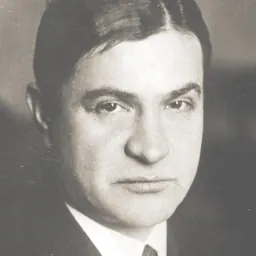
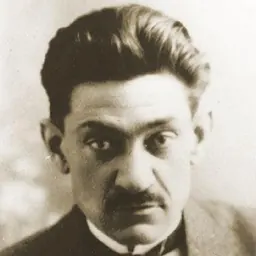
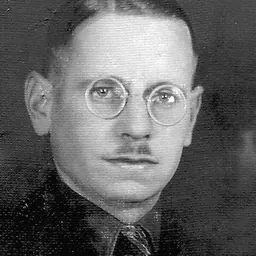
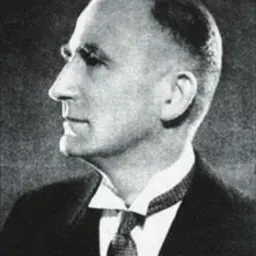


Related people
Same field, nearest in time






Contemporaries
People whose lives overlapped Yevhen Konovalets's

Frequently asked questions
Who was Yevhen Konovalets?
military commander of the UNR army and political leader of the Ukrainian nationalist movement (1891-1938)
When was Yevhen Konovalets born?
Yevhen Konovalets was born on 14 June 1891 in Zashkiv.
When did Yevhen Konovalets die?
Yevhen Konovalets died on 23 May 1938 in Rotterdam.
What was Yevhen Konovalets's occupation?
Yevhen Konovalets was a politician, military personnel, soldier and ukrainian Military Organization.
What nationality was Yevhen Konovalets?
Yevhen Konovalets was Ukrainian.
Sources & further reading
· Wikipedia: Yevhen Konovalets
Cite this page
APA: Biography.guide. (2026). Yevhen Konovalets. https://biography.guide/yevhen-konovalets/
MLA: "Yevhen Konovalets." Biography.guide, https://biography.guide/yevhen-konovalets/.
Chicago: "Yevhen Konovalets." Biography.guide. https://biography.guide/yevhen-konovalets/.
Data last updated: 2026-09-20 · Spot an error? Report a correction.
Page generated 2026-09-27 05:32 UTC