
About Mykola Stsiborskyi
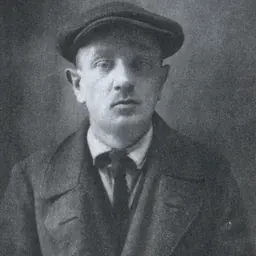
Lived 1898 – 1941 (aged 43). Mykola Stsiborskyi was a Ukrainian opinion journalist, politician, military personnel and engineer.
Mykola Orestovych Stsiborskyi (; (Pseudonyms: Zhytomyrsky, Orhansky, Rokosh.) Between 1920 and 1922 he was interned by the Poles in Kalisz, alongside other UNA soldiers, where he received special training and was promoted to the rank of lieutenant colonel.
Stsiborskyi commended fascism for its concern with national development and its hostility to communism, which he described as an "absolute evil" intent on destroying national communities. According to Zaitsev, Stsiborskyi "wrote with reverence about fascism and its historical merits" and argued that fascism should become a guide for subjugated peoples. However, Stsiborskyi also criticized the fascist permanent dictatorship for its excessive statism and the cult of the police state, asserting that this hindered the development of society and individuals. He maintained that Ukrainian nationalism ought not to "limit its creativity to mechanical copying of foreign models" and contended that the future Ukrainian state should be "neither fascist, nor national-socialist, nor 'Primo-de-Riverist".
Jews In a 1930 Rozbudova natsiï article titled Ukrainian Nationalism and Jewry, Stsiborskyi criticized Ukrainian society for widespread antisemitism and for not questioning the reasons for what he viewed as negative characteristics of Jews. Stsiborskyi asserted that Ukrainian Jews were initially indifferent to the Ukrainian national movement and that their attitudes had only changed radically after the start of the pogroms. He argued in favor of a compromise with the Jews in order to enlist their support or at least secure their neutrality in the struggle against Poland and the Soviet Union.
In the next issue, Rozbudova natsiï began publishing a series of particularly antisemitic articles by Oleksandr Mytsiuk that sought to dismantle every point Stsiborskyi had made. Stsiborskyi threatened Rozbudova natsiï editor Volodymyr Martynets with a "revolution" and wrote to Konovalets objecting to Mytsiuk's articles. Konovalets responded in agreement, saying he had reprimanded Martynets.
According to Kurylo, Stsiborskyi abandoned this position in the late 1930s, "very likely" due to pressure from within the OUN. In 1938, he advocated the expulsion of "alien ethnic elements"— Kurylo considers this to refer to Poles, Jews, and Russians. The constitution he drafted for the Abwehr in 1940 singled out Jews for ambiguous citizenship laws. In contrast to other Melnykite publications, the 1940 white book that Stsiborskyi prepared on the split in the OUN avoided invoking antisemitic attacks against Richard Yary.
Selected works
Don’t just read it —
keep it.
Full-length biographies made to live with: read them, listen on the way to work, watch them tonight.
- E-book
- Audio
- Video
Instant download · yours to keep · every purchase keeps this site free
Important facts
People in Mykola Stsiborskyi's life
Named in this biography and alive at the same time

Related people
Same field, nearest in time

Contemporaries
People whose lives overlapped Mykola Stsiborskyi's





Frequently asked questions
Who was Mykola Stsiborskyi?
Ukrainian politician (1898-1941)
When was Mykola Stsiborskyi born?
Mykola Stsiborskyi was born on 28 March 1898 in Zhytomyr.
When did Mykola Stsiborskyi die?
Mykola Stsiborskyi died on 30 August 1941 in Zhytomyr.
What was Mykola Stsiborskyi's occupation?
Mykola Stsiborskyi was an opinion journalist, politician, military personnel and engineer.
What nationality was Mykola Stsiborskyi?
Mykola Stsiborskyi was Ukrainian.
Sources & further reading
· Wikipedia: Mykola Stsiborskyi
Cite this page
APA: Biography.guide. (2026). Mykola Stsiborskyi. https://biography.guide/mykola-stsiborskyi/
MLA: "Mykola Stsiborskyi." Biography.guide, https://biography.guide/mykola-stsiborskyi/.
Chicago: "Mykola Stsiborskyi." Biography.guide. https://biography.guide/mykola-stsiborskyi/.
Data last updated: 2026-09-25 · Spot an error? Report a correction.
Page generated 2026-09-27 05:11 UTC