
About Yekaterina Zelenko
Lived 1916 – 1941 (aged 24). Yekaterina Zelenko was a Ukrainian and Russian aircraft pilot and military personnel.
Yekaterina Ivanovna Zelenko (, ; – 12 September 1941) was a Soviet Su-2 pilot who flew during the Winter War and World War II. She remains the only woman ever credited with conducting an aerial ramming, though many aviation historians question the credibility of such reports due to a lack of solid evidence.
Early life Zelenko was born in 1916 to a Russian family in the village of Koroshchine, then part of the Volhynian Governorate of the Russian Empire. She completed seven grades of school in Kursk before moving with her mother to Voronezh, where she entered the Voronezh Secondary Flying School. In October 1933 she graduated from the Voronezh Flying Club and was sent to the 3rd Orenburg Military Flying Academy named after Kliment Voroshilov.
In December 1934, she graduated with honors and was posted to Kharkiv on assignment to the 19th Light Bomber Brigade. From January 1936 until April 1938, she was assigned to the 14th Squadron of the Kharkov military district, after which she was assigned to the 4th Light Bomber Regiment, and from February to March 1940 she participated in the Soviet-Finnish War as a R-Zet pilot in the 11th Light Bomber Regiment. She flew eight missions during the conflict, for which she was awarded the Order of the Red Banner.
World War II On the eve of the German invasion of the Soviet Union Zelenko was an instructor pilot teaching other pilots to fly the Sukhoi Su-2. When the war started on 22 June 1941 she was flight commander in the 135th Short-range Bomber Aviation Regiment. From 5 July she flew combat missions in an Su-2 over Ukraine, for which she was thanked by the leadership of the 21st Army. For skillful work as a flight commander she was promoted to deputy squadron commander in August. On 12 September 1941 she took off for a reconnaissance mission from the Zerestovka airfield in an Su-2 with Nikolai Pavlyk as her aerial gunner. While returning from the mission she was attacked by at least two Messerschmitt Bf 109 fighters. One of the fighters chased after her squadron commander, Lebedev, leaving Zelenko alone. Her Su-2 was shot down by the enemy fighters. Pavlyk saw her slumped in the pilot's chair before bailing out of the plane. The Su-2 crashed near the village of Anastasyevka. Villagers found her identification documents. After Pavlyk returned to base he informed command that they were shot down and that Zelenko was either dead or badly wounded. He had not sought out the crash site for fear of being captured by the Germans.
Her husband Pavel Ignatenko died in an aviation accident in 1943.
Aerial ramming controversy According to the official version of events in her 1990 awarding of the title Hero of the Soviet Union, Zelenko's SU-2 was attacked by seven Bf 109s on 12 September 1941. After shooting down two she ran out of ammunition and rammed a Bf 109's a sliced off its tail with her propeller. Her cockpit broke up when the Su-2 exploded.
While it is undisputed that she flew 40 missions on the Su-2 and fought 12 aerial battles, many aviation historians from both Russia and elsewhere doubt the ramming story, pointing out that her first nomination for the title Hero of the Soviet Union did not mention a ramming. Claims about the location of the ramming, the location of her final resting place, and the evidence that was used to conclude that she conducted the ramming have been brought into question. For flying 40 missions she qualified for the title Hero of the Soviet Union, she was initially just awarded the Order of Lenin, likely because she was considered missing. In 1965 there was a petition to award her the title Hero of the Soviet Union for the ramming, but it was rejected due to a lack of evidence that it occurred. After the petition many journalists wrote about the ramming without providing evidence, resulting in later petitions suggesting she be awarded the title.
Awards and recognition
Awards Hero of the Soviet Union (5 May 1990) Two Orders of Lenin (29 December 1941 and 5 May 1990) Order of the Red Banner (19 May 1940)
Memorials and recognitions
The minor planet 1900 Katyusha was named in her honor. Her portrait appeared on a Soviet envelope in 1983 before she was awarded the title Hero of the Soviet Union, and later on a 2014 postage stamp of the Russian Federation. (pictured) There are streets bearing her name as well as various monuments and statues in her honor throughout Russia and Ukraine.
Don’t just read it —
keep it.
Full-length biographies made to live with: read them, listen on the way to work, watch them tonight.
- E-book
- Audio
- Video
Instant download · yours to keep · every purchase keeps this site free
Important facts
People in Yekaterina Zelenko's life
Named in this biography and alive at the same time

Related people
Same field, nearest in time
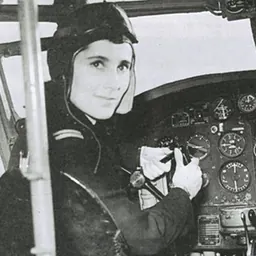



Contemporaries
People whose lives overlapped Yekaterina Zelenko's



Frequently asked questions
Who was Yekaterina Zelenko?
Soviet Su-2 pilot
When was Yekaterina Zelenko born?
Yekaterina Zelenko was born on 14 September 1916 in Koroshchino.
When did Yekaterina Zelenko die?
Yekaterina Zelenko died on 12 September 1941 in Anastasivka.
What was Yekaterina Zelenko's occupation?
Yekaterina Zelenko was an aircraft pilot and military personnel.
What nationality was Yekaterina Zelenko?
Yekaterina Zelenko was Ukrainian and Russian.
Sources & further reading
· Wikipedia: Yekaterina Zelenko
Cite this page
APA: Biography.guide. (2026). Yekaterina Zelenko. https://biography.guide/yekaterina-zelenko/
MLA: "Yekaterina Zelenko." Biography.guide, https://biography.guide/yekaterina-zelenko/.
Chicago: "Yekaterina Zelenko." Biography.guide. https://biography.guide/yekaterina-zelenko/.
Data last updated: 2026-09-20 · Spot an error? Report a correction.
Page generated 2026-09-27 05:28 UTC