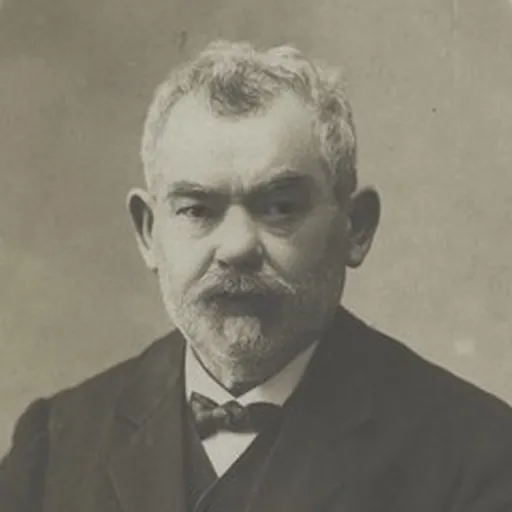
About Yehudah Leib Levin
Lived 1844 – 1925 (aged 80–81). Yehudah Leib Levin was a poet, translator and writer.
Yehudah Leib ha-Levi Levin (; 1844 – 30 November 1925), also known by the acronyms Yehalel and Yehalal, was a Hebrew socialist maskilic Hebrew poet, writer, and publicist. His poems were the first to introduce socialist themes into Hebrew literature.
Biography Early life and career Yehudah Leib Levin was born in Minsk, Belarus to a well-established Ḥasidic family. His father, Rabbi Baruch Chaim Levin, was a well-to-do merchant and scholar with a close relationship to Rabbi Shlomo Chaim Perlov of Koidanov, and his mother Miriam was the daughter of Ḥasidic rebbe Moshe of Kobrin. Levin married at the age of 17 and went to live with his father-in-law in the shtetl of Puchowitz, where he discovered the Chabad movement and diligently studied its doctrine and literature.
He is known as the author of epic poem in three parts, also concerning the social condition of the Russian Jews.
Zionism As a reaction to the 1881 pogroms, Levin began to draw away from the socialist circles. He initially advocated for emigration to the United States; in an October 1881 letter to the Hebrew weekly Ha-Magid, he wrote:
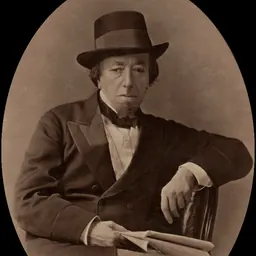
Nonetheless, Levin shortly thereafter joined the Ḥovevei Zion movement in Kiev and became an active supporter of emigration to Palestine. He publicly expressed agreement with Leon Pinsker's Auto-Emancipation, and in 1884 translated into Hebrew Benjamin Disraeli's novel Tancred, which visualizes the return of the Jews to their land.
Levin was forced to leave Kiev in 1887 because of his Zionist activities. He settled in the small town of Tomashpil where, while continuing his literary work, he worked at a sugar factory owned by the Brodsky family. In 1890, he completed the poem "Daniyel be-gov ha-arayot" ('Daniel in the Lions’ Den'), highlighting the struggle against anti-Semitism and Levin's outspoken support of Zionism; the poem was not published until 1898 because of censorship. At the Sixth Zionist Congress in 1903, he was among the "Territorialists" who supported the plan to provide temporary refuge in British East Africa for European Jews facing anti-Semitism.
Later life Levin returned to Kiev after the Soviet regime closed the Brodsky sugar factory following the Russian Revolution in 1918. His later years were marked by poverty in his daughter's home and persecution by the Yevsektsiya. He attended clandestine Zionist meetings in the city until he died on 30 November 1925. A selection of his memoirs, articles, and poems was published in 1968 as Zikhronot ve-Hegyonot ('Memoirs and Essays').
Don’t just read it —
keep it.
Full-length biographies made to live with: read them, listen on the way to work, watch them tonight.
- E-book
- Audio
- Video
Instant download · yours to keep · every purchase keeps this site free
Important facts
People in Yehudah Leib Levin's life
Named in this biography and alive at the same time

Related people
Same field, nearest in time

Contemporaries
People whose lives overlapped Yehudah Leib Levin's

Frequently asked questions
Who was Yehudah Leib Levin?
Hebrew poet (1844–1925)
When was Yehudah Leib Levin born?
Yehudah Leib Levin was born in 1844 in Minsk.
When did Yehudah Leib Levin die?
Yehudah Leib Levin died on 30 November 1925 in Kyiv.
What was Yehudah Leib Levin's occupation?
Yehudah Leib Levin was a poet, translator and writer.
Sources & further reading
· Wikipedia: Yehudah Leib Levin
Cite this page
APA: Biography.guide. (2026). Yehudah Leib Levin. https://biography.guide/yehudah-leib-levin/
MLA: "Yehudah Leib Levin." Biography.guide, https://biography.guide/yehudah-leib-levin/.
Chicago: "Yehudah Leib Levin." Biography.guide. https://biography.guide/yehudah-leib-levin/.
Data last updated: 2026-09-21 · Spot an error? Report a correction.
Portrait: Wikimedia Commons · author & licence
Page generated 2026-09-27 04:59 UTC