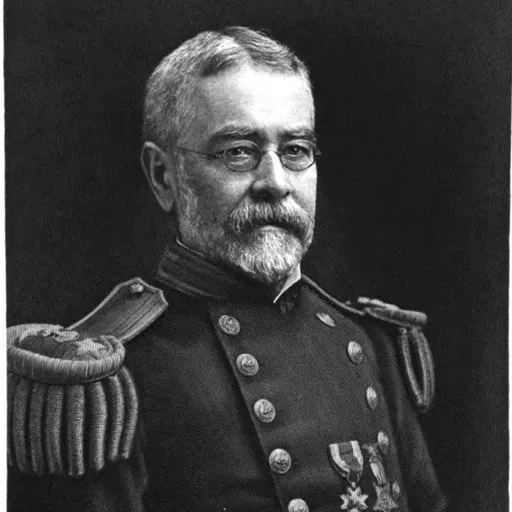
About Yates Stirling
Lived 1843 – 1929 (aged 85). Yates Stirling was an American military officer.
Yates Stirling (May 6, 1843 – March 5, 1929) was a rear admiral in the United States Navy.
Birth and personal life Stirling was born in Baltimore, Maryland, on May 6, 1843, the son of Archibald Stirling and the former Elizabeth A. Walsh. He and his wife, Ellen (1843–1929), had seven children. Their elder son, Yates Stirling Jr. (1872–1948), also became a rear admiral in the Navy, making them only the second family in the history of the U.S. Navy to have father and son rear admirals concurrently living. The first were Rear Admirals Thomas O. Selfridge Sr. and Junior. Stirling's younger son, Archibald (1884–1963), was a captain in the Navy.
Stirling was a companion of the Maryland Commandery of the Military Order of the Loyal Legion of the United States as a veteran commissioned officer of the Civil War. He was a grandson of Thomas Yates (1740–1815), captain, Fourth Battalion, Maryland Regulars during the American Revolutionary War.
Naval career Stirling attended private schools in Baltimore as a youth. He was appointed by Representative Henry Winter Davis of Maryland to the United States Naval Academy at Annapolis, Maryland, as an acting midshipman on September 27, 1860. In June 1861, Stirling and several other midshipman, including Robley "Fighting Bob" Evans, future hero of the Spanish–American War, submitted letters of resignation, believing their loyalty was with the Confederacy. Four weeks later they had second thoughts and retracted their resignations, expressing loyalty to the Union. When the rank of acting midshipman was abolished on July 16, 1862, his rank became midshipman. After the American Civil War broke out in April 1861, the academy moved to Newport, Rhode Island, for the duration of the war and Stirling graduated one year ahead of schedule in 1863 due to the expanded U.S. Navy's need for officers during the war. He was commissioned as an ensign on May 28, 1863. thumb
Stirling served for the rest of the war in the North Atlantic Blockading Squadron as part of the Union Blockade of the Confederate States of America. His first duty was aboard the screw sloop-of-war until April 13, 1864, when Shenandoah began a period under repair in Philadelphia, Pennsylvania. He then served aboard the flagship of the North Atlantic Blockading Squadron, the monitor , on the James River in Virginia until reporting back aboard Shenandoah for duty when she returned to service in June 1864. Aboard Shenandoah he saw combat at Fort Fisher in North Carolina in both the First Battle of Fort Fisher in December 1864 and the Second Battle of Fort Fisher in January 1865 and remained on blockade duty through the end of the war in April 1865. While stationed at Mare Island, his son and namesake, Yates Jr. was born on April 30, 1872.
After a lengthy period on sick leave from 1873 to 1875, Stirling returned to duty aboard the receiving ship at the Norfolk Navy Yard in Portsmouth, Virginia, from 1875 to 1876. He had torpedo duty in 1877, then had ordnance duty at the Washington Navy Yard in Washington, D.C., from 1877 to 1879. Stirling was promoted to rear admiral on June 8, 1902. Following his promotion, he was named commandant of the Puget Sound Navy Yard, where his son, Yates Jr. joined him shortly thereafter as an officer of the yard.
Stirling was commander-in-chief of the United States Asiatic Fleet from July 11, 1904, to March 23, 1905 before retiring from the Navy on May 6, 1905, at the mandatory age of 62. During the time he commanded the Asiatic Fleet, his flag was on the and his son, Yates Jr. served as his flag lieutenant. When he was interviewed shortly after his retirement, Stirling recalled an incident early in his career when he was first lieutenant taking a ship into a New England harbor with some difficulty. An old lobsterman in a dory piled high with traps managed to interfere with the ship's passage. After Stirling called down to the lobsterman with some "choice deep sea language", the old man leisurely rested on his oars and replied, "And who be you?" Stirling blustered back, "Who am I? I'm the first officer of this ship." "Well, go to your skipper, then," replied the ancient mariner with dignity. "I don't argue with nobody but my equals an I'm cap'n o' this."
Death Yates Stirling is in the front row on the left in this photograph of 13 retired United States Navy rear admirals and one retired United States Marine Corps major general taken c. 1923. Stirling died on March 5, 1929, at his home, 11 East Chase Street, Baltimore, Maryland, survived by this wife, two sons and three daughters. He was 85 years old and had been ill for about five years. He is buried along with his wife at Arlington National Cemetery in Arlington, Virginia.
Admiral Sterling was a member of the Military Order of the Loyal Legion of the United States and the Maryland Society of the Sons of the American Revolution.
Service medals
United States awards
Civil War Campaign MedalSpanish Campaign Medal
The original service criteria for the Spanish Campaign Medal promulgated in Navy Department Special Order No. 81 of June 27, 1908, required service on specific vessels and time periods for which Stirling's service during the Spanish–American War did not qualify. However, in the early 1920s, the award criteria were relaxed to provide for award of the medal to all those who served in the U.S. Navy or Marine Corps during the Spanish–American War. The first government contract to supply campaign medals to the expanded recipient base with the Bastian Brothers Company did not occur until 1922.
Dates of rank
Commodore – no longer a rank in the United States Navy, was previously reserved for wartime use and was not in use at the time of Stirling's promotion to Flag Rank in 1902. Currently, a captain who is promoted to pay grade O-7 becomes a rear admiral (lower half) and uses the abbreviated rank designation RDML as opposed to RADM, which designates a rear admiral (upper half), O-8. Stirling was promoted to rear admiral on June 8, 1902.
Don’t just read it —
keep it.
Full-length biographies made to live with: read them, listen on the way to work, watch them tonight.
- E-book
- Audio
- Video
Instant download · yours to keep · every purchase keeps this site free
Important facts
People in Yates Stirling's life
Named in this biography and alive at the same time
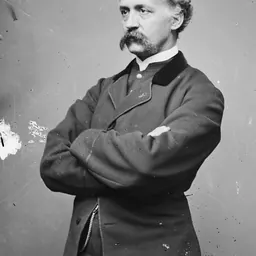

Related people
Same field, nearest in time

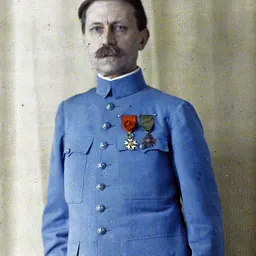



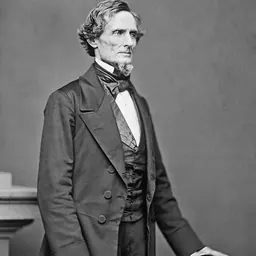
Contemporaries
People whose lives overlapped Yates Stirling's


Frequently asked questions
Who was Yates Stirling?
American admiral
When was Yates Stirling born?
Yates Stirling was born on 6 May 1843 in Baltimore.
When did Yates Stirling die?
Yates Stirling died on 5 March 1929 in Baltimore.
What was Yates Stirling's occupation?
Yates Stirling was a military officer.
What nationality was Yates Stirling?
Yates Stirling was American.
Sources & further reading
Cite this page
APA: Biography.guide. (2026). Yates Stirling. https://biography.guide/yates-stirling/
MLA: "Yates Stirling." Biography.guide, https://biography.guide/yates-stirling/.
Chicago: "Yates Stirling." Biography.guide. https://biography.guide/yates-stirling/.
Data last updated: 2026-09-20 · Spot an error? Report a correction.
Page generated 2026-09-27 05:09 UTC