
About Yasser Al-Habib
Born 1979. Yasser Al-Habib is an orator, writer and cleric.
Sheikh Yasser al-Habib ( الشيخ; born 23 April 1979) is a Kuwaiti Shia scholar, and the head of the London-based Mahdi Servants Union, as well as Al-Muhassin mosque in Fulmer, Buckinghamshire, and the writer of The Lady of Heaven. Al-Habib's work focuses on Islamic history, drawing on Shia and Sunni sources.
Al-Habib started his religious activities in Kuwait, starting off as a member of the Dawah Party, later he founded a non-profit religious organization named Khoddam Al-Mahdi Organization, and he also expressed his religious views regarding Abu Bakr and Umar, and criticized them sharply. This resulted in anger from several Sunni speakers in Kuwait, such as Othman al-Khamees, and other Arabic-speaking Sunni communities, which finally led to the arrest of al-Habib. Later, in February 2004 he was released under an annual pardon announced by the Emir of Kuwait on the occasion of the country's National Day, but his rearrest was ordered a few days later. Al-Habib fled Kuwait before he was sentenced in absentia to 10 years imprisonment, and spent months in Iraq and Iran before gaining asylum in the United Kingdom.
Early life Al-Habib was born on 23 April 1979 (25 Jumada Al-Awaal 1399), into a religious Shia Kuwaiti family. Additionally, he studied the traditional Islamic sciences under the guidance of his teacher Ayatollah Mohammed Ridha al-Shirazi in Qom, Iran.
In 1999, he founded Khoddam Al-Mahdi Organization in Kuwait.
His imprisonment was cut short in 2004 by a royal pardon on the occasion of the country's National Day; his rearrest was ordered a few days later, as his name was included in the royal pardon through a clerical error. He fled the country first to Iraq, then to Iran. Then, he went to London and was able to gain asylum in Britain.
He works in Fulmer, Buckinghamshire, and had started his religious and political activity, such as founding Al Muhassin Mosque and setting up Fadak (TV channel).
Views He recorded two lectures in English, titled: Who killed the Prophet Muhammad and Why do Shiites hate Umar Ibn al-Khattab. Sunni Al-Sha'ab newspaper described Sheikh al-Habib as a traitor and apostate in its main page, at the time that al-Habib cursed Abu Bakr and Umar.
Wahhabism Al-Habib said:
Views on Sunnis Sheikh al-Habib refers to Sunnis as Bakris, meaning the followers of Abu Bakr. He says that the real Sunnis (Ahlul Sunnah) are the ones who follow the Sunnah of Muhammad, that is Shia Muslims. He continues that Sunnis today follow the Sunnah and teachings of Abu Bakr instead, having rejected Ali ibn Abi Talib and Ahlulbayt. He explains in one of his lectures titled Bakris think they are Sunnis, but in reality are not that when people wanted to distance themselves from the Shia, and follow Mu'awiya, they started calling themselves the Jama'ah. He explains that the reality behind why people called themselves Ahlul Sunnah wal Jama'ah only began after the Umayyad ruler Umar bin Abdul Aziz forbade the Sunnah (tradition) of cursing Ali ibn Abi Talib publicly (as previously invented by Mu'awiya). It was upon then that people protested to this new prohibition, declaring that Umar bin Abdul Aziz had prohibited the Sunnah of cursing Ali ibn Abi Talib. Thus they began calling themselves Ahlul Sunnah wal Jama'ah; stressing that they adhere to the Sunnah of cursing Ali ibn Abi Talib, and that they are the Jama'ah of Mu'awiya.
He also refers to those whom claim to be Shi'a but do not denounce Abu Bakr, Umar, Aisha and other personalities in Islamic history such as Khalid ibn al-Walid, as Batris.
He described Mohammad Hussein Fadlallah (the Lebanese marja who died on 4 July 2010) as Batri. Al-Habib said that Fadlallah left a great number of doctrinal deviations, ignorant views and bad conduct which he introduced to the religion of Islam.
Celebrating Aisha's death anniversary and its reaction In September 2010, al-Habib angered Sunni Muslims by calling Aisha "an enemy of God" which led Kuwait to revoke his citizenship accusing him of trying to stir up discord among Muslims.
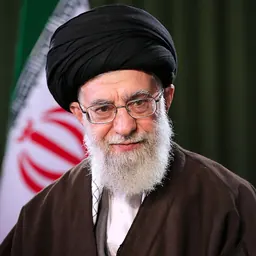
In October 2010, the Supreme Leader of Iran, Ali Khamenei, tried to calm tensions between Shias and Sunnis by issuing a fatwa against insulting Muhammad's companions and wives.
Criticism
After Iranian Supreme Leader Ali Khamenei issued the fatwa outlawing the insult of Sunni Dignitaries (Aisha, Abu Bakr and Umar ibn al-Khattāb), al-Habib responded by criticising the Islamic Republic of Iran. He referred to Khamenei as "so-called Ali al-Khamenei – who pretends to be a Shia scholar". His reasoning for naming the Iranian government as "oppressive" was because the "regime in Iran today unjustly arrests anyone who celebrates the occasion of Farhat-ul-Zahra and prevents people from visiting the tomb of Abu Lulu".
Senior Iranian cleric Naser Makarem Shirazi has referred to al-Habib as a "hired agent or a mad man" and stated: "Recently, an illiterate, foolish, non-clergy U.K citizen has, in the name of Shia, insulted sacred matters of Sunni Muslim brothers". In his Fatwa against insulting revered Sunni figures, Ali Khamanei referred to "MI6 Shi'ites", implying that al-Habib was hired by Western intelligence agencies to sow discord in the Muslim world.
Al-Habib has been criticized by several figures and leaders who speak in the name of Shiism including leader of Hezbollah, Syed Hassan Nasrallah and Ali Khamenei (who also issued a fatwa against insulting of Muhammad's companions) and Naser Makarem Shirazi.
Works Yasser al-Habib has published many books and articles throughout the years, here are some of his works.
Don’t just read it —
keep it.
Full-length biographies made to live with: read them, listen on the way to work, watch them tonight.
- E-book
- Audio
- Video
Instant download · yours to keep · every purchase keeps this site free
Important facts
People in Yasser Al-Habib's life
Named in this biography and alive at the same time







Related people
Same field, nearest in time






Contemporaries
People whose lives overlapped Yasser Al-Habib's




Frequently asked questions
Who is Yasser Al-Habib?
Shia cleric
When was Yasser Al-Habib born?
Yasser Al-Habib was born on 20 January 1979 in Kuwait.
What is Yasser Al-Habib's occupation?
Yasser Al-Habib is an orator, writer and cleric.
What nationality is Yasser Al-Habib?
Yasser Al-Habib's recorded nationality: Kuwait, Bedoon.
Sources & further reading
Cite this page
APA: Biography.guide. (2026). Yasser Al-Habib. https://biography.guide/yasser-al-habib/
MLA: "Yasser Al-Habib." Biography.guide, https://biography.guide/yasser-al-habib/.
Chicago: "Yasser Al-Habib." Biography.guide. https://biography.guide/yasser-al-habib/.
Data last updated: 2026-09-25 · Spot an error? Report a correction.
Page generated 2026-09-27 05:11 UTC