
About Yang Sung-chul
Born 1939. Yang Sung-chul is a South Korean diplomat and politician, known for National Assembly (South Korea).
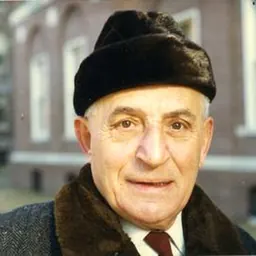
Yang Sung-chul (born 20 November 1939) is a South Korean political scientist, politician, and diplomat.
Early life and career Yang was born in Gokseong County, South Jeolla Province in 1939. He did his undergraduate studies at Seoul National University's Department of Political Science. While in college, he volunteered to serve in the Korean Army from 1960 to 1962 as a student draftee. He began working at the Hankook Ilbo as a reporter in October 1963, but received a scholarship in 1965 to study at the University of Hawaii at Manoa's East–West Center for his master's degree. It was there that he first met Kim Dae-jung, of whom he would go on to become a political supporter; Kim was visiting Hawaii at the time at the invitation of the U.S. Department of State. He went on to the University of Kentucky for his doctoral studies, where he defended a dissertation comparing the South Korean April Revolution of 1960 which led to the resignation of Syngman Rhee and the May 16 coup the following year which brought Park Chung Hee to power.
Upon receiving his Ph.D., he taught at the Eastern Kentucky University in Richmond for four years and returned to the University of Kentucky system in 1975 to 1987 where he was a full professor and a member of the University of Kentucky graduate faculty. He also taught at Northwestern University in Evanston, Illinois, Indiana University in Bloomington, and Pembroke State University in Pembroke, North Carolina. While in the United States, he was one of the founding members of the Association of the Korean Political Scientists in North America and served as its Secretary-General. Yang married after moving to the United States, and had two children there. He naturalised as a U.S. citizen in 1977.
Yang returned to South Korea in 1986 as a visiting professor at Seoul National University. Later that same year, he accepted a professorship at the Graduate Institute of Peace Studies at Kyung Hee University, where he was an academic dean until 1996. He gave up U.S. citizenship in 1989. In 1998, he became acting head of the Jeollanam-do branch of the National Congress for New Politics, replacing Han Hwa-gap (한화갑).
Ambassadorship Yang (left), Secretary of the Army Thomas E. White, and retired Army Lieutenant General Julius Becton at a 2001 wreath-laying ceremony for African-American veterans of the Korean War
In May 2000, just in advance of the first Inter-Korean summit, South Korean newspapers began to report that Yang had been chosen as Seoul's next ambassador to the United States. Yang's appointment was a surprise due to his relative lack of political and diplomatic experience. Stratfor analysed Kim's choice to nominate Yang, along with the naming of four-decade career diplomat and trade expert Hong Soong-young as ambassador to Beijing, as part of an effort to push forward the Sunshine Policy: the posting to Washington of Yang, an expert on North Korean affairs, symbolised the autonomy of Seoul's policies towards Pyongyang, while Hong's role was to improve relations with Beijing and ensure its support for inter-Korean reconciliation. Yang's term as ambassador came to an end in April 2003, when he was succeeded by Han Sung-joo.
Later career After leaving his ambassadorial post, Yang and his wife returned to South Korea. Hall of Distinguished Alumni, University of Kentucky 2010, Lexington, Kentucky Fifty Years, Fifty Stories, East-West Center, 2010, in commemoration of the East-West Center's 50th Anniversary Person of the Year 2000 for Gokseong County, South Cholla Province, Korea 건국 포장(ROK Presidential Award) On the Occasion of the 3rd Anniversary of the April Student Revolution, 1963
Don’t just read it —
keep it.
Full-length biographies made to live with: read them, listen on the way to work, watch them tonight.
- E-book
- Audio
- Video
Instant download · yours to keep · every purchase keeps this site free
Important facts
People in Yang Sung-chul's life
Named in this biography and alive at the same time


Related people
Same field, nearest in time

Contemporaries
People whose lives overlapped Yang Sung-chul's



Frequently asked questions
Who is Yang Sung-chul?
South Korean politician
When was Yang Sung-chul born?
Yang Sung-chul was born on 20 November 1939 in Gokseong County.
What is Yang Sung-chul's occupation?
Yang Sung-chul is a diplomat and politician.
What is Yang Sung-chul known for?
Yang Sung-chul is known for National Assembly (South Korea).
What nationality is Yang Sung-chul?
Yang Sung-chul is South Korean.
Sources & further reading
Cite this page
APA: Biography.guide. (2026). Yang Sung-chul. https://biography.guide/yang-sung-chul/
MLA: "Yang Sung-chul." Biography.guide, https://biography.guide/yang-sung-chul/.
Chicago: "Yang Sung-chul." Biography.guide. https://biography.guide/yang-sung-chul/.
Data last updated: 2026-09-26 · Spot an error? Report a correction.
Page generated 2026-09-27 05:16 UTC