
About Xu Haidong
Lived 1900 – 1970 (aged 69). Xu Haidong was a Chinese politician.
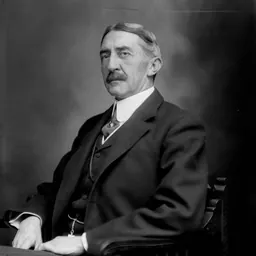
Xu Haidong (June 17, 1900 – March 25, 1970) was a senior general in the People's Liberation Army of China.
Xu was notable for leading his men from the front lines during the Chinese Civil War and Second Sino-Japanese War. His exploits earned him the nickname "Tiger Xu". He was wounded in battle nine times;
Early life Xu was born in the village of Xujiaqiao, Dawu County, Hubei. He was the sixth son in a family of ten children. His father was Xu Zhongben and his mother is only remembered by her family name, Wu . When Xu Haidong was born, his father recognized that Xu's mother was too decrepit to nurse Xu, and requested that his mother throw Xu in a pond to drown. Xu's mother refused to kill Xu, and recruited her sister-in-law to nurse Xu.
Xu's family was poor, and Xu did not receive any education until he was nine years old, when he was sent to a primary school where his uncle taught. Most of the students at the school were from rich families, and taunted Xu with the nickname "stinky tofu". When he was twelve, Xu was expelled from school after he injured a rich classmate who was bullying him. Xu was initially joined by 27 local farmers. Xu's first attack was successful in defeating the local militia, capturing local arms and supplies. Forces under Xu rose to 60 men before being defeated by government forces later in 1927. Government forces attempted to capture Xu, but he escaped. Xu's forces finally evacuated their own base area in September 1934, and reached the Wei River area, around the city of Xi'an, in June 1935.
In 1936 Xu met the American journalist Edgar Snow, who visited Yan'an to interview notable Communist commanders. In his book, Red Star Over China, Snow wrote that, among the Communists in Yan'an, none were more famous or mysterious than Xu Haidong.
Mao Zedong once said, "among the Chinese revolutionaries, no one has shed more blood than Xu Haidong's family", claiming that during the Nationalists' Communist Suppression Campaign, 66 of Xu's family members were killed by a Nationalist policy of exterminating Xu's clan.
Second Sino-Japanese War
After the outbreak of the Second Sino Japanese War (1937–1945), Xu was named commander of the 344th Brigade of the 115th Division of the Eighth Route Army Xu re-entered Shanxi in 1937 and participated in the Battle of Pingxingguan, in which a combined Nationalist-Communist force successfully delayed the Imperial Japanese Army from occupying Shanxi. After the Japanese advanced further into Shanxi, Xu continued to direct guerrilla operations in the mountainous countryside of Shanxi and western Hebei. In September 1939 Xu joined forces under the command or Liu Shaoqi, serving as Deputy Commander of the New Fourth Army in central China, just north of the Yangtze River. Xu was successful in containing Japanese forces active in central China, contributing to communist attempts to establish an anti-Japanese base area in eastern Anhui. Xu spent the rest of his life recuperating from his tuberculosis.
Later career In 1955 Xu was one of ten officers awarded the rank of Senior General, or Da Jiang , the first time that the rank of Senior General was established. Peng was purged for opposing Mao's economic policies, but Xu survived. In 1966, Xu again opposed Mao's radical policies at the beginning of the Cultural Revolution. Xu especially disagreed with Mao's practice of attacking career Party members with long histories of supporting the Party and the army. In spite of his opposition to the Cultural Revolution, in April 1969 Xu was promoted as a full Party representative during the 9th National Congress of the Chinese Communist Party.
After the 9th Congress, Xu's opposition to the Cultural Revolution was recognized by China's radical Maoists. On October 25, 1969, Xu was purged as an "anti-Party element", and he and his family were forcibly expelled to Zhengzhou, capital of Henan. The followers of Mao Zedong, Lin Biao and the Gang of Four, allegedly directed the purging of Xu. Xu's purging was physically and psychologically harsh, to the point of "torture". After his relocation, Xu was forced to live in a cold, damp house, and was denied medical treatment for his illness. Xu died several months after being purged, on March 25, 1970.
Xu was posthumously rehabilitated by Deng Xiaoping on January 25, 1979. He was one of eight senior military officers purged during the rule of Mao Zedong who were rehabilitated after Deng came to power.
Footnotes
Don’t just read it —
keep it.
Full-length biographies made to live with: read them, listen on the way to work, watch them tonight.
- E-book
- Audio
- Video
Instant download · yours to keep · every purchase keeps this site free
Important facts
People in Xu Haidong's life
Named in this biography and alive at the same time


Related people
Same field, nearest in time






Contemporaries
People whose lives overlapped Xu Haidong's


Frequently asked questions
Who was Xu Haidong?
Chinese general (1900–1970)
When was Xu Haidong born?
Xu Haidong was born on 17 June 1900 in Dawu County.
When did Xu Haidong die?
Xu Haidong died on 25 March 1970 in Zhengzhou.
What was Xu Haidong's occupation?
Xu Haidong was a politician.
What nationality was Xu Haidong?
Xu Haidong was Chinese.
Sources & further reading
Cite this page
APA: Biography.guide. (2026). Xu Haidong. https://biography.guide/xu-haidong/
MLA: "Xu Haidong." Biography.guide, https://biography.guide/xu-haidong/.
Chicago: "Xu Haidong." Biography.guide. https://biography.guide/xu-haidong/.
Data last updated: 2026-09-20 · Spot an error? Report a correction.
Page generated 2026-09-27 05:20 UTC