
About Wyndham Mortimer
Lived 1884 – 1966 (aged 81–82). Wyndham Mortimer was a trade unionist.
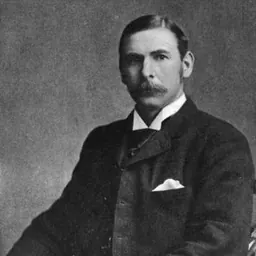
Wyndham Mortimer (March 11, 1884 – August 25, 1966) was an American trade union organizer and functionary active in the United Auto Workers union (UAW). He is best remembered as a key union organizer in the 1937 Flint Sit-Down Strike. He was the First Vice President of the UAW from 1936 to 1939. A member of the Communist Party USA (CPUSA) from about 1932, Mortimer was a critic of the efforts of the conservative American Federation of Labor to control the union and was a leader of a so-called "Unity Caucus" which led the UAW to join forces with the more aggressive Congress of Industrial Organizations (CIO).
In the spring of 1941, Mortimer's refusal to follow the anti-strike line of the UAW's governing Executive Board during a controversial work stoppage at a California aircraft factory led to his termination by the union and effectively brought an end to his career.
Biography
Early years Wyndham Mortimer was born March 11, 1884, in Karthaus, Pennsylvania, the son of a coal miner who was a member of the Knights of Labor, an early American labor union. He later recalled that one of his earliest memories of life as a young boy in Central Pennsylvania involved "walking behind parades of striking miners."
Mortimer left school at age 12 to work in the mines of Pennsylvania as a coal trapper, periodically operating trap doors in the mine shafts to allow the passage of carts and to assist with ventilation.
After leaving the coal mines, Mortimer worked as a rail-straightener in the steel mills of Lorain, Ohio, a brakeman on the Pennsylvania and New York Central Railroads, and a conductor for the Cleveland Railway Company. This appeal made headway with rank-and-file workers.
Mortimer, realizing that he faced a long and divisive fight over the issue, called a mass meeting of union members and recommended that the independent union be dissolved in favor of a new organization affiliated with the AF of L. When accused by a leader of the AF of L's Metal Trades Department of being a Communist in 1935, Mortimer replied:
"I will not dignify the wild charges made against me...by either denying or admitting them. Redbaiting is, and always has been, the employers' most potent weapon against those of us who believe in and fight for industrial unionism."
Mortimer and other Michigan Communists active in the trade union movement took pains to maintain discretion in this period, going so far as to hold their unit meetings in the middle of the night, the time and location of which was kept a carefully guarded secret. This mania for secrecy served to inhibit CPUSA activists from placing the question of socialism before their fellow trade unionists, effectively stifling their self-proclaimed task of radicalizing the working class from the outset. Homer Martin was elected as new President of the UAW at that convention and Mortimer was elected First Vice President of the UAW.
The Sit-Down Strike and after
Mortimer was dispatched to lead organizing efforts in Flint, Michigan, activity which directly led to the high-profile and successful Flint Sit-Down Strike that began on December 30, 1936, and lasted well into 1937. Lovestone managed to place a number of his loyal followers in important positions at UAW headquarters and persuaded Martin to begin a purge of his enemies in the ranks, including not only Communists such as Mortimer but those accused of being "tools" of the CPUSA, such as Victor Reuther and Walter Reuther.
Mortimer was expelled from the UAW in 1938 on charges levied by Homer Martin that he intended to turn over the UAW to the Communists — an accusation which Mortimer denied. A 12-day work stoppage resulted which was finally resolved only when the War Department and Justice Department stepped in. Attorney General Robert H. Jackson issued a public charge that the strike was inspired by the Communist Party.
Mortimer's last battle The tense situation was repeated in 1941 when Mortimer played a leading role in a strike against the North American Aviation plant located in Inglewood, California. So the White House intervened with the approval of national CIO leadership. President Franklin Roosevelt on June 8 sent in the California national guard to reopen the plant with bayonets. Strikers were told to return immediately or be drafted into the US Army. Mortimer was ordered by UAW headquarters to energetically exert his full influence upon the strikers to go back to work. When Mortimer refused this instruction, he was immediately fired from his union post. However two weeks later when Germany suddenly invaded the USSR on June 22, all the Communist activists suddenly became the strongest supporters of war production; they crushed wildcat strikes.
Later years Mortimer's defiance of the Executive Board of the UAW had ended his career in the union. A brief stint followed as an organizer for the national CIO, but he resigned from this position in 1942.
Mortimer's memoir, Organize! My Life as a Union Man, was published posthumously by Beacon Press in 1971. His papers are held by the Walter P. Reuther Library located at Wayne State University in Detroit, Michigan.
Footnotes
Works Guaranteed Annual Wage. Los Angeles: W. Mortimer, 1953. What Problems Confront American Labor and What are the Answers? Los Angeles: First Unitarian Church of Los Angeles, 1960. Wyndham Mortimer Meets the Soviet Auto Workers. Detroit: Global Books, 1961. My Trip to the Soviet Union. Hawthorne, CA: W. Mortimer, 1961. Organize! My Life as a Union Man. Boston: Beacon Press, 1971.
Don’t just read it —
keep it.
Full-length biographies made to live with: read them, listen on the way to work, watch them tonight.
- E-book
- Audio
- Video
Instant download · yours to keep · every purchase keeps this site free
Important facts
People in Wyndham Mortimer's life
Named in this biography and alive at the same time

Related people
Same field, nearest in time



Contemporaries
People whose lives overlapped Wyndham Mortimer's

Frequently asked questions
Who was Wyndham Mortimer?
American labor leader
When was Wyndham Mortimer born?
Wyndham Mortimer was born in 1884.
When did Wyndham Mortimer die?
Wyndham Mortimer died in 1966.
What was Wyndham Mortimer's occupation?
Wyndham Mortimer was a trade unionist.
Sources & further reading
Cite this page
APA: Biography.guide. (2026). Wyndham Mortimer. https://biography.guide/wyndham-mortimer/
MLA: "Wyndham Mortimer." Biography.guide, https://biography.guide/wyndham-mortimer/.
Chicago: "Wyndham Mortimer." Biography.guide. https://biography.guide/wyndham-mortimer/.
Data last updated: 2026-09-20 · Spot an error? Report a correction.
Page generated 2026-09-27 05:13 UTC