
About Woodrow W. Keeble
Lived 1917 – 1982 (aged 64). Woodrow W. Keeble was an American military personnel.
Woodrow Wilson Keeble (May 16, 1917 – January 28, 1982) was a United States Army National Guard combat veteran of both World War II and the Korean War. In 2008, he was posthumously awarded the Medal of Honor for heroic actions during the Korean War. He was a member of the people of the Lake Traverse Reservation, a federally recognized tribe of Dakota people.
On March 3, 2008, following a long campaign by his family and the congressional delegations of both North and South Dakota, President George W. Bush posthumously awarded Keeble the Medal of Honor for his heroic actions on October 20, 1951, in the Korean War. Keeble had previously been awarded the Distinguished Service Cross for these actions in 1952. He was wounded at least twice in World War II and three times in Korea, but he had received only two Purple Hearts for these injuries; later he was credited with four Purple Hearts.
Early life Keeble was born on May 16, 1917, in Waubay, South Dakota, to Isaac and Nancy Keeble, members of the Sisseton Wahpeton Oyate. While still very young, he moved with them to Wahpeton, North Dakota, where his mother worked at the Wahpeton Indian School. (Since being transferred to the tribe in the 1970s, it is called Circle of Nations School). She died when Keeble was still a child. Keeble's father, who was too impoverished to feed his family, permanently enrolled Woodrow and his siblings in the school.
Keeble excelled in sports, especially baseball. He pitched the Wahpeton amateur team to 10 straight victories. He was being recruited by the Chicago White Sox when his Army National Guard unit was called up to serve in World War II. Keeble was called to active duty with his National Guard unit on February 10, 1941.
World War II In World War II, Keeble served with I Company of the famed North Dakota 164th Infantry Regiment. After initial training in Louisiana, the regiment carried out various orders in several West Coast locations before being deployed to Australia in preparation for operations in the Pacific Theater. Keeble's unit was assigned to the United States Army's Americal Division (23rd Infantry Division).
The 164th Infantry landed on Guadalcanal on October 13, 1942, to help the battered First Marine Division, which had suffered heavy losses while clearing the South Pacific island of Japanese. The 164th regiment provided the first replacements for the 1st Marines, and although the new boys were green, the exhausted men heartily welcomed the North Dakotans—and their supplies.
Keeble's regiment of Dakotans was the first United States Army unit to conduct an offensive operation against the enemy in any theater.
Largely because of transport constraints, the Americal Division arrived on Guadalcanal piecemeal, and was fed into combat alongside the battle-hardened Marines. In contrast to the way several U.S. Army divisions were deployed in the Pacific War, the soldiers of the 164th Infantry were able to learn the practical art of jungle warfare against the Japanese without suffering as many casualties as might otherwise have occurred.
Dead soldiers from the Japanese 2nd Division litter the Guadalcanal battlefield after the failed assaults on October 25, 1942, against positions held by the 7th Marine Regiment and the 164th Infantry Regiment of the North Dakota National Guard.
The battles on Guadalcanal were some of the most brutal of the war. Japanese troops adopted the Banzai charge, wildly attacking in human waves. Sometimes the hand-to-hand battles would last all through the night.
During these battles, Keeble's reputation for bravery and skill grew. Nearly a head taller than most of his fellow soldiers, he was an expert with the Browning Automatic Rifle (BAR). His other great weapon was his pitching arm, which he used to hurl hand grenades with deadly accuracy. James Fenelon (Standing Rock Sioux Tribe of North & South Dakota), who fought with Keeble on Guadalcanal, once remarked, "The safest place to be was right next to Woody".
Despite its ad hoc formation, the Americal Division fought well at Guadalcanal, the 164th Infantry taking on a key role in the defeat of a major Japanese offensive in October 1942. The Dakotans performed so heroically on Guadalcanal in support of the Marines that they received a Navy Presidential Unit Citation.
After the battles on Guadalcanal, Keeble and the rest of the regiment participated in combat campaigns on the islands of Bougainville, Leyte, Cebu, and Mindanao. Following the Japanese surrender, the entire Americal Division landed in Japan and took part in the occupation of the Yokohama region.
Keeble was discharged from the Army on April 11, 1946, after more than five years of active duty. He had spent most of that period overseas.
After the war, Keeble returned to Wahpeton and worked at the Wahpeton Indian School. On November 14, 1947, he married Nettie Abigail Owen-Robertson (born March 30, 1917).
Keeble on combat Discussing the experience of being in combat for the first time, Keeble said,
Before I experienced the horror of that attack, I was quick to call coward or yellow anyone who showed fear under any circumstances. Nevermore. I don't know these things, but they speak truth to one. I am not a psychologist, nor a statistician, and less of a philosopher; but the depth of emotion, the dreads of fear, the referees of horrors, and the concentration of self that led me to make this observation, the fear impulse, or perhaps, better said, the (impulses caused) by fear, are stronger, more demanding than either that of love or hunger...
He also wrote: Fear in my opinion is a state of drunkenness. And when men are in that state when the fear impulse takes a hold... he loses all reason, sense of values, and is not liable, or at least should not be held accountable for acts perpetrated when thus possessed.
Keeble continued: During the 13 months [in the] almost continual and sustained combat in which I have ever participated, there were moments, and rare ones, I am sure; but they lose none of their terror or horror for which fear laid a relentless and a powerful hold on me, that the pull of cowardice was almost more than I could ward off. There were terrible moments that encompassed a lifetime, an endlessness, when terror was so strong in me, that I could feel idiocy replace reason. [Yet,] I have never left my position, nor have I shirked hazardous duty. Fear did not make a coward out of me.
Hawkins, Keeble's stepson, said one eyewitness told him the enemy directed its entire arsenal at Keeble during his assault: "He said there were so many grenades coming down on Woody, that it looked like a flock of blackbirds." Even under heavy enemy fire, Keeble completed his objective. Only after he killed the machine gunners did Keeble order his men to advance and secure the hill.
Later life Keeble returned to North Dakota after the Korean War. He resumed working at the Wahpeton Indian School. Soon after, he was diagnosed with tuberculosis, which required that he undergo long-term treatment in Minneapolis, Minnesota. Surgeons ultimately removed one of his lungs. He suffered a series of strokes that rendered him speechless, partially paralyzed, and unable to work for the remainder of his life. Nettie, his wife of 14 years, died the following year, leaving Keeble to raise their young son, Earl, alone.
Keeble fell on hard times and is said to have pawned his service medals. But despite his disabilities, Keeble persevered. In 1967, he married Blossom Iris Crawford-Hawkins (born July 18, 1926), the first Sioux woman to complete a Doctorate of Education.
Keeble was a member of the Veterans of Foreign Wars (VFW) Post 4324 – Wahpeton, North Dakota.
Keeble died January 28, 1982, and is buried in Sisseton, South Dakota. On May 17, 2008, his tombstone was replaced with a Medal of Honor headstone.
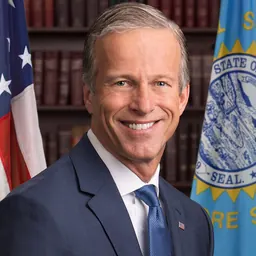
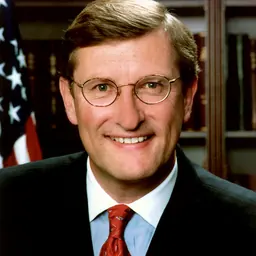
Medal of Honor campaign Keeble's family and friends remained dedicated to efforts to get him the Medal of Honor for which he was twice recommended. United States Senators Byron Dorgan (D-ND), Kent Conrad (D-ND) John Thune (R-SD) and Tim Johnson (D-SD) long urged that Keeble be posthumously awarded the Medal of Honor. Family members of U.S. Army Master Sgt. Woodrow Wilson Keeble attending his Medal of Honor ceremony
Senator Conrad and North Dakota Adjutant General Michael Haugen presented Keeble's family with a duplicate set of his military medals on May 30, 2006, at the Wahpeton Armory. Moments before the event was to begin, word came that Secretary of the Army Francis Harvey was recommending that Keeble's Distinguished Service Cross be upgraded to the Medal of Honor. From there, Keeble's case moved up to the level of Secretary of Defense.
In 2007, Secretary of Defense Donald Rumsfeld notified the four Dakota senators that a statute of limitations would prevent the Medal of Honor from being granted. The four Dakota senators immediately drafted legislation to remove the last barrier to the posthumous awarding of the medal.
In May 2007, the congressional funding bill for Iraq included language to grant a waiver of the statute of limitations to award a Medal of Honor to Woodrow W. Keeble. The President could sign off on the recommendation, conditioned on the Secretary of Defense's recommendation for the upgrade of Keeble's DSC. President Bush signed the legislation on May 24, 2007.
Senator Thune issued a statement on June 2, 2007, that read, in part, Master Sergeant Woodrow W. Keeble served with bravery and dignity, going beyond the call of duty not for notoriety or recognition-but for the mission he believed in and the country he loved. Keeble's legacy is a great source of pride for his family, his fellow Dakota Sioux, and all Americans. The Secretary of the Army's recommendation is wonderful and long-awaited news. I began working with Master Sergeant Keeble's family and tribal officials on resolving this long overdue issue in the spring of 2002, and I will continue to work with Defense officials to ensure that this legendary soldier receives the final and most distinguished honor he deserves.
Senator Johnson urged Secretary of Defense Robert M. Gates to act quickly on the recommendation. "...it is my hope that both you and the President can move forward on Master Sergeant Keeble's case as expeditiously as possible," Johnson said in a letter to Gates quoted in the Argus Leader of Sioux Falls, South Dakota.
A year later, the President finally awarded Keeble the Medal of Honor. Despite failing health, Blossom Keeble was determined to live long enough to accept the Medal of Honor on her husband's behalf, but she died quite suddenly on June 3, 2007.
In February 2008, the White House announced that Keeble would be awarded the Medal of Honor posthumously in a ceremony scheduled for March 3, with his family to receive it. "We are just proud to be a part of this for Woody," Keeble's stepson Russell Hawkins said in a U.S. Army announcement. "He is deserving of this, for what he did in the Armed Services in defense of this country."
Additional honors On March 17, 2008, the South Dakota Governor Mike Rounds, before a joint session of the State Congress, officially proclaimed the date to be forever commemorated as Woodrow Wilson Keeble Day in the state of South Dakota.
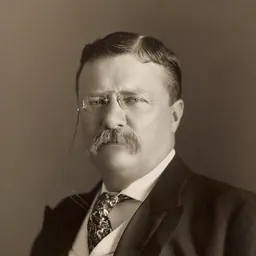
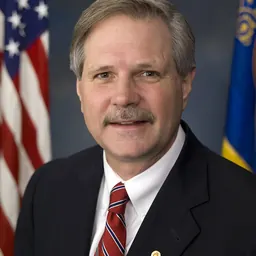
On July 23, 2008, North Dakota Governor John Hoeven posthumously presented Keeble with the Theodore Roosevelt Rough Rider Award. The award recognizes present or former North Dakotans who achieve national recognition in their fields of endeavor.
In addition to these awards, many regional sites also pay homage to the memory of Woodrow Keeble. A section of U.S. Highway 12 near Keeble's birthplace in Waubay, South Dakota, is named in his honor. A special shelter in Chahinkapa Park in Wahpeton was built in his honor. Previous to the Medal of Honor ceremony, the gymnasium at the Wahpeton Indian School, now called the Circle of Nations School, was named for him. In May 2008, the school celebrated its 100th anniversary and named a new dormitory for Keeble. The State of North Dakota erected a Medal of Honor Memorial in Roosevelt Park in Minot. North Dakota has more Medal of Honor recipients, per capita, than any other state. A separate pillar was built for Keeble and dedicated during a special celebration on July 4, 2008. A new Armed Forces Reserve Center in Sioux Falls has also been named for Keeble.
Don’t just read it —
keep it.
Full-length biographies made to live with: read them, listen on the way to work, watch them tonight.
- E-book
- Audio
- Video
Instant download · yours to keep · every purchase keeps this site free
Important facts
People in Woodrow W. Keeble's life
Named in this biography and alive at the same time




Related people
Same field, nearest in time



Contemporaries
People whose lives overlapped Woodrow W. Keeble's

Frequently asked questions
Who was Woodrow W. Keeble?
Korean War Medal of Honor recipient (1917–1982)
When was Woodrow W. Keeble born?
Woodrow W. Keeble was born on 16 May 1917 in Waubay.
When did Woodrow W. Keeble die?
Woodrow W. Keeble died on 28 January 1982 in Sisseton.
What was Woodrow W. Keeble's occupation?
Woodrow W. Keeble was a military personnel.
What nationality was Woodrow W. Keeble?
Woodrow W. Keeble was American.
Sources & further reading
· Wikipedia: Woodrow W. Keeble
Cite this page
APA: Biography.guide. (2026). Woodrow W. Keeble. https://biography.guide/woodrow-w-keeble/
MLA: "Woodrow W. Keeble." Biography.guide, https://biography.guide/woodrow-w-keeble/.
Chicago: "Woodrow W. Keeble." Biography.guide. https://biography.guide/woodrow-w-keeble/.
Data last updated: 2026-09-20 · Spot an error? Report a correction.
Page generated 2026-09-27 05:28 UTC