
About Wood Boulden
Lived 1811 – 1876 (aged 65). Wood Boulden was an American lawyer, politician and judge.
Wood Bouldin, also known as Wood Boulden, (January 20, 1811 – October 10, 1876) was a Virginia lawyer, plantation owner and politician who represented Charlotte County in the 1861 Secession Convention and in the Virginia House of Delegates during the American Civil War (1861-1865). Bouldin then served as a justice of the Supreme Court of Virginia from 1872 until his death in 1876.
Early life and education Born at "Golden Hills" plantation in Charlotte County, Virginia to the former Ann Lewis and her lawyer (later circuit-riding judge and eventually Congressman) husband Thomas Bouldin, he was named to honor his grandfather Wood Bouldin (1742-1800), who had married Joanna, the aunt of U.S. President John Tyler. His parents had married in 1804, and Ann Lewis Bouldin bore a total of six sons and five daughters before her death in 1823. His father remarried in 1825 and his second wife, Eliza Watkins Spencer, bore four sons. Meanwhile, as a youth, this Wood Bouldin was sent to Richmond to receive a private education from Mr. Turner. He then was sent to Bedford County, Virginia to attend the New London Academy conducted by Rev. Nicholas H. Cobbs (later the bishop of Alabama). After teaching school for a year, Bouldin moved to Halifax County, Virginia and studied law under William Leigh. the family's ties to this Southside Virginia area began with Col. Thomas Bouldin (1702-1782) who moved his family including six sons from Cecil County, Maryland to the southern Virginia frontier, and became the first sheriff of then-vast Lunenburg County, then of Charlotte County. His son, this man's namesake, Wood Bouldin Sr. was promoted from second to first lieutenant of the 14th Virginia Regiment and inherited land in Charlotte County, as well as married Joanna Tyler. His brothers (this man's uncles) Thomas Bouldin and Joseph Bouldin operated an ordinary and farmed in Henry County further west, with Joseph Bouldin winning election to the Virginia House of Delegates in 1806. Lt. Wood Bouldin's son (this man's father) won election to the U.S. House of Representatives in 1829, was re-elected once and after missing a term, was elected again, then died on the floor of the U.S. House of Representatives on February 11, 1834, when this man was barely of legal age, and was succeeded by his brother (this man's uncle) James Bouldin. That uncle James Bouldin was also one of the founding subscribers for a new episcopal church building in Charlotte county in 1833, called Roanoke Church, and decades later in 1859-1860 this man would be one of the founding subscribers for a new church building in Marysville (replacing the old building designed by a former assistant to Thomas Jefferson which is now the reminder of the community known as Ca Ira). Meanwhile, in 1838, another brother/uncle, Louis C. Bouldin, began a decades-long career representing Charlotte, Lunenburg, Nottoway and Prince Edward Counties in the Virginia Senate.
Career After admission to the Virginia bar in 1833, Bouldin moved to Charlotte Courthouse to begin practice, but soon discovered the estate of his father, who died on February 11, 1834, was in financial arrears, in part because of his handling of the large estate of Frederick Ross. Seeking a larger practice, and a new environment after the death of his first wife, Bouldin moved to Richmond in 1842 and entered a law partnership with Robert Stanard, who soon became a Judge of the Court of Appeals. Boulden participated actively in the debate, initially stating that he favored remaining in the Union, but also introduced a resolution that any attempt by the U.S. to collect revenue or reclaim military installations in any seceding state would amount to starting a war in which Virginia would "sustain the seceded States".
During the Civil War, Charlotte County voters elected Bouldin to the Virginia House of Delegates, and he served in that part-time position throughout the war.
Personal life
Bouldin married Maria Louisa Barksdale on December 22, 1837 in Charlotte County, and they had a son, Wood Bouldin (1838-1911). However, Maria died in 1839, when their son was an infant. Three years later, Boulden moved to Richmond, then remarried in 1847. His second wife, Martha Baldwin Daniel (1819-) of Lynchburg was the sister of Court of Appeals Judge William Daniel, and bore six daughters (of whom Elvina, Martha, Ann, Alice and Virginia reached adulthood), as well as four sons (of whom Charles Ellett, Briscoe Baldwin and Frank Deane Bouldin reached adulthood). His former law office at 14 S. Main Street in Halifax remains, and is a contributing building in the Town of Halifax Court House Historic District. His eldest son and namesake became active in the state Democratic party and would represent Halifax at the Virginia Constitutional Convention of 1902, and play a key role in disenfranchising African Americans.
Don’t just read it —
keep it.
Full-length biographies made to live with: read them, listen on the way to work, watch them tonight.
- E-book
- Audio
- Video
Instant download · yours to keep · every purchase keeps this site free
Important facts
People in Wood Boulden's life
Named in this biography and alive at the same time




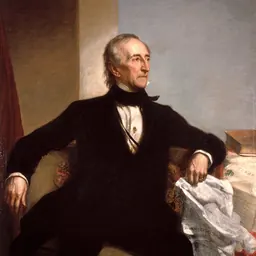
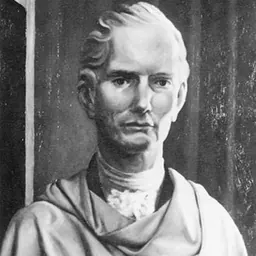
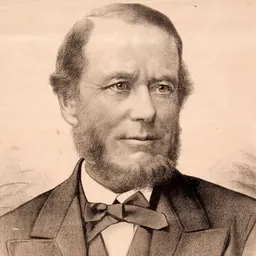

Related people
Same field, nearest in time




Contemporaries
People whose lives overlapped Wood Boulden's




Frequently asked questions
Who was Wood Boulden?
American politician (1811-1876)
When was Wood Boulden born?
Wood Boulden was born on 20 January 1811 in Charlotte County.
When did Wood Boulden die?
Wood Boulden died on 10 October 1876 in Richmond.
What was Wood Boulden's occupation?
Wood Boulden was a lawyer, politician and judge.
What nationality was Wood Boulden?
Wood Boulden was American.
Sources & further reading
Cite this page
APA: Biography.guide. (2026). Wood Boulden. https://biography.guide/wood-boulden/
MLA: "Wood Boulden." Biography.guide, https://biography.guide/wood-boulden/.
Chicago: "Wood Boulden." Biography.guide. https://biography.guide/wood-boulden/.
Data last updated: 2026-09-20 · Spot an error? Report a correction.
Page generated 2026-09-27 05:20 UTC