
About Wolfgang von Kempelen
Lived 1734 – 1804 (aged 70). Wolfgang von Kempelen was a Hungarian and Austrian engineer, writer, painter, playwright, chess player and architect, known for Mechanical Turk.
Johann Wolfgang von Kempelen (; 23 January 1734 – 26 March 1804) was a writer, engineer, and inventor, known for his chess-playing "automaton" hoax The Turk and for his speaking machine.
Personal life Von Kempelen was born in Pressburg (today's Bratislava, Slovakia), then capital city of the Kingdom of Hungary within the Habsburg Empire, the last child of Engelbert Kempelen (1680–1761), and Anna Theresa Spindler.
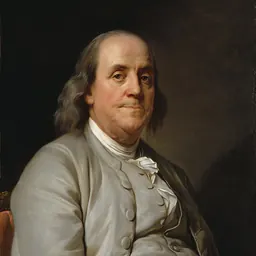
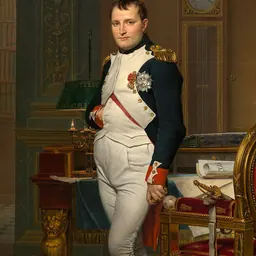
Von Kempelen studied law and philosophy in Pressburg, and attended the Academy in Győr, Vienna and Rome, but mathematics and physics also interested him. Besides Pressburg's native tongues of German, Hungarian and Slavic von Kempelen also spoke Latin, French, Italian, and later, some English and Romanian, which he learned during his travels in England and assignments in Banat. The machine appeared to be able to play a strong game of chess against a human opponent, but was in fact merely an elaborate simulation of mechanical automation: a human chess master concealed inside the cabinet puppeteered the Turk from below by means of a series of levers. With a skilled operator, the Turk won most of the games played during its demonstrations around Europe and the Americas for nearly 84 years, playing and defeating many challengers including statesmen such as Napoleon Bonaparte and Benjamin Franklin.
Kempelen also created a manually operated speaking machine. An early version (possibly an original) can still be seen in the Musical Instruments section of the Deutsches Museum in Munich. In 1789, he published a book containing his nearly twenty years of speech research, Mechanismus der menschlichen Sprache Nebst Beschreibung seiner sprechenden Maschine. thumb
He constructed steam engines, water pumps, a pontoon bridge in Pressburg (1770), patented a steam turbine for mills (1788/89) and a typewriter for Mozart's friend a blind Viennese pianist Maria Theresia von Paradis (1779), and built a theatre house in Buda (inaugurated 25 October 1790) (now Budapest) and the famous fountains at Schönbrunn in Vienna (1780). He was also a talented artist and etcher, wrote poems and epigrams, and composed a singspiel, Andromeda and Perseus, performed in Vienna.
Retirement and death
He retired in 1798, after forty-three years of service to the Austrian Empire. Some sources claim he was destitute at the time of his retirement because the Emperor revoked his pension, though this conclusion is most likely a misunderstanding of his multiple pensions. In 1771, Maria Theresia honored von Kempelen with an annual pension of 1,000 ducats for his exemplary work, but after her death, her son Joseph II made drastic cuts to the benefits granted to the court's civil servants, and von Kempelen's supplementary pension was revoked in 1781. Upon his retirement, von Kempelen was granted a pension equal to his final salary of 5,000 Gulden, and in 1802, he sought to recover the income from his smaller annual pension by submitting a petition to Francis II, requesting compensation in the amount of 20,000 Gulden accrued in expenses in service to the crown, but was ultimately denied.
At the time of his death in 1804, he owned a country estate in Gomba near Pressburg, but died in his apartment on the Alsergrund, a suburb of Vienna.
The Wolfgang von Kempelen Computing Science History Prize was named in his honor, as was a high school in Budapest.
Publications
Mechanismus der menschlichen Sprache. Wolfgangs von Kempelen k. k. wirklichen Hofraths Mechanismus der menschlichen Sprache, nebst der Beschreibung seiner sprechenden Maschine; Wien 1791. (Digitized within the Oregon Health & Science University Digital Collections) Wolfgang von Kempelen: Der Mechanismus der menschlichen Sprache. / The Mechanism of Human Speech.: Kommentierte Transliteration & Übertragung ins Englische / Commented Transliteration & Translation into English. Herausgegeben von / Edited by Fabian Brackhane, Richard Sproat & Jürgen Trouvain; Dresden 2017 (Online version).
Don’t just read it —
keep it.
Full-length biographies made to live with: read them, listen on the way to work, watch them tonight.
- E-book
- Audio
- Video
Instant download · yours to keep · every purchase keeps this site free
Important facts
People in Wolfgang von Kempelen's life
Named in this biography and alive at the same time
Related people
Same field, nearest in time


Contemporaries
People whose lives overlapped Wolfgang von Kempelen's






Frequently asked questions
Who was Wolfgang von Kempelen?
Austrian dramatic, graphic, constructer, linguist, painter, writer, inventor and nobleman (1734-1804)
When was Wolfgang von Kempelen born?
Wolfgang von Kempelen was born on 23 January 1734 in Bratislava.
When did Wolfgang von Kempelen die?
Wolfgang von Kempelen died on 26 March 1804 in Alservorstadt, Vienna.
What was Wolfgang von Kempelen's occupation?
Wolfgang von Kempelen was an engineer, writer, painter, playwright, chess player and architect.
What was Wolfgang von Kempelen known for?
Wolfgang von Kempelen was known for Mechanical Turk.
What nationality was Wolfgang von Kempelen?
Wolfgang von Kempelen was Hungarian and Austrian.
Sources & further reading
· Wikipedia: Wolfgang von Kempelen
· DBpedia: Wolfgang von Kempelen
Cite this page
APA: Biography.guide. (2026). Wolfgang von Kempelen. https://biography.guide/wolfgang-von-kempelen/
MLA: "Wolfgang von Kempelen." Biography.guide, https://biography.guide/wolfgang-von-kempelen/.
Chicago: "Wolfgang von Kempelen." Biography.guide. https://biography.guide/wolfgang-von-kempelen/.
Data last updated: 2026-09-20 · Spot an error? Report a correction.
Page generated 2026-09-27 05:30 UTC