
About Wolfgang Kroll
Lived 1906 – 1992 (aged 85). Wolfgang Kroll was a Taiwanese and German physicist and university teacher.
Wolfgang Kroll (March 21, 1906 – February 28, 1992) was a German physicist who received his doctorate in physics from the University of Breslau in 1930. He spent the next few years in Leipzig conducting postdoctoral research with Werner Heisenberg.
Due to the power of the Nazi Party, Kroll left Germany in 1937 to teach in Hokkaido, Japan, and then arrived in the Japanese colony of Taipei in 1941, where he taught at the Preparatory Department of the Taihoku Imperial University. After the war, Kroll was invited to transfer to the as the university was renamed as National Taiwan University. He was promoted to associate professor and then to professor. He was the first full-time professor in Taiwan to hold a doctorate in theoretical physics after the war. Afterward, he was invited to teach in the Department of Physics of Tunghai University.
In August 1976, Kroll retired from the Department of Physics at National Taiwan University and became an honorary professor along with the following year. After his retirement, Kroll also taught part-time at the Chinese Culture University and other places. In the late 1970s, as Taiwan's economy began to take off, prices rose and Kroll's pension became relatively meagre, leaving him in a difficult position. On February 28, 1992, Kroll died of emphysema at National Taiwan University Hospital at the age of 87.
Life
Early years
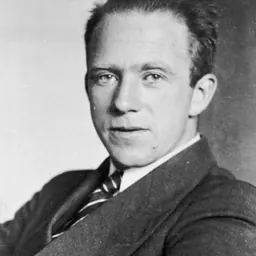
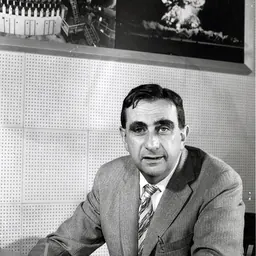
Wolfgang Kröll was born on March 21, 1906, in Greifswald in the northern part of the German Empire. When he was a child, Kroll experienced the First World War, when Germany was short of supplies and the elephants in the zoo were shot and killed, leading Kroll to eat their flesh. In the late 1920s, Kroll entered the University of Breslau where he studied theoretical physics and received his Ph.D. in physics from the university in 1930 with a thesis on Dirac's electron theory. In the same year, he received a fellowship from the German Science Aid Organization and went to Leipzig University to do postdoctoral research under Werner Heisenberg for seven years. During this period, he also met Edward Teller, who would become the father of the hydrogen bomb. Kroll stated that he chose to go to Japan to see the "fascinating East" and that he and his father had many friends in Japan.
There are two accounts of the way Kroll left Germany. According to Xu Zhongping, Kroll exchanged in Japan, while another theory suggests that Kroll's journey to Japan was arranged by his father. where he was a lecturer for five years beginning in 1937. During this period, Kroll mentored assistant professor in his research on the specific heat of solids and frequency spectra. He also completed a revision of the Houston method in 1955, using interpolation to determine the ISO-frequency spectral map, avoiding the singularity problem of the original Houston method at the high-frequency end. He also wrote a paper on his research results and published it in Physical Review that year, which became the first paper by a Taiwanese scholar in this journal.
Since then, almost all the theoretical physics courses in the Department of Physics at NTU had been taught by Kroll, including courses in theoretical physics, quantum mechanics, relativity, statistical mechanics, physical mathematics, electronics, and other theoretical courses.
Before the 1970s, Kroll was the only full-time professor in Taiwan with a PhD in theoretical physics. Kroll published two more papers on solid-specific heat-related research, building on his 1952 paper. In the following year, he became the only "National Research Chair Professor" at the Physical Research Center of the National Council on Science Development and continued his research in the fields of specific heat magnetoresistance, and mathematical physics. He also worked with his students to study the solution of the electromagnetic wave equation of a waveguide with internal wrinkles and to find its waveguide coefficient, and his results were published in the Chinese Journal of Physics between 1963 and 1967. In 1967, Kroll also published a paper on the development of function classes satisfying a particular integral formula in the same journal. According to Kroll's estimation, he taught about 2,000 to 3,000 students during his 30 years of teaching at NTU. and also taught at Taipei Medical University.
However, in the late 1970s, as Taiwan's economy began to take off, prices rose, making Kroll's pension insufficient to provide for his medical needs when he became ill. Huang Zhenlin, who later became the head of the Department of Physics at NTU, served as Kroll's assistant professor when he was young. Influenced by Kroll, Huang Zhenlin also devoted himself to research in the field of solid-specific heat. Their discussion was later published in the German Handbuch der Physik. said that Kroll was "one of his most respected teachers". He said that if he had not been taught quantum mechanics, statistical mechanics, and theoretical physics by Kroll, he "would not have been able to enter the research field so quickly". taught at the University of Breslau, and was a high-ranking German government official with a prominent family background. Kroll's brother was a medical doctor, in addition to Kroll's younger brother. Kroll was unmarried for the rest of his life, but he had a son and a middle-aged woman who helped him with household chores for many years. In addition, Kroll had a lover in Taiwan, who placed the last flower on the coffin during Kroll's funeral.
Don’t just read it —
keep it.
Full-length biographies made to live with: read them, listen on the way to work, watch them tonight.
- E-book
- Audio
- Video
Instant download · yours to keep · every purchase keeps this site free
Important facts
People in Wolfgang Kroll's life
Named in this biography and alive at the same time
Related people
Same field, nearest in time

Contemporaries
People whose lives overlapped Wolfgang Kroll's
Frequently asked questions
Who was Wolfgang Kroll?
German-Taiwanese physicist
When was Wolfgang Kroll born?
Wolfgang Kroll was born on 21 March 1906 in Greifswald.
When did Wolfgang Kroll die?
Wolfgang Kroll died on 28 February 1992 in Taipei.
What was Wolfgang Kroll's occupation?
Wolfgang Kroll was a physicist and university teacher.
What nationality was Wolfgang Kroll?
Wolfgang Kroll was Taiwanese and German.
Sources & further reading
Cite this page
APA: Biography.guide. (2026). Wolfgang Kroll. https://biography.guide/wolfgang-kroll/
MLA: "Wolfgang Kroll." Biography.guide, https://biography.guide/wolfgang-kroll/.
Chicago: "Wolfgang Kroll." Biography.guide. https://biography.guide/wolfgang-kroll/.
Data last updated: 2026-09-20 · Spot an error? Report a correction.
Page generated 2026-09-27 05:19 UTC