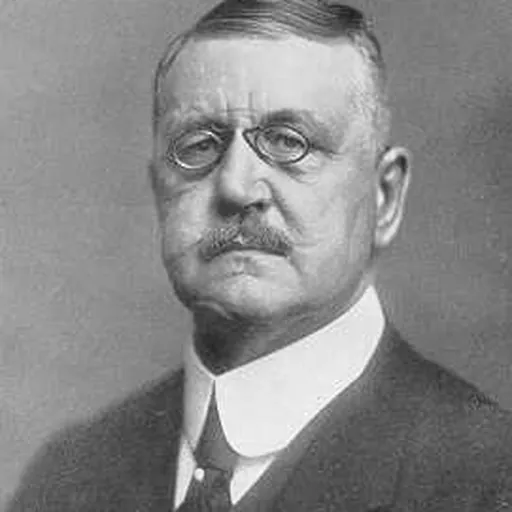
Wolfgang Kapp
Prussian civil servant and journalist. Nominal leader of the Kapp-Putsch
About Wolfgang Kapp
Lived 1858 – 1922 (aged 63). Wolfgang Kapp was an American and German jurist, politician, beamter and civil servant.
Wolfgang Kapp (24 July 1858 – 12 June 1922) was a German conservative and nationalist political activist who is best known for his involvement in the eponymous 1920 Kapp Putsch. He spent most of his career working for the Prussian Ministry of Finance and then as director of the Agricultural Credit Institute in East Prussia. During World War I, Kapp was a vocal annexationist and critic of the government's policies, which he saw as not aggressive enough. His strong dislike of parliamentary government and the Weimar Republic led him to take a leading role in the 1920 putsch that bears his name. Following the putsch's failure to overthrow the German government, Kapp went into exile in Sweden. He returned to Germany in late 1921 to appear in court, but died while under medical care before he could testify.
Early life Kapp was born in New York City, where his father Friedrich Kapp, a political activist and later Reichstag delegate for the National Liberal Party, had settled after the failed European revolutions of 1848. In 1870, the family returned to Germany, and Kapp's schooling continued in Berlin at the Friedrich Wilhelm Gymnasium. Wolfgang Kapp married Margarete Rosenow in 1884; the couple had three children. Through his wife's family, Kapp acquired connections with politically conservative elements. He studied law at the Eberhard Karls University of Tübingen and the Georg-August University of Göttingen, where he became a member of the student organization Corps Hannovera Göttingen. In 1886, he completed his doctorate in law and was appointed to a position in the Prussian Ministry of Finance the same year.
In 1907, through the intercession of his friend Elard von Oldenburg-Januschau, an influential Junker from East Prussia, Kapp took over the lucrative position of director of the East Prussian Agricultural Credit Institute, a post he held until March 1920. He successfully lobbied for the agricultural workers' movement, peasant settlement and agricultural debt relief, and against strong opposition he founded a non-profit public life insurance company. In 1912 he was elected to the supervisory board of Deutsche Bank. He was also an honorary doctor of the University of Königsberg.
In reaction to the Reichstag Peace Resolution of 1917, Kapp and Grand Admiral Alfred von Tirpitz founded the German Fatherland Party , of which Kapp was briefly the chairman. Through a by-election, he became a member of the last Reichstag of the Empire on 2 February 1918 for a constituency in Gumbinnen, East Prussia. Kapp felt the defeat of the First World War as a national disgrace. He became a proponent of the stab-in-the-back myth, the belief that the German army had remained undefeated in the field and was stabbed in the back by Jews, Freemasons and communists at home. He joined the German National People's Party (DNVP) in 1919 and participated in the anti-republican National Union . The members, which included General Erich Ludendorff, Colonel Max Bauer and Captain Waldemar Pabst, were the core group behind the Kapp Putsch that attempted to overthrow the Weimar Republic.
Exile and death The German government did not ask for Kapp's extradition and he was granted permanent residency in Sweden. The trial against his co-conspirators in the putsch began in December 1921. After Dietrich von Jagow was sentenced to five years in prison, Kapp returned to Germany intending to claim his innocence and that the true criminals were those behind the German Revolution of 1918–1919. Before he could testify, a medical examination in the prison in Leipzig where he was being held found a tumor behind his right eye. He died of cancer shortly after the operation to remove it.
Don’t just read it —
keep it.
Full-length biographies made to live with: read them, listen on the way to work, watch them tonight.
- E-book
- Audio
- Video
Instant download · yours to keep · every purchase keeps this site free
Important facts
People in Wolfgang Kapp's life
Named in this biography and alive at the same time

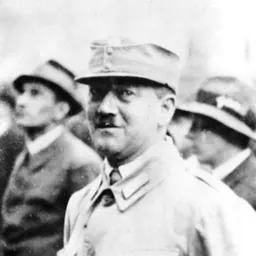
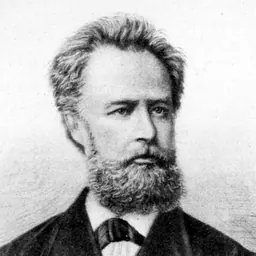

Related people
Same field, nearest in time
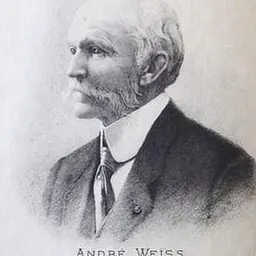
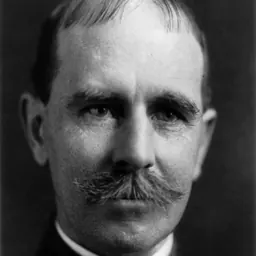

Contemporaries
People whose lives overlapped Wolfgang Kapp's



Frequently asked questions
Who was Wolfgang Kapp?
Prussian civil servant and journalist. Nominal leader of the Kapp-Putsch (1858-1922)
When was Wolfgang Kapp born?
Wolfgang Kapp was born on 24 July 1858 in New York City.
When did Wolfgang Kapp die?
Wolfgang Kapp died on 12 June 1922 in Klinikum St. Georg.
What was Wolfgang Kapp's occupation?
Wolfgang Kapp was a jurist, politician, beamter and civil servant.
What nationality was Wolfgang Kapp?
Wolfgang Kapp was American and German.
Sources & further reading
Cite this page
APA: Biography.guide. (2026). Wolfgang Kapp. https://biography.guide/wolfgang-kapp/
MLA: "Wolfgang Kapp." Biography.guide, https://biography.guide/wolfgang-kapp/.
Chicago: "Wolfgang Kapp." Biography.guide. https://biography.guide/wolfgang-kapp/.
Data last updated: 2026-09-22 · Spot an error? Report a correction.
Portrait: Wikimedia Commons · author & licence
Page generated 2026-09-27 05:00 UTC