
About Władysław Broniewski
Lived 1897 – 1962 (aged 64). Władysław Broniewski was a Polish and Russian military officer, poet, writer, opinion journalist and translator.
Władysław Kazimierz Broniewski (17 December 1897 – 10 February 1962) was a Polish poet, writer, translator and soldier, known for his revolutionary and patriotic writings.
Life
He was the son of Antoni, a bank clerk. As a young man, Broniewski joined in 1915 the legions of Józef Piłsudski. As a member of the 1st Legions Infantry Regiment, he participated in the Polish–Soviet War and in 1920 fought in the Battle of Białystok. He was decorated for bravery with the order of Virtuti Militari.
Broniewski developed leftist sympathies and by the late 1920s he was a revolutionary poet. In summer 1931, he was arrested during a literary meeting of writers connected with the Communist Party of Poland (KPP) along with Jan Hempel and Aleksander Wat. He was helped by Bolesław Wieniawa-Długoszowski.
When Poland was attacked in 1939 by Germany, he wrote an important poem encouraging Poles to put away political differences and fight the aggressors. After Poland was invaded by the Soviet Union, Broniewski found himself in Soviet-occupied Lwów. His poems were printed in a Soviet-published newspaper, but he was soon arrested by the NKVD on trumped-up charges of "hooliganism". He refused to co-operate with the NKVD and after four months was transported to the Lubianka prison in Moscow, where he stayed for thirteen months. He left the Soviet Union with the Polish army led by General Władysław Anders and through Iran came to Iraq and then Palestine.
After World War II and the establishment of the Polish People's Republic, he compromised by writing in 1951 a poem Słowo o Stalinie ('A Word about Stalin'). Subsequently, Broniewski became an important political figure and was proclaimed a foremost national poet by the authorities. He still managed to preserve a certain degree of independence, and some of his poems from this period are a testimony to his talent. He had also been an accomplished translator of poetry and prose, translating, among others, Fyodor Dostoevsky, Sergei Yesenin, Vladimir Mayakovsky, and Bertolt Brecht.
During the last years of Broniewski's life, his health had been ruined by alcohol abuse. He died in Warsaw.
Poetry
Broniewski's poetry deals with problems of human life in the context of historical events, such as wars and revolutions (for example, the Paris Commune), and with questions of justice, fight for freedom, patriotism and personal suffering. This last aspect is evident in the cycle Anka, dedicated to the memory of tragically deceased poet's daughter Anna, who was gas-poisoned on 1 September 1954 (often compared to Jan Kochanowski's Laments). Another important Broniewski poem is Ballady i romanse, alluding to the title of Adam Mickiewicz's collection. Ballady i romanse is about the Holocaust. Its hero is a thirteen year old Jewish girl Ryfka, who dies together with Jesus Christ shot by the Nazis. Broniewski was conservative regarding poetic form. He used classical forms of verse, traditional metres and stanzas. He often employed the dactylic metre.
Poetry collections Wiatraki (1925) Dymy nad miastem (1927) Troska i pieśń (1932) Krzyk ostateczny (1938) Bagnet na broń (1943) Drzewo rozpaczające (1945) Nadzieja (1951) Anka (1956)
Honours and awards National honours
Foreign honours
Don’t just read it —
keep it.
Full-length biographies made to live with: read them, listen on the way to work, watch them tonight.
- E-book
- Audio
- Video
Instant download · yours to keep · every purchase keeps this site free
Important facts
People in Władysław Broniewski's life
Named in this biography and alive at the same time
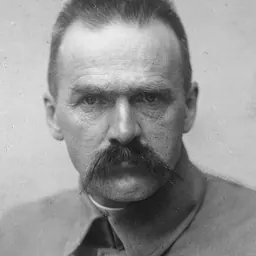
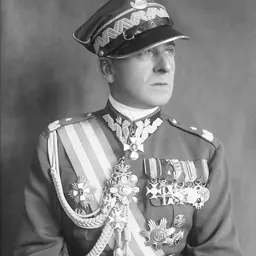
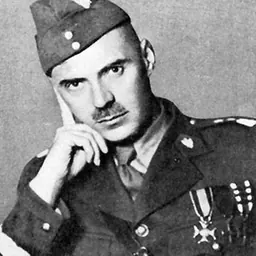


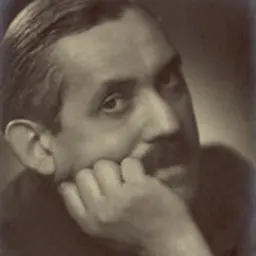

Related people
Same field, nearest in time


Contemporaries
People whose lives overlapped Władysław Broniewski's



Frequently asked questions
Who was Władysław Broniewski?
Polish poet (1897–1962)
When was Władysław Broniewski born?
Władysław Broniewski was born on 17 December 1897 in Płock.
When did Władysław Broniewski die?
Władysław Broniewski died on 10 February 1962 in Warsaw.
What was Władysław Broniewski's occupation?
Władysław Broniewski was a military officer, poet, writer, opinion journalist and translator.
What nationality was Władysław Broniewski?
Władysław Broniewski was Polish and Russian.
Sources & further reading
· Wikipedia: Władysław Broniewski
· DBpedia: Władysław Broniewski
Cite this page
APA: Biography.guide. (2026). Władysław Broniewski. https://biography.guide/wladyslaw-broniewski/
MLA: "Władysław Broniewski." Biography.guide, https://biography.guide/wladyslaw-broniewski/.
Chicago: "Władysław Broniewski." Biography.guide. https://biography.guide/wladyslaw-broniewski/.
Data last updated: 2026-09-20 · Spot an error? Report a correction.
Page generated 2026-09-27 05:25 UTC