
About Winthrop Pickard Bell
Lived 1884 – 1965 (aged 80). Winthrop Pickard Bell was a Canadian historian, university teacher, writer and philosopher.
Winthrop Pickard Bell (May 12, 1884 – April 4, 1965) was a Canadian academic who taught philosophy at the University of Toronto and Harvard. He was best known for his work as a historian of Nova Scotia until his work as a spy for MI6 was uncovered. In 1939, Bell published the first major warning of the Holocaust in English.
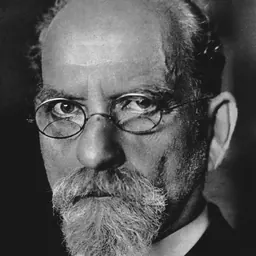
Biography Winthrop Bell was born in Halifax, Nova Scotia and educated at Mount Allison University, McGill University, and Harvard University where he studied under Josiah Royce. He traveled to Germany and attended the University of Leipzig and finally the University of Göttingen, which is where he completed his doctoral studies under Edmund Husserl. Bell wrote his doctoral dissertation about Royce's theory of knowledge.
Engraving by Winthrop P. Bell on a cell-door in the of Göttingen University Edith Stein was among his friends during his Göttingen period.
During the First World War he was held in the civilian internment camp at Ruhleben, near Berlin, for more than three years. After the war, he gave talks about his experiences as a prisoner and warned that the terms of peace were too steep for Germans to survive. MI6 recruited, trained, and returned him to Germany as a spy.
In his latter years he focused his energies on historical research, much of which concerned the group of mid-18th-Century immigrants to Nova Scotia known as the "Foreign Protestants".
Spy career While researching his philosophy dissertation in 2008, Jason Bell (no relation) consulted Winthrop Bell's archive at Mount Allison University. He was shocked to find the archive full of Winthrop's dispatches from his years as a spy. Jason wrote a biography of Winthrop's career called Cracking the Nazi Code.
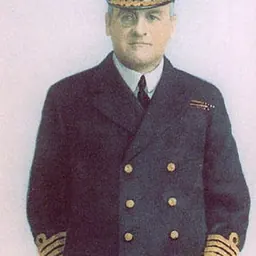
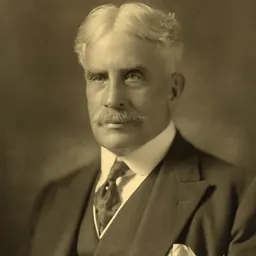
During the interview phase of Winthrop Bell's recruitment, Canadian Prime Minister Robert Borden invited him to dinner at Claridge's on December 3, 1918. Bell gave Borden his view of the German situation. By December 9, he was informally a Canadian agent and briefing intelligence agencies at Whitehall. In late January 1919, Bell met with Mansfield Smith-Cumming and officially became an MI6 agent, with Canada underwriting the cost of his employment. He returned to Germany on February 21, 1919. A month later, Bell's prediction took the form of the First Silesian Uprising. When he returned to Berlin, Bell found it "in the throes of a great strike and a sinister political background. It might not take much to overthrow the Government but what would follow only the Gods know."
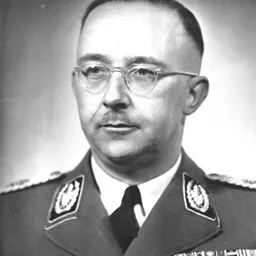
In the fall of 1919, Bell was able to warn the United Kingdom about the October 1919 attack on Riga. The Freikorps allied with the Russians in the assault. Bell worked to insure that the UK could win the battle and not overreact to the labyrinthian scheme of German reactionaries. Heinrich Himmler demanded an investigation after several engineers at Telefunken became suspicious. Runge was able to convince Göring that his team's inability to develop the technology was due to incompetence. Moreover, he bluffed Göring that British submarines could not possibly be using centimetric radar. Göring never told his counterparts in the German Navy about the discovery. Meanwhile, the Royal Navy were in fact using the new technology and devastating the U-boat fleet.
In part two, Bell presses his point by quoting Hitler's aspiration to "take up where we left off six hundred years ago". Unlike medieval Germans, who interbred with their captives, Hitler rails at length against such admixture. Bell also turns Hitler's interpretation of Germany's "slow execution" under the Treaty of Versailles into a prescription for Nazi treatment of conquered lands. Hitler writes, "A clever victor will as far as possible impose his requirements upon the vanquished bit by bit," and he invokes the extermination of Carthage as a model. Bell predicted that Hitler would "arrange the stages of the 'gradual execution' as to mask its real nature as long as possible not only from the victims but also from the rest of the world." He presciently concludes that "isolation" from Hitler's policy is impossible".
Don’t just read it —
keep it.
Full-length biographies made to live with: read them, listen on the way to work, watch them tonight.
- E-book
- Audio
- Video
Instant download · yours to keep · every purchase keeps this site free
Important facts
People in Winthrop Pickard Bell's life
Named in this biography and alive at the same time


Related people
Same field, nearest in time

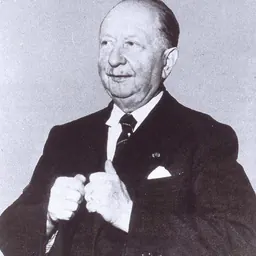
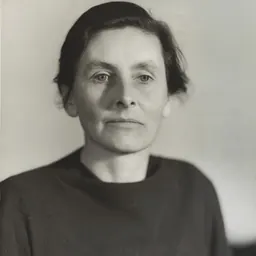
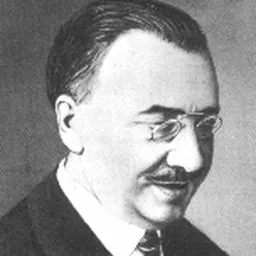
Contemporaries
People whose lives overlapped Winthrop Pickard Bell's
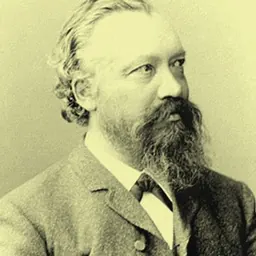

Frequently asked questions
Who was Winthrop Pickard Bell?
Canadian philosopher (1884–1965)
When was Winthrop Pickard Bell born?
Winthrop Pickard Bell was born on 12 May 1884 in Halifax.
When did Winthrop Pickard Bell die?
Winthrop Pickard Bell died on 4 April 1965.
What was Winthrop Pickard Bell's occupation?
Winthrop Pickard Bell was a historian, university teacher, writer and philosopher.
What nationality was Winthrop Pickard Bell?
Winthrop Pickard Bell was Canadian.
Sources & further reading
· Wikipedia: Winthrop Pickard Bell
· DBpedia: Winthrop Pickard Bell
Cite this page
APA: Biography.guide. (2026). Winthrop Pickard Bell. https://biography.guide/winthrop-pickard-bell/
MLA: "Winthrop Pickard Bell." Biography.guide, https://biography.guide/winthrop-pickard-bell/.
Chicago: "Winthrop Pickard Bell." Biography.guide. https://biography.guide/winthrop-pickard-bell/.
Data last updated: 2026-09-20 · Spot an error? Report a correction.
Page generated 2026-09-27 05:15 UTC