
About Wing-tsit Chan
Lived 1901 – 1994 (aged 92). Wing-tsit Chan was an American philosopher, university teacher and translator.
Wing-tsit Chan (; 18 August 1901 – 12 August 1994) was a Chinese scholar and professor best known for his studies of Chinese philosophy and his translations of Chinese philosophical texts. Chan was born in China in 1901 and went to the United States in 1924, earning a Ph.D. from Harvard University in 1929. Chan taught at Dartmouth College and Chatham University for most of his academic career. Chan's 1963 book A Source Book in Chinese Philosophy was highly influential in the English-speaking world, and was often used as a source for quotations from Chinese philosophical classics.
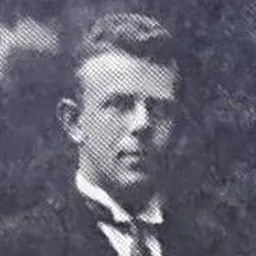
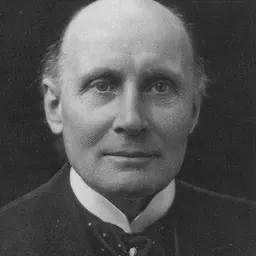
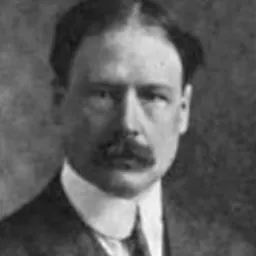
Life and career Chan Wing-tsit was born on 18 August 1901 in Kaiping, a city in China's southern Guangdong Province. In 1916 he enrolled at Canton Christian College (later Lingnan University) near Canton (modern Guangzhou). After graduating with a bachelor's degree from Lingnan, he began his graduate studies at Harvard University in 1924. There he studied with Irving Babbitt, William Ernest Hocking, and Alfred North Whitehead, and was advised by James Haughton Woods, an eminent Sanskritist and translator of the Yoga Sutra. Chan received his Ph.D. in Philosophy and Chinese Culture in 1929.
On his return to China in 1929, Chan received an appointment at Lingnan, which in 1927 had been reconstituted as Lingnan University, and served as its dean of the faculty from 1929 to 1936. In 1935 the University of Hawaiʻi at Mānoa offered him a visiting appointment. In 1937 he moved to Honolulu and taught there until 1942. He then taught at Dartmouth College from 1942 to 1966. He was Professor Emeritus of Chinese Philosophy and Culture at Dartmouth College, and from 1966 to 1982, Anna R.D. Gillespie Professor of Philosophy at Chatham University in Pittsburgh, Pennsylvania. In retirement, Chan taught part-time at Chatham and at Columbia University.
Chan was the author of A Source Book in Chinese Philosophy, one of the most influential sources in the field of Asian studies, and of hundreds of books and articles in both English and Chinese on Chinese philosophy and religion. He was a leading translator of Chinese philosophical texts into English in the 20th century. He was also the author of articles on Chinese philosophy, Classical Confucian texts, Ou-Yang Hsiu, and Wang Yang-Ming in the Macropedia of the Encyclopædia Britannica (15th edition, 1977 imprint). He expressed particular satisfaction over his chapter, The path to wisdom: Chinese philosophy and religion, in the book, Half the World: The History and Culture of China and Japan (1973), edited by Arnold J. Toynbee.
Don’t just read it —
keep it.
Full-length biographies made to live with: read them, listen on the way to work, watch them tonight.
- E-book
- Audio
- Video
Instant download · yours to keep · every purchase keeps this site free
Important facts
People in Wing-tsit Chan's life
Named in this biography and alive at the same time



Related people
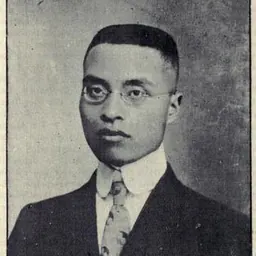
Same field, nearest in time


Contemporaries
People whose lives overlapped Wing-tsit Chan's


Frequently asked questions
Who was Wing-tsit Chan?
academic (1901-1994)
When was Wing-tsit Chan born?
Wing-tsit Chan was born on 18 August 1901 in Kaiping.
When did Wing-tsit Chan die?
Wing-tsit Chan died on 12 August 1994 in Pittsburgh.
What was Wing-tsit Chan's occupation?
Wing-tsit Chan was a philosopher, university teacher and translator.
What nationality was Wing-tsit Chan?
Wing-tsit Chan was American.
Sources & further reading
Cite this page
APA: Biography.guide. (2026). Wing-tsit Chan. https://biography.guide/wing-tsit-chan/
MLA: "Wing-tsit Chan." Biography.guide, https://biography.guide/wing-tsit-chan/.
Chicago: "Wing-tsit Chan." Biography.guide. https://biography.guide/wing-tsit-chan/.
Data last updated: 2026-09-20 · Spot an error? Report a correction.
Page generated 2026-09-27 05:32 UTC