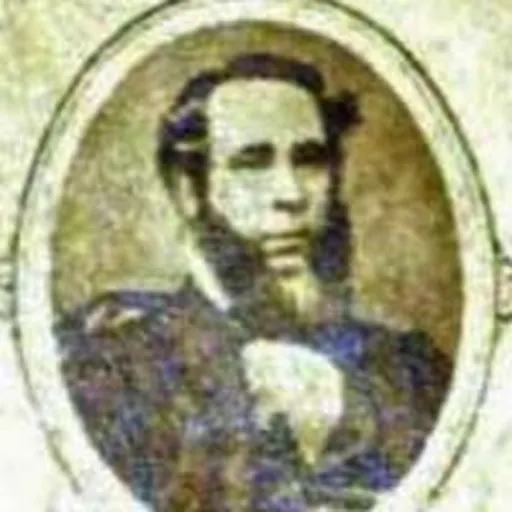
About Wilson Armistead
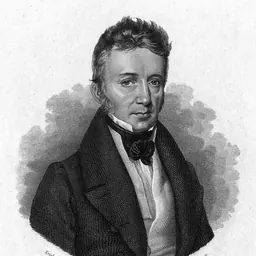
Lived 1819 – 1868 (aged 48). Wilson Armistead was a British abolitionist, merchant, author, botanist, entomologist and flax.
Wilson Armistead (30 August 181918 February 1868) was an English businessman, abolitionist and writer from Leeds. He led the Leeds Anti-Slavery Association and wrote and edited anti-slavery texts. His best known work, A Tribute for the Negro, was published in 1848 in which he describes slavery as "the most extensive and extraordinary system of crime the world ever witnessed". In 1851 he hosted Ellen and William Craft, including them on the census return as 'fugitive slaves' in an act that has been described as "guerrilla inscription".
Early life Wilson Armistead was born in Leeds on 30 August 1819 to Joseph and Hannah Armistead In 1852 he published an edition of the founder of the Quakers George Fox's journal, first published in 1664, which he annotated with numerous historical and biographical footnotes. In a letter published in the Leeds Mercury newspaper on 29 November 1859, he condemned John Brown's raid on Harpers Ferry. Like many quakers, there is also evidence that Armistead supported the temperance movement and in June 1854 he became a member of an auxiliary committee to the United Kingdom Alliance.
The Leeds Anti Slavery Association was founded in 1853 with Armistead as its president and his wife as librarian and developed from an earlier ladies' committee formed by Sarah Pugh and Harriet Lupton. In September 1853, Armistead welcomed Harriet Beecher Stowe on behalf of the Association, acknowledging the impact of her anti-slavery novel Uncle Tom's Cabin. Five years previously in 1848, Armistead had published his most influential work A Tribute for the Negro which Irene Goodyear suggests represents a rare example of Armistead's creative writing ability, comprising 150 biographical sketches and "a well-reasoned argument covering fifteen chapters". Sources for Tribute provide evidence that he was in regular correspondence with high-profile abolitionists of the day including fellow Quaker and founder of the British and Foreign Antislavery Society, Joseph Sturge, as well as Joseph Jenkins Roberts, Governor of Liberia. On the same trip, in July 1850, he also describes an encounter on a train with Thomas H. Jones, a self-emancipated fugitive slave from Wilmington, North Carolina. Soon afterwards the Crafts were forced to escape to England after the Fugitive Slave Act was passed in September 1850 and their former masters sent agents to Boston after them. when the census was taken. As head of the household, Wilson Armistead recorded his guests as “Fugitives from slavery in America, the land of their nativity” Later when Garrison visited Yorkshire in 1867, Armistead welcomed him to address the citizens of Leeds at the Town Hall, though the event was reportedly "numerically not well attended", In total 46 titles were attributed to him with more than half addressing slavery and much of the remainder Quakerism. The last years of his life, from 1865 until his death in 1868, were spent in the ironically named "Virginia Cottage" belonging to his father and named in 1828 by a previous owner, a Leeds tobacco merchant who had made their living selling slave-produced tobacco from the state of Virginia. The house is now part of Lyddon Hall on the University of Leeds campus. During this time, as treasurer of the Leeds Freedmen's Aid Association, he was occupied raising money to support the thousands of freed slaves "suddenly cast upon their own resources by the American war" and in February 1866 was able to send a remittance of £1,000 to the secretary of the Eastern Department of the American Freedmen's Aid Commission in New York, a sum that "exceeded the expectation of the most sanguine". where "he read a congratulatory address to Mr Garrison on the success of his labours."
Armistead's health was poor for a number of years that has been attributed to his work load and late hours. while his obituary in the Leeds Times attributes his death to "internal gout".
Don’t just read it —
keep it.
Full-length biographies made to live with: read them, listen on the way to work, watch them tonight.
- E-book
- Audio
- Video
Instant download · yours to keep · every purchase keeps this site free
Important facts
People in Wilson Armistead's life
Named in this biography and alive at the same time



Related people
Same field, nearest in time



Contemporaries
People whose lives overlapped Wilson Armistead's

Frequently asked questions
Who was Wilson Armistead?
English merchant, author, and abolitionist
When was Wilson Armistead born?
Wilson Armistead was born on 30 August 1819 in Leeds.
When did Wilson Armistead die?
Wilson Armistead died on 18 February 1868 in Leeds.
What was Wilson Armistead's occupation?
Wilson Armistead was an abolitionist, merchant, author, botanist, entomologist and flax.
What nationality was Wilson Armistead?
Wilson Armistead was British.
Sources & further reading
Cite this page
APA: Biography.guide. (2026). Wilson Armistead. https://biography.guide/wilson-armistead/
MLA: "Wilson Armistead." Biography.guide, https://biography.guide/wilson-armistead/.
Chicago: "Wilson Armistead." Biography.guide. https://biography.guide/wilson-armistead/.
Data last updated: 2026-09-23 · Spot an error? Report a correction.
Portrait: Wikimedia Commons · author & licence
Page generated 2026-09-27 05:07 UTC