
About Willy Liebel
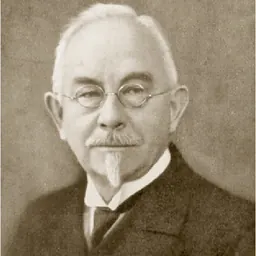
Lived 1897 – 1945 (aged 47–48). Willy Liebel was a German politician, local politician and primator.
Friedrich Wilhelm "Willy" Liebel (31 August 1897 – 20 April 1945) was a German Nazi Party politician who served as the Oberburgermeister of Nuremberg during Nazi Germany from 1933 to 1945. He was instrumental in engineering the destruction of the Grand Synagogue of Nuremberg in 1938. He was a member of the paramilitary Sturmabteilung (SA) and rose to the rank of SA-Obergruppenführer. He also sat as a deputy in the Reichstag and died during the Battle of Nuremberg, most likely by suicide.
Early years Liebel was born in Nuremberg and was educated in the local Volksschule and Gymnasium. Following an apprenticeship in his father's printing and publishing shop, he took part as a one-year volunteer with the Royal Bavarian Life Guards in the First World War from 1914 to 1918. He attained the rank of Leutnant of reserves and was awarded the Iron Cross, 2nd class, the Military Merit Order with swords, and the Wound Badge. After discharge from the military, he returned to work in the family business from 1921 as a partner, and as sole owner from 1926. Liebel was a member of several right-wing militant organizations such as Reichsflagge (Imperial Flag) and Tannenbergbund (Tannenburg League) and, in 1923, he founded the Altreichsflagge (Old Imperial Flag).
On 5 November 1925, he joined the Nazi Party (membership number 23,091). As an early Party member, he later would be awarded the Golden Party Badge. He became the organization leader in the Nuremberg Ortsgruppe (local group) and later a Kreisleiter (district leader). In 1929 he was elected as a city councilor in Nuremberg and, from 1930, he was the leader of the Nazi faction on the council. He was also made the president of the district councils (Kreistage) of Upper Franconia and Middle Franconia.
Liebel was also chairman of the Zweckverband Reichsparteitag, which organized and carried out the Nuremberg rallies that took place annually in Nuremberg from 1933 to 1938. Under his administration, the Nazi Party Rally Grounds that were largely designed by Albert Speer were constructed. Liebel also embarked upon a program of urban architectural renewal that he felt befitted one of the centers of Nazi pageantry. The aim was to restore the city center to the medieval look of centuries past by exposing half-timbering and, in particular, eliminating late nineteenth-century styling. Among the buildings he slated for demolition was the Grand Synagogue of Nuremberg. He felt that this "foreign" building with its Moorish revival architecture could not be reconciled with the "Old German" image that he strove to create. He described it as "the worst building sin of past decades … a settlement can only be reached through the complete removal of the synagogue". He succeeded in having the building completely demolished around the time of the Party rally in September 1938. This was two months before the widespread anti-Jewish pogrom known as Kristallnacht. Later in Liebel's mayoralty, the Jews of Nuremberg were rounded up and deported to the extermination camps in the east. Beginning in November 1941, the police president of Nuremberg, then-SS-Brigadeführer Benno Martin, oversaw the deportation of over 1,300 Jews.
Most of Liebel's tenure in Nuremberg was characterized by a fierce rivalry with Julius Streicher, who was the powerful Gauleiter of Franconia. Streicher was removed from his post in February 1940 for financial and moral corruption by a decision of the Supreme Party Court. His chief accusers were Liebel and Martin, both of whom had been intriguing against him for years. After Streicher's removal, a similar rivalry developed with Streicher's protégé, Karl Holz after he became Gauleiter in April 1942.
Other offices In March 1936, Liebel was elected as a deputy to the Reichstag from electoral constituency 26 (Franconia). Reelected in April 1938, he retained this seat until his death. Liebel was also a member of the Sturmabteilung (SA), in which he reached the rank of SA-Obergruppenführer in August 1941. During the Second World War, when Speer was placed in charge of the Reich Ministry of Armaments and War Production in February 1942, he appointed Liebel to be head of the Planning Department. It was Liebel who informed Speer, who had been absent from Berlin in September 1944, of Hitler's determination to implement a scorched earth strategy.
Death In April 1945, Liebel was in Nuremberg when the city came under attack by the US Army in a fierce, five-day battle. Together with the rest of the local Party leadership, Liebel was headquartered in a bunker at the police headquarters, one of the last strongholds held. Although accounts of his death differ, most indicate that he died of suicide by a gunshot to the head in the early hours of 20 April – coincidentally on Hitler's 56th birthday. This is the version recounted by Oberst , a senior Wehrmacht commander present in the police bunker. Another account alleges that he was shot by Holz, his longtime political rival, because Liebel favored surrendering the city while the more fanatical Holz argued for continued last-ditch resistance.
Don’t just read it —
keep it.
Full-length biographies made to live with: read them, listen on the way to work, watch them tonight.
- E-book
- Audio
- Video
Instant download · yours to keep · every purchase keeps this site free
Important facts
People in Willy Liebel's life
Named in this biography and alive at the same time


Related people
Same field, nearest in time





Contemporaries
People whose lives overlapped Willy Liebel's


Frequently asked questions
Who was Willy Liebel?
German politician (1897-1945)
When was Willy Liebel born?
Willy Liebel was born in 1897 in Nuremberg.
When did Willy Liebel die?
Willy Liebel died in 1945 in Nuremberg.
What was Willy Liebel's occupation?
Willy Liebel was a politician, local politician and primator.
What nationality was Willy Liebel?
Willy Liebel was German.
Sources & further reading
Cite this page
APA: Biography.guide. (2026). Willy Liebel. https://biography.guide/willy-liebel/
MLA: "Willy Liebel." Biography.guide, https://biography.guide/willy-liebel/.
Chicago: "Willy Liebel." Biography.guide. https://biography.guide/willy-liebel/.
Data last updated: 2026-09-20 · Spot an error? Report a correction.
Page generated 2026-09-27 05:00 UTC