
Willie McKnight
Canadian flying ace
About Willie McKnight
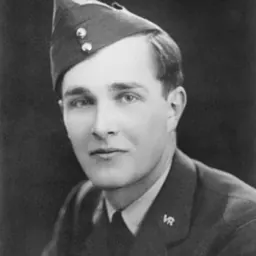
Lived 1918 – 1941 (aged 22). Willie McKnight was a Canadian airman.
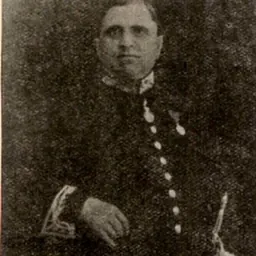
William Lidstone McKnight, (18 November 1918 – 12 January 1941) was a Canadian flying ace with the Royal Air Force (RAF) of the Second World War. He was Canada's fifth-highest scoring ace of the war, credited with shooting down nineteen aircraft.
From Alberta, McKnight joined the RAF in early 1939 and served in No. 242 Squadron during the final phase of the Battle of France, covering the evacuation of the British Expeditionary Force from Dunkirk and then the Allied retreat from Brittany, during which he claimed his first aerial victories. Afterwards he was briefly hospitalised due to exhaustion. He flew in the Battle of Britain, often as wing man to Squadron Leader Douglas Bader, claiming several more victories. Twice awarded the Distinguished Flying Cross, he was shot down and killed on 12 January 1941 during a sortie to Gravelines.
Early years William Lidstone "Willie" McKnight was born in Edmonton, Alberta, Canada on 18 November 1918. He grew up in Calgary where he attended Crescent Heights High School. Although he achieved high marks academically, he was a high-spirited student, often causing mischief. After completing his schooling, he went to medical school at the University of Alberta. In February 1939 he joined the Royal Air Force (RAF) on a short service commission.
McKnight began training in mid-April at No. 6 Flying Training School (FTS) at Little Rissington as an acting pilot officer on probation. Still prone to mischief, he was twice placed under arrest and confined to his barracks during the course of his training. Despite his misdemeanors, he duly gained his 'wings'. After transitioning to the more potent Hurricane, the squadron became operational in March 1940. By this time McKnight had been confirmed in his pilot officer rank.
Battle of France As part of the British Expeditionary Force (BEF), No. 242 Squadron began operations over France in mid-May, a detachment being based at French airfields. McKnight meanwhile had been attached to No. 607 Squadron, in France, but was there for only two days before being transferred to No. 615 Squadron at Abbeville. On 19 May, McKnight scored his first victory patrolling near Cambrai destroying a Messerschmitt Bf 109 fighter.
On 21 May McKnight was withdrawn to Britain and a few days later rejoined No. 242 Squadron, stationed at Biggin Hill. By this time, the retreating BEF and allied armies were being pushed into Dunkirk and the squadron flew patrols over the area. McKnight shot down a Bf 109 near Ostend on 28 May. Another Bf 109 was shot down by McKnight, this time to the north of Dunkirk, the next day, as well shooting down a Dornier Do 17 medium bomber about to the east of Dunkirk. A second Bf 109 claimed as destroyed was unable to be confirmed. On 31 May, McKnight shot down a pair of Messerschmitt Bf 110 heavy fighters as well as a Bf 109, all in the vicinity of Dunkirk. The next day, he destroyed two Junkers Ju 87 dive bombers; McKnight's claims for two more destroyed Ju 87s were not confirmed.
No. 242 Squadron was sent to France on 8 June to reinforce the RAF units still supporting the remnants of the BEF still there. The pace of operations was hectic, as the squadron and its personnel relocated several times as the BEF retreated towards the Atlantic coast. At times the squadron's pilots were having to service their own aircraft. McKnight destroyed two Bf 109s to the south of Champagne on 14 June. The same day, he was awarded the Distinguished Flying Cross (DFC) for which the published citation read:
No. 242 Squadron, after being involved in the cover for the evacuation of British troops from Le Havre, withdrew to the United Kingdom on 18 June. The constant combat had been telling on McKnight and, exhausted and underweight, he was admitted to hospital in early July to recuperate. He was awarded a Bar to his DFC in October. The citation, published in The London Gazette, read:
By this time the Luftwaffe was decreasing its operations over England and No. 242 Squadron started carrying out night fighter patrols from Duxford although these were unsuccessful. However, it was still involved in day fighter operations and on one of these, a sortie over the Thames Estuary and out to the North Sea on 5 November, McKnight, along with Flying Officer Leonard Haines of No. 19 Squadron, disabled a Bf 109; the pilot, Edward Scheidt of Jagdgeschwader 26 (Fighter Wing 26), bailed out over the Thames and his aircraft crashed near Birchington.
Circus offensive No. 242 Squadron returned to Coltishall in late November, followed by a further move to Martlesham Heath the following month. In early 1941, the squadron began carrying out offensive operations to German-occupied France as part of the RAF's Circus offensive. The squadron's first sortie of this type, involving two aircraft and known as a "Mosquito" raid, was made on 9 January 1941.
On 12 January, McKnight, paired with Pilot Officer M. Brown, made his first Mosquito sortie to Gravelines. They strafed German shipping and, just inland of Gravelines, German troops were spotted and these too were attacked. The pair then were intercepted by several Bf 109s. While Brown safely returned to Martlesham Heath, McKnight was never seen again and was most likely shot down, either by a Bf 109 or by anti-aircraft fire. Fellow No. 242 Squadron pilot and flying ace John Latta made his own Mosquito sortie later in the day and was also killed. His loss, and that of McKnight, which was widely reported in Calgary, had a significant impact on the squadron. McKnight is credited with having destroyed nineteen aircraft, two shared with other pilots. Claims for another three destroyed aircraft are unconfirmed. Calgary's McKnight Boulevard, near the city's airport, is named after him.
Don’t just read it —
keep it.
Full-length biographies made to live with: read them, listen on the way to work, watch them tonight.
- E-book
- Audio
- Video
Instant download · yours to keep · every purchase keeps this site free
Important facts
People in Willie McKnight's life
Named in this biography and alive at the same time





Related people
Same field, nearest in time



Contemporaries
People whose lives overlapped Willie McKnight's

Frequently asked questions
Who was Willie McKnight?
Canadian flying ace
When was Willie McKnight born?
Willie McKnight was born on 18 November 1918 in Edmonton.
When did Willie McKnight die?
Willie McKnight died on 12 January 1941 in English Channel.
What was Willie McKnight's occupation?
Willie McKnight was an airman.
What nationality was Willie McKnight?
Willie McKnight was Canadian.
Sources & further reading
Cite this page
APA: Biography.guide. (2026). Willie McKnight. https://biography.guide/willie-mcknight/
MLA: "Willie McKnight." Biography.guide, https://biography.guide/willie-mcknight/.
Chicago: "Willie McKnight." Biography.guide. https://biography.guide/willie-mcknight/.
Data last updated: 2026-09-25 · Spot an error? Report a correction.
Page generated 2026-09-27 05:13 UTC