
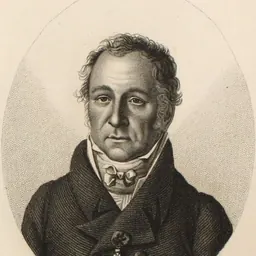
William V, Prince of Orange
Prince of Orange, General Stadtholder of the United Provinces
About William V, Prince of Orange
Lived 1748 – 1806 (aged 58). William V, Prince of Orange was a Dutch politician, art collector, aristocrat and statesperson.
William V (Willem Batavus; 8 March 1748 – 9 April 1806) was Prince of Orange and the last Stadtholder of the Dutch Republic. He went into exile to London in 1795.
Early life
William Batavus was born in The Hague on 8 March 1748, the only son of William IV, who had the year before been restored as stadtholder of the United Provinces. He was only three years old when his father died in 1751, and a long regency began. His regents were:
Dowager Princess Anne, his mother, from 1751 to her death in 1759; Dowager Princess Marie Louise, his grandmother, from 1759 to her death in 1765; Duke Louis Ernest of Brunswick-Lüneburg, from 1759 to 1766, and kept on as a privy counsellor, in accordance with the Acte van Consulentschap, until October 1784; Princess Carolina, his sister (who at the time was an adult aged 22, while he was still a minor at 17), from 1765 to William's majority in 1766.
William was made the 568th Knight of the Order of the Garter in 1752.
Stadtholder William V assumed the position of stadtholder and Captain-General of the Dutch States Army on his majority in 1766. However, he allowed the Duke of Brunswick to retain a large influence on the government with the secret Acte van Consulentschap. On 4 October 1767 in Berlin, Prince William married Princess Wilhelmina of Prussia, the daughter of Augustus William of Prussia, niece of Frederick the Great and a cousin of George III. (He himself was George III's first cousin).
Directly after his arrival in England, the Prince wrote a number of letters (known as the Kew Letters) from his new residence in Kew to the governors of the Dutch colonies, instructing them to hand over their colonies to the British as long as France continued to occupy the "mother country". Only a number complied, while those that demurred from doing so became confused and demoralised. Almost all Dutch colonies were eventually captured by the British, who in the end returned most, but not all (South Africa and Ceylon), first at the Treaty of Amiens and later with the Convention of London signed in 1814. But that was his only success, as the troops suffered from choleric diseases, and civilians at that time were unwilling to re-instate the old regime. The arrogance of the tone in his proclamation, demanding the restoration of the stadtholderate, may not have been helpful, according to Simon Schama. boxstyle_1=background-color: #fcc; boxstyle_2=background-color: #fb9; boxstyle_3=background-color: #ffc; boxstyle_4=background-color: #bfc; 1= 1. William V, Prince of Orange 2= 2. William IV, Prince of Orange 3= 3. Anne, Princess Royal and Princess of Orange 4= 4. John William Friso, Prince of Orange 5= 5. Marie Louise of Hesse-Kassel 6= 6. George II of Great Britain 7= 7. Caroline of Ansbach 8= 8. Henry Casimir II, Count of Nassau-Dietz 9= 9. Henriëtte Amalia van Anhalt-Dessau 10= 10. Charles I, Landgrave of Hesse-Kassel 11= 11. Maria Amalia of Courland 12= 12. George I of Great Britain 13= 13. Sophia Dorothea of Celle 14= 14. John Frederick, Margrave of Brandenburg-Ansbach 15= 15. Princess Eleonore Erdmuthe of Saxe-Eisenach
Appreciation During his life and afterward, William V was a controversial person, in himself, and because he was the unwilling center of a political firestorm that others had caused. Many historians and contemporaries have written short appreciations of him that were often acerbic. Phillip Charles, Count of Alvensleben, who was the Prussian envoy to the Hague from 1787 (so not someone who must be suspected to be prejudiced against William) may be taken as an example. He wrote: His great-great-granddaughter Queen Wilhelmina of the Netherlands was less kind. She simply called him a sufferd (dummy).
Legacy Orange County, North Carolina was named for William V of Orange Orange County, Indiana was named after the North Carolina county. The Orange River, the longest river in South Africa was named in honour of William V of Orange.
Don’t just read it —
keep it.
Full-length biographies made to live with: read them, listen on the way to work, watch them tonight.
- E-book
- Audio
- Video
Instant download · yours to keep · every purchase keeps this site free
Important facts
Family & relationships
People in William V, Prince of Orange's life
Named in this biography and alive at the same time



Related people
Same field, nearest in time



Contemporaries
People whose lives overlapped William V, Prince of Orange's




Frequently asked questions
Who was William V, Prince of Orange?
Prince of Orange, General Stadtholder of the United Provinces (1748-1806)
When was William V, Prince of Orange born?
William V, Prince of Orange was born on 8 March 1748 in The Hague.
When did William V, Prince of Orange die?
William V, Prince of Orange died on 9 April 1806 in Brunswick.
What was William V, Prince of Orange's occupation?
William V, Prince of Orange was a politician, art collector, aristocrat and statesperson.
What nationality was William V, Prince of Orange?
William V, Prince of Orange was Dutch.
Sources & further reading
· Wikipedia: William V, Prince of Orange
· DBpedia: William V, Prince of Orange
Cite this page
APA: Biography.guide. (2026). William V, Prince of Orange. https://biography.guide/william-v-prince-of-orange/
MLA: "William V, Prince of Orange." Biography.guide, https://biography.guide/william-v-prince-of-orange/.
Chicago: "William V, Prince of Orange." Biography.guide. https://biography.guide/william-v-prince-of-orange/.
Data last updated: 2026-09-20 · Spot an error? Report a correction.
Page generated 2026-09-27 05:20 UTC