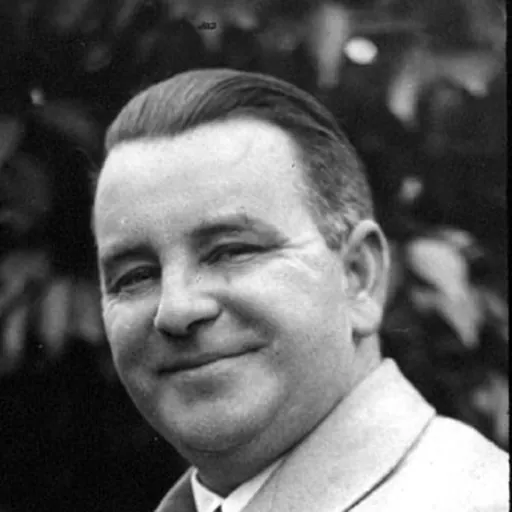
About William Trethewey
Lived 1892 – 1956 (aged 63). William Trethewey was a New Zealand sculptor.
William Thomas Trethewey (8 September 1892 – 4 May 1956) was a sculptor and monumental mason from Christchurch, New Zealand. His best known work is the Citizens' War Memorial in Cathedral Square, Christchurch, where the city's annual Anzac Day service is held.
Early life Trethewey was born in 1892 in Christchurch. His parents, Mary Wallace and the carpenter Jabez Trethewey, were from Cornwall. They lived in Linwood. He attended Christchurch East School and left school at the age of 13. He trained as a wood carver and studied under Frederick Gurnsey at the Canterbury College School of Art.
After their marriage, the couple moved to Wellington, where he attended life-modelling classes under Joseph Ellis. It is said though, that Trethewey was mostly self-educated. He obtained knowledge of anatomy by observing the different muscles while he shaved, and read about the sculpting work of Gian Lorenzo Bernini, Michelangelo and Auguste Rodin. He submitted the sculpture to the annual Canterbury Society of Arts exhibition in 1919 and the piece aroused great interest. The society purchased the sculpture, but lost it. It was a memorial for the 154 former Elmwood pupils who had served in the war, and it was unveiled by the Minister of Education, James Parr, on 26 February 1921.
Most war memorials were imported mass-produced carvings. Trethewey received only one more commission for a war memorial in those years, from the community in Kaiapoi. The resulting work was a digger on a base which had been prepared by his then business partner Daniel Berry. At the time, the sculpture was judged to personify the Anzac spirit, and the mayor held an enthusiastic speech at the unveiling on 26 April 1922. Trethewey was paid £800 for this commission. Trethewey won a competition and was chosen as the sculptor; this was his biggest commission in his career so far. A 12-ton block of Carrara marble was imported for this work. The Cook Statue is registered as a Category II heritage item by Heritage New Zealand.
Citizens' War Memorial
George Gould (1865–1941) was a successful businessman, farmer and stock breeder. He was a director of The Press from 1903 until his death with one brief interruption. He chaired the board through the years of the Christchurch newspaper war in 1934–1935. His company, Pyne Gould Corporation Limited, is these days listed on the New Zealand Stock Market.
After the war, many ideas for a war memorial were put forward. Gould proposed a column opposite the ChristChurch Cathedral and by 1920, this was one of the three dominant proposals. Two of those proposals, the other the Bridge of Remembrance, were eventually adopted, with Gould's idea receiving the support of the Canterbury Anglican elite. While the Bridge of Remembrance was unveiled in 1924, the Christchurch City Council opposed the Cathedral Square proposal and stopped it from going ahead. The argument was that the cathedral would dwarf the memorial, and that the bustling nature of the Square was an inappropriate setting for a place of reflection. The design was accepted in June 1933, after which Trethewey refined it before carving the figures in clay, boxing them up, and forwarding them for casting to Arthur Bryan Burton's Thames Ditton Foundry in Surrey. Trethewey travelled to London and supervised the casting of the bronze figures. The figures, representing Youth, Justice, Peace, Valour and Sacrifice, are based on friends and family of Tretheway; According to MacLean and Phillips in The sorrow and the pride: New Zealand war memorials, it is possible to make 'a good case...for it being the finest public monument in the country'. The memorial is registered as a Category I heritage item with the New Zealand Historic Places Trust, and it is the site of the annual Anzac Day service in Christchurch.
Public taste moved away from monumental masonry, and demand for Trethewey's skills waned. A bas-relief for Nelson's cathedral steps was a late commission, but much of Trethewey's energy went into the making of clocks. After World War II, there was no demand for heroic stone memorials. Trethewey passed his company on to his children and grandchildren, His wife died in 1975. The family grave holds William and Ivy Trethewey, and his parents, Jabez (1851–1935) and Mary (1855–1944).
Don’t just read it —
keep it.
Full-length biographies made to live with: read them, listen on the way to work, watch them tonight.
- E-book
- Audio
- Video
Instant download · yours to keep · every purchase keeps this site free
Important facts
People in William Trethewey's life
Named in this biography and alive at the same time




Related people
Same field, nearest in time



Contemporaries
People whose lives overlapped William Trethewey's


Frequently asked questions
Who was William Trethewey?
New Zealand sculptor (1892-1956)
When was William Trethewey born?
William Trethewey was born on 8 September 1892 in Christchurch.
When did William Trethewey die?
William Trethewey died on 4 May 1956 in Christchurch.
What was William Trethewey's occupation?
William Trethewey was a sculptor.
What nationality was William Trethewey?
William Trethewey was New Zealand.
Sources & further reading
· Wikipedia: William Trethewey
Cite this page
APA: Biography.guide. (2026). William Trethewey. https://biography.guide/william-trethewey/
MLA: "William Trethewey." Biography.guide, https://biography.guide/william-trethewey/.
Chicago: "William Trethewey." Biography.guide. https://biography.guide/william-trethewey/.
Data last updated: 2026-09-23 · Spot an error? Report a correction.
Portrait: Wikimedia Commons · author & licence
Page generated 2026-09-27 05:05 UTC