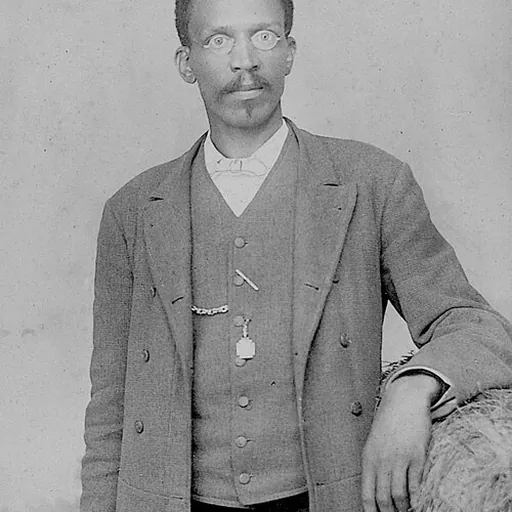
William Thornton Montgomery
American freedman, businessman
About William Thornton Montgomery
Lived 1843 – 1909 (aged 65–66). William Thornton Montgomery was an American businessperson, farmer and carpenter.
alt=Black and white photo of a Civil War ironclad ship, the USS Carondelet, in the water. The USS Carondelet was a battleship of the United States Navy during the Civil War. It was built in 1861 and was the first battleship to use steam engines during the Civil War. Montgomery served as a seaman on the USS Carondelet between December 1863 and March 1864.
William Thornton Montgomery (February 1843 – July 3, 1909) was an American freedman, businessman, farmer, and community leader, best known for his contributions to agriculture and his advocacy for African American empowerment. The Montgomery family, including W. T. Montgomery and Isaiah Montgomery, would later become prominent figures in the post-emancipation era, advocating for the rights and advancement of African Americans.
Born into slavery on Joseph Davis' Hurricane plantation in Warren County, Mississippi, in February 1843, Montgomery was the eldest son of Benjamin Thornton Montgomery and Mary Montgomery. He grew up alongside his younger brother, Isaiah Montgomery, who later founded Mound Bayou, Mississippi, an all-black community.
Early life and education William Thornton Montgomery was born into slavery on February 1843, on Joseph Davis' Hurricane plantation in Warren County, Mississippi, to parents Mary Montgomery and Benjamin Thornton Montgomery. He was the eldest son, grew up alongside his younger brother, Isaiah Montgomery. on Hurricane Plantation at Davis Bend, he was enslaved by Joseph Emory Davis, the brother of Confederate president, Jefferson Davis. Davis Bend was not a typical Southern plantation; it operated as a unique experiment in utopian living for enslaved people, influenced by the ideas of early utopian socialist philosopher Robert Owen. Davis ran the plantation with a vision of creating a community where enslaved individuals could live and work together harmoniously.
Although the Montgomery family experienced comparatively better living conditions at Davis Bend than many enslaved people elsewhere, they remain enslaved and continued to seek their freedom.
The experience of growing up at Davis Bend shaped William Thornton Montgomery's worldview and instilled in him a desire to challenge the status quo. It was here that he first encountered the principles of community cooperation and self-sufficiency, ideals that would later influence his entrepreneurial pursuits and advocacy for African American empowerment.
Civil war and post-emancipation era After the American Civil War began in 1861, Joseph Davis fled at the first sign of the Union Navy along his section of the Mississippi River. Joseph Davis' slave utopia failed – all Davis Bend residents embraced freedom and many men enlisted in the US Army and Navy. Both Montgomery brothers joined the US Navy, William serving aboard the river ironclad USS Carondelet, and Isaiah as the personal attendant of Admiral David Dixon Porter. Davis Bend became a refugee camp for formerly enslaved people seeking the protection of the Union Navy stationed nearby. As the former home of Confederate President Jefferson Davis, the United States took pleasure in turning Davis Bend into a place where the Freedmen's Bureau experimented with ways of easing formerly enslaved people into freedom and the market economy.
In February of 1865, 22-year-old William Thornton Montgomery returned to Davis Bend, reopened his father's store, and became head of a company of African American cotton farmers protected by soldiers of the United States Colored Troops. The rest of the family soon joined him, and Benjamin once again became the leader of the Davis Bend community.
On November 19, 1866, Montgomery's father purchased both Davis Bend plantations (Hurricane and Brierfield) for $300,000 ($6.04 million in 2024), laying the groundwork for their entrepreneurial endeavors.
The following years saw the family reach unprecedented highs but it ended in hard times. Their store, Montgomery & Sons, flourished and expanded. Benjamin petitioned the government for a post office to serve Davis Bend, and on May 6, 1867, William Thornton Montgomery became its postmaster, and perhaps the first African American postmaster in the South. Soon after, William was named constable for the Justice of the Peace, and the latter post was soon awarded to his father. Both of these appointments were likely firsts among African Americans in the South.
The Montgomery & Sons Association The Montgomery and Sons Association was a community and business venture established by Benjamin Thornton Montgomery, William Thornton Montgomery's father, following the end of the Civil War and emancipation of enslaved individuals. Benjamin Montgomery, who had been enslaved on Joseph Davis' plantation, was highly educated and a mechanical and business genius. He purchased the plantation from Joseph Davis after the war and shared Davis' utopian philosophy.
"The Association" aimed to create a community of free African American sharecroppers in Mississippi. They envisioned a self-sufficient and prosperous community where freedmen could live and work independently. The association operated as a collective enterprise, with members pooling resources and labor to cultivate land and engage in various business ventures. Plantation owner Montgomery would lease land on good terms to members of the Association. Davis Bend's courts were reestablished, schools were built, and workers pooled their efforts for community projects like levee maintenance.
At its peak, the Montgomery and Sons Association was among the wealthiest merchant-planters in the South. The community flourished for a time, with improved living conditions, educational opportunities, and economic success for its members. However, the association faced challenges such as local natural disasters, the collapse of the cotton industry, and legal disputes over land ownership.
After the war, the cotton industry and the Southern economy in general went into steep decline. The buying price of $300k was good for 1867, but within years the land was worth a fraction of that price. The debt was an impossible burden to overcome. A flood broke through the plantation's levees and permanently rerouted the Mississippi River, turning Davis Bend into Davis Island. Prices for cotton plummeted in spite of uncooperative weather and insects causing decreasing yields.
Ultimately, the demise of the Montgomery and Sons Association led Montgomery to seek opportunities elsewhere, eventually leading him to Dakota Territory.
Disheartened by the setbacks encountered within the Association, Montgomery resolved to explore new horizons. With a steadfast resolve reminiscent of his forebears' ambitions, he embarked on a fresh chapter, as articulated in a succinct passage from his autobiography: "seeking to commence anew, at the age of forty, the aspirations of youth." Opting for a departure from past failures, he shifted his focus away from the familiar landscape. Following a tenure as Warren County treasurer, serving as a crucial stop on the railroad route.
Enjoying not only financial prosperity but also harmonious race relations in his new locale, Montgomery employed the services of Scandinavian settlers to oversee his household and farm operations.
While endeavoring to persuade his kin to join him in the Dakota Territory, Montgomery encountered resistance from those who doubted the realization of their dreams amidst the vast plains. Despite his attempts, the allure of the southern landscape remained strong for his brother Isaiah, who shared his restlessness but remained convinced of the impracticality of their aspirations in the Dakotas.
Later life and death By the turn of the century, Montgomery's investments in wheat futures and land in Manitoba had gone bad. In the summer of 1900, he lost his land in Richland County as well. He decided to become a citizen of Mound Bayou. William became a director of the Bank of Mound Bayou and co-founder of the Mound Bayou Loan and Investment Company.
He died on July 3, 1909, aged 66 in Mound Bayou.
Don’t just read it —
keep it.
Full-length biographies made to live with: read them, listen on the way to work, watch them tonight.
- E-book
- Audio
- Video
Instant download · yours to keep · every purchase keeps this site free
Important facts
People in William Thornton Montgomery's life
Named in this biography and alive at the same time


Related people
Same field, nearest in time
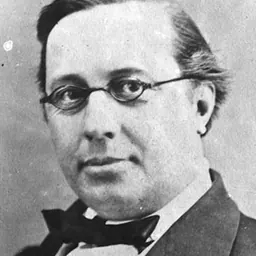



Contemporaries
People whose lives overlapped William Thornton Montgomery's


Frequently asked questions
Who was William Thornton Montgomery?
American freedman, businessman (1843–1909)
When was William Thornton Montgomery born?
William Thornton Montgomery was born in 1843 in Warren County.
When did William Thornton Montgomery die?
William Thornton Montgomery died on 3 July 1909.
What was William Thornton Montgomery's occupation?
William Thornton Montgomery was a businessperson, farmer and carpenter.
What nationality was William Thornton Montgomery?
William Thornton Montgomery was American.
Sources & further reading
· Wikipedia: William Thornton Montgomery
· DBpedia: William Thornton Montgomery
Cite this page
APA: Biography.guide. (2026). William Thornton Montgomery. https://biography.guide/william-thornton-montgomery/
MLA: "William Thornton Montgomery." Biography.guide, https://biography.guide/william-thornton-montgomery/.
Chicago: "William Thornton Montgomery." Biography.guide. https://biography.guide/william-thornton-montgomery/.
Data last updated: 2026-09-21 · Spot an error? Report a correction.
Portrait: Wikimedia Commons · author & licence
Page generated 2026-09-27 05:00 UTC