
About William T. Sanders
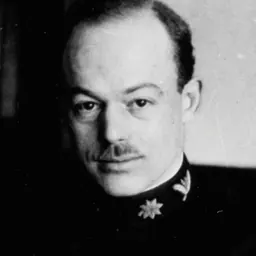
Lived 1926 – 2008 (aged 81–82). William T. Sanders was an American anthropologist and university teacher.
William Timothy Sanders (1926–2008) was an American anthropologist who specialized in the archaeology of Mesoamerica.
Early life and education Sanders was born into a working-class family in Patchogue, New York. His interest in Mesoamerica was sparked by reading William H. Prescott's History of the Conquest of Mexico. During his high school years, he struck up a friendship with classmate and fellow future anthropologist Harold C. Conklin.
Career Sanders completed his doctoral dissertation, Tierra y Agua: a Study of Ecological Factors in the Development and Personality of Mesoamerican Civilizations after taking up a post as an assistant professor at the University of Mississippi in 1956,
In 1979, The Basin of Mexico: Ecological Processes in the Evolution of a Civilization, a regional analysis synthesising multiple survey results spanning 3000 years which was co-authored by Sanders, was published: due to its bright green cover and influence, it has been nicknamed "The Green Bible". During the 1980s and 1990s he co-directed survey work at the Classic Maya site of Copán in Honduras. In 1985, he was elected to the National Academy of Sciences. Outside of the US, he also served as a visiting professor at the Instituto Nacional de Antropología e Historia, the National Autonomous University of Mexico and the National School of Anthropology and History in Mexico.
Sanders' approach was influenced by cultural evolutionism, and laid particular stress on cultural ecology, emphasising the relationship between people and their surroundings, and seeking similarities in different cultures in their response to specific environmental conditions. As such, he saw the study of settlement patters in a society as key, and bound up the study of ecological and demographic developments.
During his studies at Harvard, he developed the concept of the "central Mexican symbiotic region", referring to the network of symbiotic and mutually beneficial social and economic relationships that existed across a diversity of ecological zones in central Mexico prior to the Spanish conquest of the Aztec Empire. He argued that this area saw earlier and more acute urban development and state formation than other areas of Mexico, which he believed was the result of its physical geography: a semiarid climate which facilitated land clearance, variations in altitude meaning that it contained conditions suitable for growing maize, cotton and agave, and unpredictable levels of rainfall which spurred the development of irrigation and intensive agriculture. This in turn led to high population densities which could support more sophisticated agricultural techniques
Death Sanders died on July 2, 2008, in State College, Pennsylvania, following a fall.
Don’t just read it —
keep it.
Full-length biographies made to live with: read them, listen on the way to work, watch them tonight.
- E-book
- Audio
- Video
Instant download · yours to keep · every purchase keeps this site free
Important facts
Related people
Same field, nearest in time




Contemporaries
People whose lives overlapped William T. Sanders's


Frequently asked questions
Who was William T. Sanders?
American anthropologist (1926–2008)
When was William T. Sanders born?
William T. Sanders was born in 1926 in Patchogue.
When did William T. Sanders die?
William T. Sanders died in 2008 in State College.
What was William T. Sanders's occupation?
William T. Sanders was an anthropologist and university teacher.
What nationality was William T. Sanders?
William T. Sanders was American.
Sources & further reading
· Wikipedia: William T. Sanders
Cite this page
APA: Biography.guide. (2026). William T. Sanders. https://biography.guide/william-t-sanders/
MLA: "William T. Sanders." Biography.guide, https://biography.guide/william-t-sanders/.
Chicago: "William T. Sanders." Biography.guide. https://biography.guide/william-t-sanders/.
Data last updated: 2026-09-20 · Spot an error? Report a correction.
Page generated 2026-09-27 05:06 UTC