
About William Sturges Bourne
Lived 1769 – 1845 (aged 75). William Sturges Bourne was a British politician.
William Sturges-Bourne PC (7 November 1769 – 1 February 1845), known as William Sturges until 1803, was a British Tory politician. He was briefly Home Secretary under George Canning in 1827.
Background and education Born William Sturges, he was the only son of the Reverend John Sturges and his wife Judith (née Bourne). He was educated at Winchester College and Christ Church, Oxford, and was called to the bar at Lincoln's Inn in 1793. In 1803, Sturges inherited property from his uncle Francis Bourne, requiring him to add the surname Bourne to his own.
Political career At Oxford he became good friends with George Canning, who helped him become elected to parliament for Hastings in 1798. In Pitt's second government, Sturges Bourne became Secretary to the Treasury, and, after a period out of government during the Ministry of All the Talents, he became a Lord of the Treasury from 1807 to 1809, retiring along with his ally Canning from the government. Sturges Bourne left parliament after the 1812 general election, but, due again to Canning's influence, became a Privy Councillor in 1814, and returned to parliament for Bandon Bridge in 1815. In 1814 he became a commissioner on the Board of Control, remaining in this office until 1822. He also served from 1818 to 1819 as Chairman of a Committee to reform the Poor Laws, which was successfully carried out as the Sturges Bourne Acts.
Although he retired from government in 1822 due to a large inheritance, he returned to government as Home Secretary when Canning became prime minister in April 1827. He only served briefly in this post, becoming instead First Commissioner of Woods and Forests when the Whig grandee Lord Lansdowne joined the ministry as Home Secretary a few months later. He was offered the Chancellorship of the Exchequer several times by Canning's successor Lord Goderich, but turned it down, leading Colonial Secretary William Huskisson to accuse him of sabotaging the ministry. Sturges Bourne retired from government with Wellington's accession as premier in February 1828. Sturges Bourne supported Catholic emancipation, but opposed the Whig Reform Bill, and retired from parliament in 1831. In his later career, he served as a member of the Royal Commission on the Poor Laws.
He was elected a Fellow of the Royal Society in April 1826
Family Sturges Bourne married Anne, third daughter of Oldfield Bowles, in 1808. He died at Testwood House, New Forest, Hampshire, in February 1845, aged 75.
Don’t just read it —
keep it.
Full-length biographies made to live with: read them, listen on the way to work, watch them tonight.
- E-book
- Audio
- Video
Instant download · yours to keep · every purchase keeps this site free
Important facts
People in William Sturges Bourne's life
Named in this biography and alive at the same time
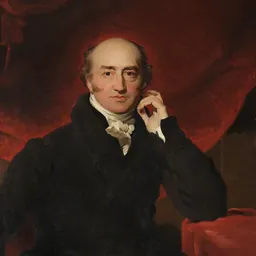

Related people
Same field, nearest in time

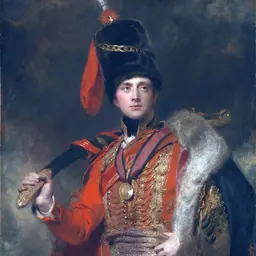


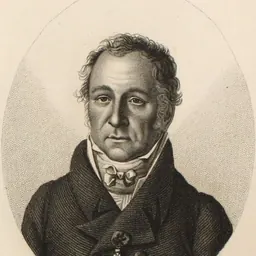
Contemporaries
People whose lives overlapped William Sturges Bourne's





Frequently asked questions
Who was William Sturges Bourne?
British politician
When was William Sturges Bourne born?
William Sturges Bourne was born on 7 November 1769.
When did William Sturges Bourne die?
William Sturges Bourne died on 1 February 1845 in New Forest.
What was William Sturges Bourne's occupation?
William Sturges Bourne was a politician.
What nationality was William Sturges Bourne?
William Sturges Bourne was British.
Sources & further reading
· Wikipedia: William Sturges Bourne
· DBpedia: William Sturges Bourne
Cite this page
APA: Biography.guide. (2026). William Sturges Bourne. https://biography.guide/william-sturges-bourne/
MLA: "William Sturges Bourne." Biography.guide, https://biography.guide/william-sturges-bourne/.
Chicago: "William Sturges Bourne." Biography.guide. https://biography.guide/william-sturges-bourne/.
Data last updated: 2026-09-20 · Spot an error? Report a correction.
Page generated 2026-09-27 05:02 UTC