
About William Stewart Halsted
Lived 1852 – 1922 (aged 69). William Stewart Halsted was an American surgeon and physician.
William Stewart Halsted, M.D. (September 23, 1852 – September 7, 1922) was an American surgeon who emphasized strict aseptic technique during surgical procedures, was an early champion of newly discovered anesthetics, and introduced several new operations, including the radical mastectomy for breast cancer. Along with William Osler (Professor of Medicine), Howard Atwood Kelly (Professor of Gynecology) and William H. Welch (Professor of Pathology), Halsted was one of the "Big Four" founding professors at the Johns Hopkins Hospital. His operating room at Johns Hopkins Hospital is in Ward G, and was described as a small room where medical discoveries and miracles took place. According to an intern who once worked in Halsted's operating room, Halsted had unique techniques, operated on the patients with great confidence and often had perfect results which astonished the interns.
Throughout his professional life, he was addicted to cocaine and later also to morphine, which were not illegal during his time. As revealed by Osler's diary, Halsted developed a high level of drug tolerance for morphine. He was "never able to reduce the amount to less than three grains daily" (approximately 200 mg). Halsted's addictions resulted from experiments on the use of cocaine as an anesthetic agent that he performed on himself.
Early life
William S. Halsted was born on September 23, 1852, in New York City. His mother was Mary Louisa Haines and his father William Mills Halsted, Jr. He was the oldest of four children. His father was a businessman with Halsted, Haines and Company which was an organization that supplied dry goods. William Halsted, Jr. was very involved in the community. One of their homes was on Fifth Avenue in New York City and the other was an estate in Westchester County, New York. He didn't like his new school and even ran away at one point. He was later enrolled at Phillips Academy in Andover, Massachusetts, where he graduated in 1869. Halsted entered Yale College after a year of studying at home. Once he entered medical school, he left his early academic difficulties behind him.
Medical career After graduation, Halsted joined the New York Hospital as house physician in April 1878, where he introduced the hospital chart which tracks the patient's temperature, pulse and respiration. It was at New York Hospital that Halsted met the pathologist William H. Welch, who would become his closest friend. He left New York Hospital in October 1878. His mother completely recovered. Halsted would also inject himself with the drug to test it before using it on his patients during surgeries. However, his addiction to cocaine ended his medical career in New York City. Compared to his teaching in New York, Halsted's teaching was declining. He would pay attention to specific students and ignore the rest. However, he would also give certain residents that worked under him unprecedented learning experiences because of the amount of responsibility he awarded them. His methods of training surgeons spread, first to the rest of Baltimore and then throughout the United States. This belief led him to perform the first radical mastectomy for breast cancer in the U.S. at Roosevelt Hospital in New York in 1882, an operation first performed in France a century earlier by Bernard Peyrilhe (1735-1804). Halsted had observed a German surgeon perform increasingly aggressive surgeries to remove cancerous tumors from the breast, but the patients still relapsed even with this more aggressive surgery. The main reason for the introduction of rubber gloves was to protect the hands of scrub nurse Caroline Hampton. She suffered from contact dermatitis and painful eczema as a result of the antiseptics used, so Halsted arranged for Goodyear Rubber Company to make "bespoke" rubber gloves for her. Caroline Hampton would later give up her job as a nurse to become Halsted's wife. Although the use of gloves wasn't originally championed for sanitary reasons, such gloves drastically increased the cleanliness of operations, as was later demonstrated by Joseph Colt Bloodgood. intestinal and arterial aneurysm surgery.
H.L. Mencken considered Halsted the greatest physician of the whole Johns Hopkins group, and Mencken's praise of his achievements when he reviewed Dr. MacCallum's 1930 biography is a memorable tribute. "His contributions to surgery were numerous and various. He introduced the use of local anesthetics, he was the first to put on rubber gloves, and he devised many new and ingenious operations. But his chief service was rather more general, and hard to describe. It was to bring in a new and better way of regarding the patient. Antisepsis and asepsis, coming in when he was young, had turned the attention of surgeons to external and often extraneous things. Fighting germs, they tended to forget the concrete sick man on the table. Dr. Halsted changed all that. He showed that manhandled tissues, though they could not yell, could yet suffer and die. He studied the natural recuperative powers of the body, and showed how they could be made to help the patient. He stood against reckless slashing, and taught that a surgeon must walk very warily. Dr. William Mayo, one of the cofounders of the Mayo Clinic, once commented that Dr. Halsted took so long to perform procedures that the patients usually healed before he had a chance to close the incision. Though, like most men of his craft, he had no religion, he yet revived and reinforced the ancient saying of Ambroise Paré: 'God cured him; I assisted.' Above all, he was a superb teacher, though he never formally taught. The young men who went out from his operating room were magnificently trained, and are among the great ornaments of American surgery today."
Personal life In 1890, Halsted married Caroline Hampton, the niece of Wade Hampton III, a former general in the Confederate States Army and also a former Governor of South Carolina. They purchased the High Hampton mountain retreat in North Carolina from Caroline's three aunts. There, Halsted raised dahlias and pursued his hobby of astronomy; he and his wife had no children. He died on September 7, 1922, 16 days short of his 70th birthday, from bronchopneumonia as a complication of surgery for gallstones and cholangitis.
Eponyms Halsted's law: transplanted tissue will grow only if there is a lack of that tissue in the host Halsted's operation I: operation for inguinal hernia Halsted's operation II: radical mastectomy for breast cancer Halsted's sign: a medical sign for breast cancer Halsted's suture: a mattress suture for wounds that produced less scarring Halsted mosquito forceps: a type of hemostat Halsted ligament (Costoclavicular ligament): it is formed from dense condensation of clavipectoral fascia
Works
(First mention of rubber gloves in the operating room)
Don’t just read it —
keep it.
Full-length biographies made to live with: read them, listen on the way to work, watch them tonight.
- E-book
- Audio
- Video
Instant download · yours to keep · every purchase keeps this site free
Important facts
People in William Stewart Halsted's life
Named in this biography and alive at the same time



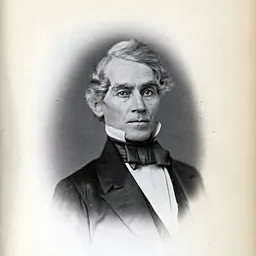

Related people
Same field, nearest in time
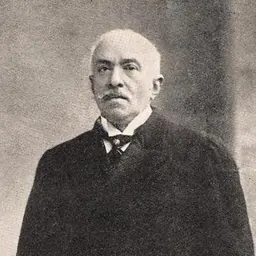

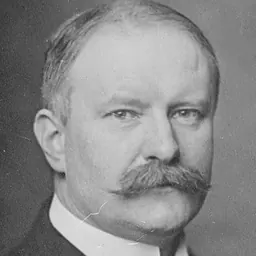
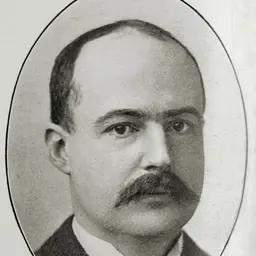
Contemporaries
People whose lives overlapped William Stewart Halsted's




Frequently asked questions
Who was William Stewart Halsted?
American surgeon (1852-1922)
When was William Stewart Halsted born?
William Stewart Halsted was born on 23 September 1852 in New York City.
When did William Stewart Halsted die?
William Stewart Halsted died on 7 September 1922 in Baltimore.
What was William Stewart Halsted's occupation?
William Stewart Halsted was a surgeon and physician.
What nationality was William Stewart Halsted?
William Stewart Halsted was American.
Sources & further reading
· Wikipedia: William Stewart Halsted
· DBpedia: William Stewart Halsted
Cite this page
APA: Biography.guide. (2026). William Stewart Halsted. https://biography.guide/william-stewart-halsted/
MLA: "William Stewart Halsted." Biography.guide, https://biography.guide/william-stewart-halsted/.
Chicago: "William Stewart Halsted." Biography.guide. https://biography.guide/william-stewart-halsted/.
Data last updated: 2026-09-20 · Spot an error? Report a correction.
Page generated 2026-09-27 05:29 UTC