
William Sooy Smith
Union United States Army general and civil engineer
About William Sooy Smith
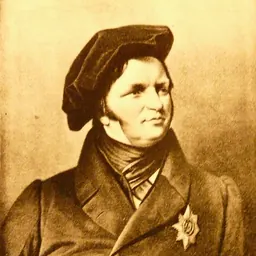
Lived 1830 – 1916 (aged 85). William Sooy Smith was an American military officer, civil engineer and engineer.
William Sooy Smith (July 22, 1830 – March 4, 1916) was a West Point graduate and career civil engineer who became a brigadier general in the Union Army during the American Civil War.
In civilian life, he was a renowned engineer involved in bridge construction that included the building of the first large all steel bridge in the world.
Early life and career Smith was born in Tarlton, Ohio, and graduated from Ohio University in 1849 with an engineering degree. He furthered this degree at West Point as soon as he left the university, graduating sixth in his class from the U.S. Military Academy in 1853. Smith resigned from the Army on June 19, 1854 to accept a position with the Illinois Central Railroad.
Smith established the engineering company Parkinson & Smith in 1857, and was involved in the first surveys for a bridge between the United States and Canada across the Niagara River near Niagara Falls.
Civil War
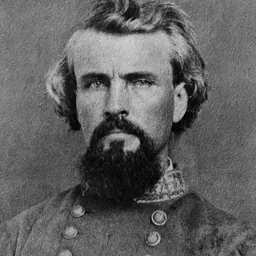
In 1861 at the outbreak of the Civil War, Smith joined the 13th Ohio Infantry, and by June he was commissioned as its colonel. After serving in western Virginia, he was appointed brigadier general (volunteers) on April 16, 1862 to rank from April 15, 1862. Smith participated in the Vicksburg campaign, commanding the XVI Corps' first division. He did not start his advance until February 11, ten days later than planned. Smith's force did not join up with Sherman at Meridian as forces under Maj. Gen. Nathan Bedford Forrest defeated him on February 22, 1864 in the Battle of Okolona. Smith was forced to fight an eleven-mile running battle before retreating across the state line into Tennessee on February 26. Consequently, he was criticized for putting Sherman's Meridian Expedition in danger.
Afterwards, he served as chief of cavalry in both the Department of Tennessee and the Military Division of the Mississippi, under Ulysses S. Grant and William T. Sherman. He resigned from the Army in July 1864 due to rheumatoid arthritis.
Postbellum career
After leaving the army Smith returned to civil engineering. In 1867, he sank the first pneumatic caisson of the Waugoshanee lighthouse in the Straits of Mackinaw. At Glasgow, Missouri, from 1878 to 1879, Smith worked on the Glasgow Railroad Bridge. This was the first all-steel bridge, which crossed the Missouri River.
In 1876 Smith was awarded the American Centennial Exposition prize, and continued to work in engineering until retirement to Medford, Oregon towards the end of his life. After his death in 1916, he was buried in Forest Home Cemetery in Forest Park, Illinois.
Don’t just read it —
keep it.
Full-length biographies made to live with: read them, listen on the way to work, watch them tonight.
- E-book
- Audio
- Video
Instant download · yours to keep · every purchase keeps this site free
Important facts
People in William Sooy Smith's life
Named in this biography and alive at the same time
Related people
Same field, nearest in time



Contemporaries
People whose lives overlapped William Sooy Smith's





Frequently asked questions
Who was William Sooy Smith?
Union United States Army general and civil engineer
When was William Sooy Smith born?
William Sooy Smith was born on 22 July 1830 in Tarlton.
When did William Sooy Smith die?
William Sooy Smith died on 4 March 1916 in Medford.
What was William Sooy Smith's occupation?
William Sooy Smith was a military officer, civil engineer and engineer.
What nationality was William Sooy Smith?
William Sooy Smith was American.
Sources & further reading
· Wikipedia: William Sooy Smith
Cite this page
APA: Biography.guide. (2026). William Sooy Smith. https://biography.guide/william-sooy-smith/
MLA: "William Sooy Smith." Biography.guide, https://biography.guide/william-sooy-smith/.
Chicago: "William Sooy Smith." Biography.guide. https://biography.guide/william-sooy-smith/.
Data last updated: 2026-09-20 · Spot an error? Report a correction.
Page generated 2026-09-27 05:25 UTC