About William Smith
Lived 1790 – 1847 (aged 56–57). William Smith was a British sailor, explorer and sealer.
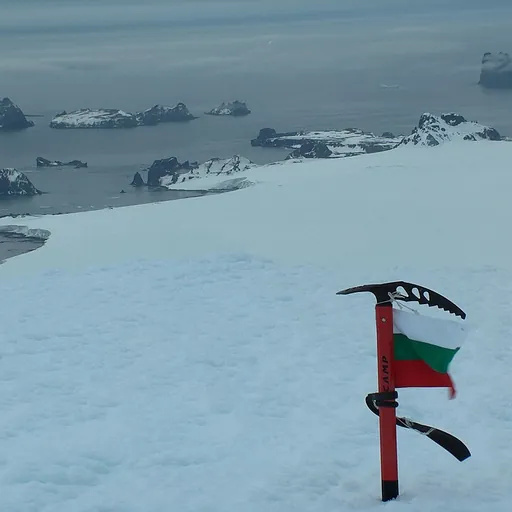
Williams Point on Livingston Island, the land discovered by William Smith on 19 February 1819.
William Smith (c. 1790–1847) was an English captain born in Blyth, Northumberland, who discovered the South Shetland Islands, an archipelago off the Graham Land in Antarctica. His discovery was the first ever made south of 60° south latitude, in the present Antarctic Treaty area.
Early life and Apprenticeship Earsdon Parish Records held at Woodhorn Museum show that William, eldest son of William and Mary Smith, was baptised at St. Cuthbert's Church on 10 October 1790. Smith had a younger brother, Thomas, and sister, Mary, and his father was a Joiner of Seaton Sluice.
In the eighteenth century, boys would start their seven-year apprenticeship at sea at the age of fourteen. According to John Miers' account of the discovery, William Smith had undertaken his apprenticeship ‘in the Greenland whale-fishery’. (At that time, there was a substantial British whaling industry, including to Greenland.) During his life he worked with Richard Siddins, described by historian Ida Lee as "...perhaps the greatest traveler of them all, who gave so much information concerning early Fiji, and delighted to hold mission services on board his ship in Sydney Harbour."
By 1811 Smith became part owner of the ship , which was then under construction in Blyth, Northumberland. On 19 February 1819 he spotted the new land at 62° south latitude and 60° west longitude, but did not land on it (based on those coordinates, it was most likely Livingston Island.) The naval authorities did not believe his discovery, but on a subsequent trip on 16 October he landed on the largest of the islands. He named the island King George Island and the archipelago South Shetland Islands in honour of the Shetland Islands which are to the north of Scotland. At the beginning of the following year, 1820, the Royal Navy chartered William and dispatched with her with Lieutenant Edward Bransfield on board to survey the newly discovered islands, discovering also the Antarctic Peninsula in the process.
Honours Smith Island and Cape Smith in the South Shetland Islands, Antarctica are named after William Smith.
Don’t just read it —
keep it.
Full-length biographies made to live with: read them, listen on the way to work, watch them tonight.
- E-book
- Audio
- Video
Instant download · yours to keep · every purchase keeps this site free
Important facts
People in William Smith's life
Named in this biography and alive at the same time


Related people
Same field, nearest in time


Contemporaries
People whose lives overlapped William Smith's




Frequently asked questions
Who was William Smith?
English captain who discovered the South Shetland Islands
When was William Smith born?
William Smith was born on 11 October 1790 in Seaton Sluice.
When did William Smith die?
William Smith died in 1847 in Northumberland.
What was William Smith's occupation?
William Smith was a sailor, explorer and sealer.
What nationality was William Smith?
William Smith was British.
Sources & further reading
· DBpedia: William Smith (mariner)
Cite this page
APA: Biography.guide. (2026). William Smith. https://biography.guide/william-smith-sailor/
MLA: "William Smith." Biography.guide, https://biography.guide/william-smith-sailor/.
Chicago: "William Smith." Biography.guide. https://biography.guide/william-smith-sailor/.
Data last updated: 2026-09-22 · Spot an error? Report a correction.
Portrait: Wikimedia Commons · author & licence
Page generated 2026-09-27 05:02 UTC