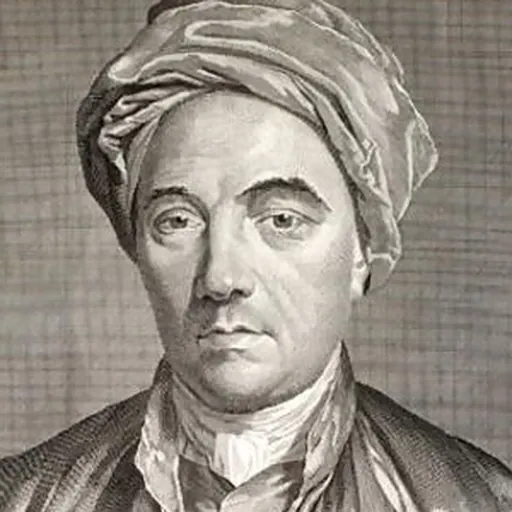
About William Smellie
Lived 1697 – 1763 (aged 66). William Smellie was a British physician, gynecologist, obstetrician and surgeon.
William Smellie (5 February 1697 – 5 March 1763) was a Scottish obstetrician and medical instructor who practiced and taught primarily in London. One of the first prominent male midwives in Britain, he designed an improved version of the obstetrical forceps, established safer delivery practices, and through his teaching and writing helped make obstetrics more scientifically based. He is often called the "father of British midwifery".
Early life and education Smellie was born on 5 February 1697 in the town of Lesmahagow, Scotland. He was the only child of Sara Kennedy (1657–1727) and Archibald Smellie (1663/4–1735), a merchant and burgess of the town.
Smellie practiced medicine before getting a license, opening an apothecary in 1720 in Lanark. It was not a particularly lucrative venture, as he also sold cloth as a side business to supplement his income, but he began reading medical books and teaching himself obstetrics at this time. By 1728, he was married to Eupham Borland, who was seven years his senior. In 1733 he was accepted as a member of the Faculty of Physicians and Surgeons in Glasgow. In 1739, after studying midwifery in Paris for a brief period, he established a practice and a pharmacy in London. He invented a "machine" – an obstetrical manikin – for instructing his students. It essentially functioned as a model of the birthing process, and would nowadays be referred to as a "phantom". While not an original idea, the phantom was far more accurate than previous models and allowed him to visually demonstrate midwifing techniques.
He also designed an improved version of the obstetrical forceps, which had been recently revealed after the midwifing Chamberlen family had kept it secret for generations. He publicized the use of these instruments although he promoted natural birth as the best method of delivery due to its less invasive nature. In his new version of the forceps, Smellie shortened and curved the blades and included a locking mechanism.
Smellie was highly respected as a teacher as well as a midwife. Ten years after establishing his London practice, Smellie had 900 pupils and had delivered 280 lecture courses.
One of his students, William Hunter, went on to become a known obstetrician and served as the physician of Queen Charlotte. Unlike Hunter, Smellie was able to gain prestige and success without connections to reputable individuals in society. Through his background, Smellie was able to gain acclaim through his interest in obstetrics and as an innovator of medical instruments and reference literature.
Controversy In 2010, the self-described historian Don Shelton questioned the methods by which Smellie performed his research. In the Journal of the Royal Society of Medicine he suggested that Smellie and his collaborator and later competitor William Hunter were responsible for multiple murders of pregnant women in order to gain access to corpses for anatomical dissection and physiological experimentation. Due to the inadequate match between supply and demand of corpses, scientists had to find other means, often requiring illegal methods, to obtain access. Shelton proposed that these two physicians used what would later be named "burking", after murderer William Burke, who killed 16 people in collusion with William Hare, selling the bodies to anatomist Dr. Robert Knox. He indicated that grave robbing was not a sufficient method by which obstetricians could access the specific type of tissue required for testing and dissection. In 1755, there was questioning of Smellie's access to corpses. Many of the accusations came from competitors, and fearing trial and even execution, Smellie stopped his work for several years in an effort to quash the suspicion that had been raised. and very likely other methods than murder were available to obtain bodies of recently dead pregnant women at that time.
Helen King indicated that the response of the media and the internet to Shelton's publication "raised fresh questions about how medical history is generated, presented and evaluated in the media and, in particular, on the internet".
Works
A Treatise on the Theory and Practice of Midwifery (published in three volumes from 1752 to 1764) describes the mechanism of labour and how to handle the normal birthing process along with various complications that might arise. The book was the first to set up procedures for ensuring the safe use of obstetrical forceps, as Smellie recognized that the forceps were a life-saving tool but best used sparingly. By the time Smellie published the first volume, he had been practicing for over 30 years and had been involved in around 1,150 deliveries. The information presented in his book was illuminating, as few people at the time had so much experience in midwifing. A Sett of Anatomical Tables (1754) was also an important contribution to the field of obstetrics. This was a compilation of Smellie's anatomical drawings depicting childbirth and pregnancy. Though only one hundred copies were printed, it was groundbreaking in its detail and anatomical accuracy.
Don’t just read it —
keep it.
Full-length biographies made to live with: read them, listen on the way to work, watch them tonight.
- E-book
- Audio
- Video
Instant download · yours to keep · every purchase keeps this site free
Important facts
People in William Smellie's life
Named in this biography and alive at the same time



Related people
Same field, nearest in time




Contemporaries
People whose lives overlapped William Smellie's



Frequently asked questions
Who was William Smellie?
Scottish obstetrician (1697–1763)
When was William Smellie born?
William Smellie was born on 15 February 1697 in Lanark.
When did William Smellie die?
William Smellie died on 5 March 1763 in Lanark.
What was William Smellie's occupation?
William Smellie was a physician, gynecologist, obstetrician and surgeon.
What nationality was William Smellie?
William Smellie was British.
Sources & further reading
· DBpedia: William Smellie (obstetrician)
Cite this page
APA: Biography.guide. (2026). William Smellie. https://biography.guide/william-smellie-physician/
MLA: "William Smellie." Biography.guide, https://biography.guide/william-smellie-physician/.
Chicago: "William Smellie." Biography.guide. https://biography.guide/william-smellie-physician/.
Data last updated: 2026-09-20 · Spot an error? Report a correction.
Portrait: Wikimedia Commons · author & licence
Page generated 2026-09-27 04:58 UTC