
About William Segar
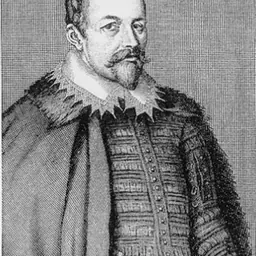
Lived 1564 – 1633 (aged 68–69). William Segar was an English painter.
Sir William Segar (c. 1554–1633) was a portrait painter and officer of arms to the court of Elizabeth I of England; he became Garter King of Arms under James I.
Like other artists of the Tudor court, Segar was active in more than one medium, painting portraits of luminaries of the court in addition to his duties in the College of Arms. He painted Elizabeth's favourite the Earl of Essex in his "Sable sad" (black) armour for the Accession Day tilt of 1590. The famous "Ermine Portrait" of Elizabeth is sometimes attributed to Segar.
Personal life William Segar may have been the son of one Nicholas Segar Once thought to be of Dutch origin, Segar is now believed to have been born in England of an English mother. By 1584 William had married Helen Somers, and had three sons and three daughters. By 1596 Segar was married to Maria Browne and had four sons, including Thomas Segar who later became Bluemantle Pursuivant, and three daughters. In December 1616 one of Segar's rivals, York Herald Ralph Brooke, tricked him into confirming foreign royal arms to Gregory Brandon, a common hangman of London who was masquerading as a gentleman. Brooke then reported him to James I, who imprisoned both Brooke and Segar in Marshalsea. They were released a few days later and the Lord Chamberlain hoped that the experience would make Brooke more honest and Segar more wise.
Heraldic career William Segar as Norroy King of Arms in the funeral procession of Elizabeth I, 1603. Segar was trained as a scrivener and found employment with Sir Thomas Heneage, vice-chamberlain to Queen Elizabeth. Through Heneage's influence, Segar was admitted to the College of Arms in June 1585. While serving as Portcullis Pursuivant, he "reluctantly" to serve as the Master of ceremonies for the St. George's Day festivities in Utrecht. During his tenure as Norroy, Robert Cooke, Clarenceux King of Arms, was encroaching on the traditional privileges of Garter King of Arms, Sir William Dethick. In 1595 Segar sided with Dethick, criticising Cooke for his inability to write clearly and for making many grants of arms to "base and unworthy persons for his private gaine onely."
In 1596, Segar accompanied the Earl of Shrewsbury to invest Henry IV of France with the Order of the Garter, witnessing Henry's famed Royal entry into Rouen. worn with his herald's tabard (image, left). In 1612 he invested Maurice, Prince of Orange, with the Garter, and the same year was granted arms. He was knighted on 5 November 1616.
Segar was the author of The Booke of Honour and Armes which was published anonymously in 1590. An expanded and illustrated version was published as Honour Military and Civil 1602; some editions had an engraved frontispiece by Francis Delaram (image, above right).
Portraits by William Segar
Arms
Don’t just read it —
keep it.
Full-length biographies made to live with: read them, listen on the way to work, watch them tonight.
- E-book
- Audio
- Video
Instant download · yours to keep · every purchase keeps this site free
Important facts
People in William Segar's life
Named in this biography and alive at the same time




Related people
Same field, nearest in time


Contemporaries
People whose lives overlapped William Segar's




Frequently asked questions
Who was William Segar?
British artist and officer of arms (1564-1633)
When was William Segar born?
William Segar was born in 1564.
When did William Segar die?
William Segar died on 11 December 1633 in London.
What was William Segar's occupation?
William Segar was a painter.
What nationality was William Segar?
William Segar was English.
Sources & further reading
Cite this page
APA: Biography.guide. (2026). William Segar. https://biography.guide/william-segar/
MLA: "William Segar." Biography.guide, https://biography.guide/william-segar/.
Chicago: "William Segar." Biography.guide. https://biography.guide/william-segar/.
Data last updated: 2026-09-20 · Spot an error? Report a correction.
Page generated 2026-09-27 05:25 UTC