
About William Scamp
Lived 1801 – 1872 (aged 70). William Scamp was a British architect.
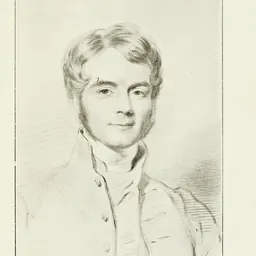
William Scamp (5 June 1801 – 13 January 1872) was an English architect and engineer. After working on the reconstruction of Windsor Castle to designs of Sir Jeffry Wyatville, he was employed by the Admiralty from 1838 to his retirement in 1867. Throughout his career of almost three decades, Scamp designed naval facilities in Britain, Malta, Gibraltar and Bermuda.
Scamp's early works from the 1840s include a dockyard and the Royal Naval Bakery in Malta. During his stay in Malta, he oversaw the construction of St Paul's Pro-Cathedral, making significant alterations to the building in the process. His most notable works in Britain were extensions of the Chatham and Portsmouth Dockyards carried out from the 1860s to the 1880s.
Life Scamp was born on 5 June 1801 in the village of Georgeham in North Devon, and he was the son of a maltster and shipowner.
In 1838, Scamp joined the Admiralty at Woolwich Dockyard. He was buried at Kensal Green Cemetery in London.
Works Scamp is credited with designing dockyard facilities in a logical manner, rather than locating buildings wherever space was available. His projects also considered the possibility of further expansion in the future.
Malta
Scamp arrived on Malta in 1841 along with Captain R. E. Brandreth, in order to draw up a report on Malta's dockyard facilities. This was to be a short visit, but Scamp ended up working on the island for three years. Scamp's stay in Malta had significant impact on the island's architectural scene, since he introduced a new form of British colonial architecture which challenged the existing Baroque-inspired traditions which originated from the Hospitaller era.
Scamp decided that the ideal location of the new No. 1 Dock would be in Cospicua, in what is now known as Dockyard Creek. The city's residents were against this plan and protested to the Governor, but works proceeded nonetheless, Scamp oversaw the stabilization works in 1841–42 and the construction of the rest of the cathedral, which was completed in 1844. He made a number of substantial changes to the cathedral's original plans in the process, with his most notable contribution being the design of the bell tower and shifting its position to make it a free-standing structure. The bell tower of the cathedral forms a prominent part of Valletta's skyline. Scamp also designed the cathedral's interior, and he seems to have been inspired by Nicholas Hawksmoor's St Mary Woolnoth church in London. Scamp's intended location for the high altar was altered in accordance with the wishes of Bishop George Tomlinson, although later alterations in the 20th century resulted in a redesign according to Scamp's plans.
Scamp returned to Malta a number of times later on in his career, assisting in extending the Grand Harbour to Il-Menqa in 1860. He was also a consultant in the construction of the Valletta covered market hall and the Asylum for the Insane in Attard.
Britain, Gibraltar and Bermuda Scamp's first work were the Assembly Halls at Ilfracombe, which he designed and built after winning a design competition. He also produced many drawings for the Windsor Castle project as Jeffry Wyatville's Clerk of Works.
Notable works in Britain by Scamp while working with the Admiralty include a dry dock at Keyham, two dry docks and ancillary facilities at Devonport, and a tunnel between these two dockyards. After the Crimean War, he designed a hauling-up yard at Haslar Lake near Gosport. He also designed extensions to the Chatham and Portsmouth Dockyards, which were undertaken in 1861–85 and 1867–81 respectively, both projects being completed after Scamp's death.
Scamp also contributed to the naval base at Gibraltar and the Royal Naval Dockyard in Bermuda. Some buildings he designed in Bermuda show similarities to the Naval Bakery he had designed on Malta.
Don’t just read it —
keep it.
Full-length biographies made to live with: read them, listen on the way to work, watch them tonight.
- E-book
- Audio
- Video
Instant download · yours to keep · every purchase keeps this site free
Important facts
People in William Scamp's life
Named in this biography and alive at the same time

Related people
Same field, nearest in time





Contemporaries
People whose lives overlapped William Scamp's





Frequently asked questions
Who was William Scamp?
English architect (1801-1872)
When was William Scamp born?
William Scamp was born on 5 June 1801 in Georgeham.
When did William Scamp die?
William Scamp died on 13 January 1872.
What was William Scamp's occupation?
William Scamp was an architect.
What nationality was William Scamp?
William Scamp was British.
Sources & further reading
Cite this page
APA: Biography.guide. (2026). William Scamp. https://biography.guide/william-scamp/
MLA: "William Scamp." Biography.guide, https://biography.guide/william-scamp/.
Chicago: "William Scamp." Biography.guide. https://biography.guide/william-scamp/.
Data last updated: 2026-09-22 · Spot an error? Report a correction.
Page generated 2026-09-27 05:30 UTC