
About William Rodgers
Born 1928. William Rodgers is a British politician and autobiographer.
William Thomas Rodgers, Baron Rodgers of Quarry Bank, (born 28 October 1928) is a British politician and life peer. As a Labour Party member of Parliament, he served as Secretary of State for Transport from 1976 to 1979, and was one of the "Gang of Four" of senior Labour politicians who defected to form the Social Democratic Party (SDP). He subsequently helped to lead the SDP into the merger that formed the Liberal Democrats in 1988, and later served as the party's leader in the House of Lords between 1997 and 2001.
Early life Rodgers was born in Liverpool, Lancashire, and educated at Quarry Bank High School in Liverpool. After national service in the King's Regiment (Liverpool), he studied Modern History at Magdalen College, Oxford on an Open Exhibition. He was general secretary of the Fabian Society from 1953 to 1960 and a councillor on St Marylebone Borough Council from 1958 to 1962. He was instrumental in lobbying the National Executive Committee of the Labour Party to reverse its vote in favour of unilateral nuclear disarmament in 1961. He also unsuccessfully fought a by-election at Bristol West in 1957.
Political career Rodgers first entered the House of Commons at a by-election in 1962, representing Stockton-on-Tees, and served in Labour governments under Harold Wilson and James Callaghan, becoming Secretary of State for Transport in Callaghan's cabinet in 1976. Within the Labour Party, he was known for being a highly effective organiser around centrist causes such as multilateral nuclear disarmament and Britain's membership of the European Economic Community. He held the post until Labour's defeat in the 1979 general election. From 1979 to 1981 he was Shadow Defence Secretary. With Labour drifting to the left, Rodgers joined Shirley Williams, Roy Jenkins and David Owen in forming the Social Democratic Party (SDP) in 1981. In September 1982, Rodgers stood to become the president of the SDP, but took only 19.4 per cent of the vote, finishing in a distant second place behind Williams.
At the 1983 general election the SDP–Liberal Alliance won many votes but few seats, and Rodgers lost his seat of Stockton North (known as Stockton-on-Tees before the boundary changes of 1983). He remained outside Parliament, unsuccessfully contesting Milton Keynes for the SDP in the 1987 general election, until he was created a life peer as Baron Rodgers of Quarry Bank, of Kentish Town in the London Borough of Camden, on 12 February 1992. During that interval he was Director-General of the Royal Institute of British Architects and also became Chairman of the Advertising Standards Authority.
In 1987, Rodgers was chairman of the successful "Yes to Unity" campaign within the SDP in favour of merger with the Liberal Party. He became the Liberal Democrats' Lords spokesman on home affairs in 1994 and was the party's leader in the Lords between 1997 and 2001. Rodgers's autobiography was titled Fourth Among Equals, reflecting his position as the least prominent of the SDP's founders. He was interviewed in 2012 as part of The History of Parliament's oral history project.
Rodgers retired from the House of Lords on 12 December 2023.
Personal life In 1955, Rodgers married Silvia Szulman (1928–2006), a Berlin-born artist and writer, who became a political hostess. The couple had three daughters: Rachel, Lucy, and Juliet.
On 8 May 2001, Rodgers suffered a stroke at his home and was treated at the Royal Free Hospital and attended speech therapy sessions at North Middlesex Hospital for two and a half years. He said he was "very, very lucky not to have suffered any physical damage" as a result. He has since been a keen advocate for better treatment and care for stroke victims.
In popular culture Rodgers was a main character in Steve Waters's 2017 play Limehouse, which premiered at the Donmar Warehouse; he was portrayed by Paul Chahidi.
Don’t just read it —
keep it.
Full-length biographies made to live with: read them, listen on the way to work, watch them tonight.
- E-book
- Audio
- Video
Instant download · yours to keep · every purchase keeps this site free
Important facts
People in William Rodgers's life
Named in this biography and alive at the same time
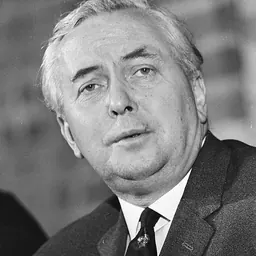


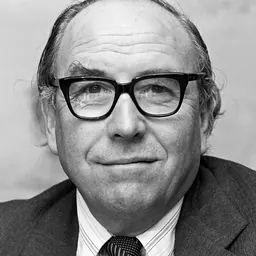

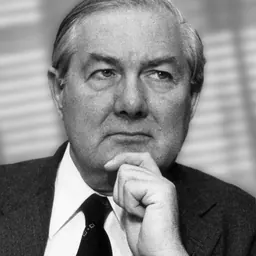


Related people
Same field, nearest in time


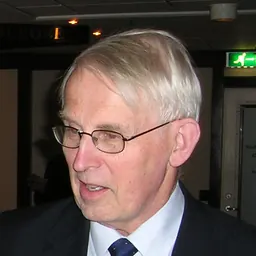


Contemporaries
People whose lives overlapped William Rodgers's


Frequently asked questions
Who is William Rodgers?
British politician (born 1928)
When was William Rodgers born?
William Rodgers was born on 28 October 1928 in Liverpool.
What is William Rodgers's occupation?
William Rodgers is a politician and autobiographer.
What nationality is William Rodgers?
William Rodgers is British.
Sources & further reading
· DBpedia: Bill Rodgers, Baron Rodgers of Quarry Bank
Cite this page
APA: Biography.guide. (2026). William Rodgers. https://biography.guide/william-rodgers/
MLA: "William Rodgers." Biography.guide, https://biography.guide/william-rodgers/.
Chicago: "William Rodgers." Biography.guide. https://biography.guide/william-rodgers/.
Data last updated: 2026-09-26 · Spot an error? Report a correction.
Page generated 2026-09-27 05:16 UTC