
About William Robert Grove
Lived 1811 – 1896 (aged 85). William Robert Grove was a British chemist, judge, inventor, physicist, lawyer and photographer, known for Conservation of energy, Fuel cell and William Palmer (murderer).
Sir William Robert Grove, FRS FRSE (11 July 1811 – 1 August 1896) was a Welsh judge and physical scientist. He anticipated the general theory of the conservation of energy, and was a pioneer of fuel cell technology.
Early life Born in Swansea, Wales, Grove was the only child of John, a magistrate and deputy lieutenant of Glamorgan, and his wife, Anne (née Bevan).
His early education was in the hands of private tutors, before he attended Brasenose College, Oxford to study classics, though his scientific interests may have been cultivated by mathematician Baden Powell. Otherwise, his taste for science has no clear origin though his circle in Swansea was broadly educated. He graduated in 1832.
In 1835, he was called to the bar by Lincoln's Inn. In the same year, Grove joined the Royal Institution and was a founder of the Swansea Literary and Philosophical Society, an organisation with which he maintained close links.
Scientific work
In 1829, at the Royal Institution, Grove met Emma Maria Powles.. They married in 1837.
The couple embarked on a tour of the continent for their honeymoon. This sabbatical offered Grove an opportunity to pursue his scientific interests and resulted in his first scientific paper suggesting some novel constructions for electric cells. In 1840 Grove invented one of the first incandescent electric lights, which was later perfected by Thomas Edison.
Later that year, he gave another account of his development at the British Association for the Advancement of Science meeting in Birmingham, where it aroused the interest of Michael Faraday. On Faraday's invitation Grove presented his discoveries at the prestigious Royal Institution Friday Discourse on 13 March 1840.
His work also led him to early insights into the nature of ionisation. For observations made in Ref., and calotype processes. Inspired by his legal practice, he presciently observed:
On the Correlation of Physical Forces
In 1846, Grove published On The Correlation of Physical Forces in which he anticipated the general theory of the conservation of energy that was more famously put forward in Hermann von Helmholtz' Über die Erhaltung der Kraft (On the Conservation of Force) published the following year.
James Prescott Joule had been energized by his investigations into the mechanical equivalent of heat by comparing the mass of coal consumed in a steam engine with the mass of zinc consumed in a Grove battery in performing a common quantity of mechanical work. Grove was certainly familiar with William Thomson's theoretical analysis of Joule's experimental results and Thomson's immature suggestions of conservation of energy. Thomson's public champion, Peter Guthrie Tait was initially a supporter of Grove's ideas but later dismissed them with some coolness.
Though Groves's ideas were forerunners of the theory of the conservation of energy, they were qualitative, unlike the quantitative investigations of Joule or Julius Robert von Mayer. His ideas also shaded into broader speculation, such as the nature of Olbers's paradox, which he may have discovered for himself rather than through a direct knowledge.
Grove also speculated that other forms of energy were yet to be discovered "as far certain as certain can be of any future event." and called for reform. In 1846 Grove was elected to the Council of the Royal Society, and was heavily involved in the campaign to modernise its charter, in addition to campaigning for the public funding of science. and in the unsuccessful defence of poisoner William Palmer in 1856. He was especially involved in the photography patent cases of Beard v. Egerton (1845–1849), on behalf of Egerton, and of Talbot v. Laroche (1854). In the latter case Grove appeared for William Fox Talbot in his unsuccessful attempt to assert his calotype patent.
In 1871 he was made judge of the Court of Common Pleas, and was appointed to the Queen's Bench in 1880.
Grove was a careful, painstaking and accurate judge, courageous and not afraid to assert an independent judicial opinion. However, he was fallible in patent cases, where he was prone to become overinterested in the technology in question and to be distracted by questioning the litigants as to potential improvements in their devices, even going so far as to suggest his own innovations. and had several children, including Major-General Sir Coleridge Grove. Groves's daughter, Imogen Emily (died 1886), married William Edward Hall in 1866. His daughter Anna married Herbert Augustus Hills (1837–1907) and was mother to Edmond Herbert Grove-Hills ("Colonel Rivers") and John Waller Hills.
His health perpetually troubled, Grove died at home, 115 Harley Street in London, after a long illness. Grove became a Fellow of the Royal Society in 1840, and received its Royal Medal in 1847. and became Privy Councillor in 1887. The Grove Fuel Cell Symposium and Exhibition is organised by Elsevier.
Don’t just read it —
keep it.
Full-length biographies made to live with: read them, listen on the way to work, watch them tonight.
- E-book
- Audio
- Video
Instant download · yours to keep · every purchase keeps this site free
Important facts
People in William Robert Grove's life
Named in this biography and alive at the same time


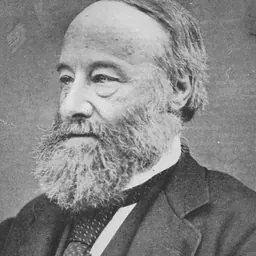
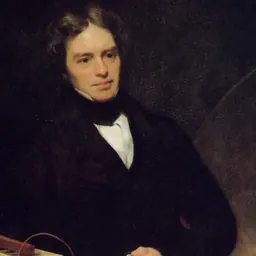
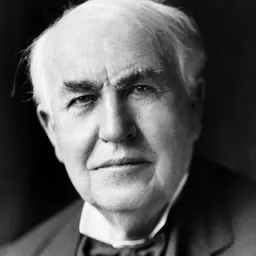
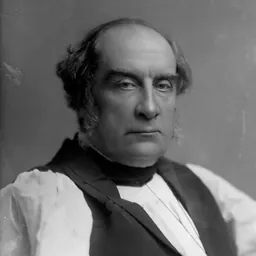
Related people
Same field, nearest in time




Contemporaries
People whose lives overlapped William Robert Grove's





Frequently asked questions
Who was William Robert Grove?
British judge and chemist (1811–1896)
When was William Robert Grove born?
William Robert Grove was born on 11 July 1811 in Swansea.
When did William Robert Grove die?
William Robert Grove died on 1 August 1896 in London.
What was William Robert Grove's occupation?
William Robert Grove was a chemist, judge, inventor, physicist, lawyer and photographer.
What was William Robert Grove known for?
William Robert Grove was known for Conservation of energy, Fuel cell and William Palmer (murderer).
What nationality was William Robert Grove?
William Robert Grove was British.
Sources & further reading
· Wikipedia: William Robert Grove
· DBpedia: William Robert Grove
Cite this page
APA: Biography.guide. (2026). William Robert Grove. https://biography.guide/william-robert-grove/
MLA: "William Robert Grove." Biography.guide, https://biography.guide/william-robert-grove/.
Chicago: "William Robert Grove." Biography.guide. https://biography.guide/william-robert-grove/.
Data last updated: 2026-09-26 · Spot an error? Report a correction.
Page generated 2026-09-27 05:14 UTC