
About William R. Roberts
Lived 1830 – 1897 (aged 67). William R. Roberts was an American politician and diplomat.
William Randall Roberts (February 6, 1830 – August 9, 1897) was an Irish-born American businessman, Fenian Brotherhood leader, two-term congressman from New York (1871 to 1875), and United States Ambassador to Chile.
Born in Mitchelstown, County Cork, he emigrated to the United States in 1849 and built a successful career in the New York dry goods trade.
Roberts became a leading figure in the Fenian Brotherhood, the American support wing of the Irish Republican Brotherhood, joining in 1863 and rising to prominence as an orator and financial backer of the movement. He led the "Senate" faction that deposed founder John O'Mahony in late 1865, and championed a strategy of invading Canada rather than staging an immediate rising in Ireland, on the theory that a captured Canadian foothold could be used to force British concessions or provoke a diversion of imperial military resources. He took part in the 1866 Fenian raid into Canada, was briefly arrested and imprisoned in New York as a result, and later addressed the US Senate seeking amnesty for Fenian prisoners held in Ireland. He resigned his Fenian leadership at the end of 1867 and gradually withdrew from revolutionary activity over the following years, though he continued to involve himself in Irish-American affairs, including helping to organise a New York reception for released Fenian prisoners, the Cuba Five, in 1871.
From 1870, Roberts turned his attention to American politics, winning election to Congress as a Democrat and serving two terms in which he criticised British foreign policy, opposed the growing power of the railroad barons, and supported civil rights for African Americans. After leaving Congress he served on the New York City board of aldermen and was active within Tammany Hall before founding a rival political association. In 1885, in recognition of his support for Grover Cleveland's presidential campaign, he was appointed United States Ambassador to Chile, a post he held until a paralytic stroke in 1888 ended his diplomatic career. He spent his remaining years in poor health in New York and died in 1897.
Biography Early life Roberts was born in Mitchelstown, County Cork, Ireland, the son of baker Randall Roberts and Mary Roberts (née Bishop). Roberts was educated in Cork before he immigrated to the United States in July 1849, aged 19, with the rest of his family. Roberts worked as a clerk for a dry goods company in New York for many years before he set up his own successful dry goods business, the ‘Crystal Palace’, which he would run until his retirement in 1869. According to a later account, Roberts spent close to a decade as a clerk for the noted New York businessman A. T. Stewart, whose dry goods emporium at 280 Broadway was known as the "Marble Palace", before his first attempt to establish a business of his own failed as a result of the Panic of 1857; he subsequently opened a successful store at 252 Bowery, near Houston Street.
Fenian Roberts joined the newly emerging Fenian Brotherhood in 1863, an organisation made up of the Irish diaspora in America that was dedicated to establishing an independent Irish Republic. The Fenian Brotherhood operated as the American support wing of the Irish Republican Brotherhood (IRB), a secret society controlling the movement. Roberts, whose wealth allowed him to regularly donate to the organisation, quickly found himself amassing influence amongst the American Fenians. During the American Civil War, which raged from 1861 to 1864, thousands of Irishmen had joined the ranks of both armies, gaining military experience and were often now influenced by the idea of Radical Republicanism. The leader of the Fenian Brotherhood, the scholarly John O'Mahony (who himself served as an officer in the Union Army), thought the Irish veterans should be deployed to Ireland post-haste for a rebellion there, funded by the Irish in America. However, Roberts quickly became the leader of a faction of Fenians with an alternative plan. Roberts and his supporters argued instead that the Fenians should gather the Irish veterans and their resources, and instead attack Canada with the hopes of securing at least one Canadian region. By holding part of Canada, Roberts and his faction believed they could either hold that region for ransom from the British, or divert British military forces out of Ireland and into Canada, thereby leaving Ireland vulnerable to a rebellion. A subtext to Roberts and his faction's argument was that many veterans of the Union Army were angered by British support for the Confederacy during the war, and sought a measure of revenge by attacking Canada, regardless if this furthered Fenian objectives or not.
None of the biographical sources for Roberts records any military service during the Civil War itself, and it is possible he paid a substitute fee rather than serve after being drafted, but he was nonetheless afterwards referred to as "Colonel" Roberts in connection with his Fenian activities.
In October 1865 the Fenian Brotherhood held another convention in Philadelphia. In the days beforehand, Roberts lead a delegation of Fenians to a meeting with William Seward, the US secretary of state, and President Andrew Johnson. When Roberts' group pointedly asked what the Johnson Administration's response to a Fenian invasion of Canada would be, their reply was sufficiently vague enough for the Fenian delegation to believe they could launch the plan without significant resistance. A Fenian representative, B. Doran Killian, had separately met with Johnson the previous month and received similar indications that the American government would recognise a Fenian foothold in Canada as the "accomplished" Irish Republic in exile.
That December, the Fenian senate formally impeached and deposed O'Mahony on charges including violation of his oath of office and mismanagement of the Brotherhood's funds. Roberts was among the senators who signed the judgment removing O'Mahony, and was thereafter named his successor as president of the Fenian Brotherhood, subsequently revoking the summons O'Mahony had issued for a rival Fenian congress of his own. O'Mahony's supporters responded by convening the Hamilton Rowan Circle in New York, which formally expelled Roberts, together with Patrick O'Rourke and Patrick Keenan, as enemies of the Brotherhood's welfare. — Roberts standing his rationale for raiding Canada
During the early summer of 1866, thousands of armed, uniformed and supplied Fenians crossed the border from the US into Canada as part of an invasion. Although having some initial success against inexperienced Canadian militias, the Fenians were undone by poor logistics and the American government moving swiftly to block their efforts, fearing their activity would the pretext for a war between the US and the British. The invasion force itself was commanded by John O'Neill, who engaged a larger British force at Ridgeway on 2 June 1866; when the expected reinforcements failed to materialise, his men retreated across the Niagara River, where many were taken into custody by American troops under General George Meade, best known for commanding the Union forces at Gettysburg. This would be amongst the last of his Fenian activities as Roberts' attention shifted to American politics. He died at Bellevue Hospital. He was buried in Calvary Cemetery, Woodside, New York. His body was later disinterred, and the cemetery's records do not indicate to where it was subsequently moved. He was survived by a wife and son, but whom he had been separated from before his stroke.
Later that month, Roberts' son, James F. Roberts, a lawyer in Flushing, New York, accused a Dr. J. N. Butler, son-in-law of a Mr. and Mrs. C. M. Siebert, of performing an autopsy on his father's body without notifying the family. Court testimony indicated that Roberts had met Mrs. Siebert some years earlier in the western United States, become infatuated with her, and brought her and her husband first to New York and later to Chile, where their conduct attracted comment, having appointed Siebert secretary of the legation. It was alleged that Roberts had subsequently been kept isolated by the Sieberts for nine years, prevented from communicating with his wife and children, and that his property had been taken from his control. Following his stroke, Roberts lived with the Sieberts at a house he owned at 106 West Seventy-sixth Street, which he later gave to them. James F. Roberts separately testified that he had not been on friendly terms with his father for fifteen years.
Don’t just read it —
keep it.
Full-length biographies made to live with: read them, listen on the way to work, watch them tonight.
- E-book
- Audio
- Video
Instant download · yours to keep · every purchase keeps this site free
Important facts
People in William R. Roberts's life
Named in this biography and alive at the same time

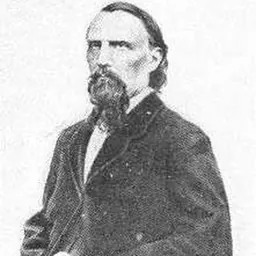
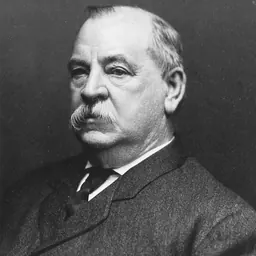
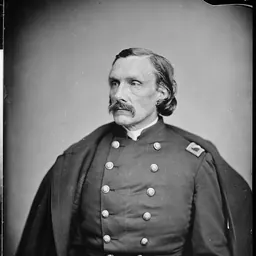

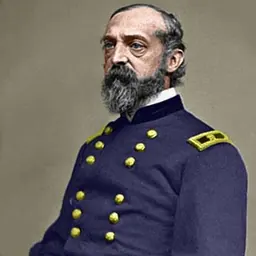


Related people
Same field, nearest in time




Contemporaries
People whose lives overlapped William R. Roberts's




Frequently asked questions
Who was William R. Roberts?
American politician, New York (1830-1897)
When was William R. Roberts born?
William R. Roberts was born on 6 February 1830 in New York City.
When did William R. Roberts die?
William R. Roberts died on 9 August 1897 in New York City.
What was William R. Roberts's occupation?
William R. Roberts was a politician and diplomat.
What nationality was William R. Roberts?
William R. Roberts was American.
Sources & further reading
· Wikipedia: William R. Roberts
Cite this page
APA: Biography.guide. (2026). William R. Roberts. https://biography.guide/william-r-roberts/
MLA: "William R. Roberts." Biography.guide, https://biography.guide/william-r-roberts/.
Chicago: "William R. Roberts." Biography.guide. https://biography.guide/william-r-roberts/.
Data last updated: 2026-09-20 · Spot an error? Report a correction.
Page generated 2026-09-27 05:28 UTC