
About William Pickens
Lived 1881 – 1954 (aged 73). William Pickens was an American educator, essayist and journalist.
William Pickens (January 15, 1881 – April 6, 1954) was an American orator, educator, journalist, and essayist. He wrote multiple articles and speeches, and two autobiographies, The Heir of Slaves and Bursting Bonds (1923). In the latter book he noted race-motivated attacks on African Americans, both in the urban riots of 1919, which took place across the country, and in lynchings in 1921.
In the winter of 1890, Pickens and his family moved to Argenta, Arkansas (now known as North Little Rock, Arkansas.)
He earned a master's degree from Fisk University (1908) and a Litt. D from Selma University in 1915. Both of these were historically black colleges or universities.
In 1911, he published his first autobiography, entitled The Heir of Slaves. He detailed his experiences as a Black man living in the late nineteenth and early twentieth century.
Pickens was a Methodist. He says there are six ways to identify what democracy should mean. First is Democracy in Education, which allows equal training for both races, and makes a clear distinction of talent rather than skin color.
On January 15, 1923, Pickens joined the "eight people group". They wrote and sent a "Garvey Must Go" letter to the U.S. Department of Justice, arguing against Marcus Garvey for what they considered mismanagement of his organization. Feeling later that Garvey's sentence was excessive and racially motivated, in August 1927 Pickens wrote a letter to The New Republic that called for Garvey's release from prison.
Pickens once said, "Color had been made the mark of enslavement and was taken to be also the mark of inferiority; for prejudice does not reason, or it would not be prejudice... If prejudice could reason, it would dispel itself."
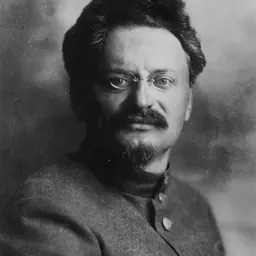
As a prominent NAACP activist, Pickens travelled widely in and beyond the US. In 1927, for instance, he visited Europe. In Britain, he was hosted by Quakers. From Britain, he went to Germany, Poland, and the USSR. He stayed in the Soviet Union for two weeks and had a brief meeting with Leon Trotsky, who Pickens said "showed intelligent interest in the American Negro". In 1936, Pickens travelled to Hawai'i and Central America.
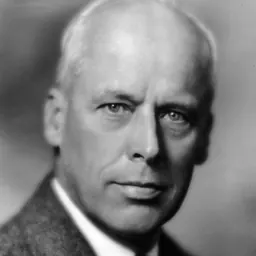
Despite tensions between the NAACP and the Communist Left, especially because of their competition in helping the defendants in the Scottsboro case, during the 1930s Pickens was affiliated with the political Left, as were many other intellectuals. He did not join the Communist Party, but supported numerous Socialist-led campaigns. In 1934, he endorsed Norman Thomas, presidential candidate of the American Socialist Party.
Pickens visited Spain in August 1938 during its Civil War. After returning to the U.S., he worked with the Spanish Aid Committee to raise funds for the Republican cause. While he played down his associations with the Left – notably during his interview with the anti-Communist House Un-American Activities Committee – he was associated with numerous organisations that were part of the Communists' "Popular Front", including the International Labor Defense, the American League Against War and Fascism, and the American Committee for the Protection of Foreign Born.
Pickens published writings in such pro-Communist journals as the New Masses and Fight. In his essay "The Fight Against Fascism", he joined a chorus of Black anti-fascists who argued that the beginnings of fascism had long been evident in the U.S. South.
U.S. Treasury
From 1941-1950, Pickens served as the director of the interracial section of the Treasury Department's Saving Bonds Division, during the Franklin D. Roosevelt and Truman administrations. Beginning after the United States entry into World War II, he promoted individuals investing in WWII war bonds. In this role, he is said to have had more direct contact with the Negro masses than any other African-American leaders in his time.
Other His address "Misrule in Hayti" won him the Ten Eyck Prize for oratory. Ten years later, he renounced his ideas. The address led to a conflict between Pickens, Monroe Trotter, and Booker T. Washington.
Subject to Anti-Communist actions On February 1, 1943, Pickens was one of the 39 men, all federal government employees, named by Martin Dies as affiliates of "Communist front organizations", who urged Congress to refuse "to appropriate money for their salaries," accusing them of being disloyal to the U.S. Congress offered an amendment to the Treasury and Post Office Appropriations Bill, then in the House Appropriations Committee, to remove funding for the salary of these 39 government employees.
After legislators learned that Pickens was the only employee who would be covered by that appropriations bill, the initial amendment failed. Dies proposed a separate action to withhold only Pickens's salary.
A few days later, it became known that Pickens was the only Black person in the list of 39; the appearance of racism along with a public push to give the named men a "day in court" persuaded the committee to create a sub-committee (the Kerr Committee) to investigate the Dies allegations. Pickens wrote to and met with people investigating the allegations. The Kerr committee did not name Pickens as being subversive or unfit.
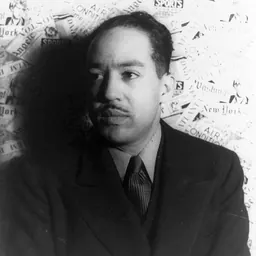
Pickens and his family began what became four generations of the Pickens family who have lived and summered in Sag Harbor Hills or SANS, a traditionally Black beach enclave in Sag Harbor's Eastville neighborhood. In the 1950s Pickens and his family were frequently visited by poet Langston Hughes, who was his Yale college roommate.
Don’t just read it —
keep it.
Full-length biographies made to live with: read them, listen on the way to work, watch them tonight.
- E-book
- Audio
- Video
Instant download · yours to keep · every purchase keeps this site free
Important facts
People in William Pickens's life
Named in this biography and alive at the same time

Related people
Same field, nearest in time



Contemporaries
People whose lives overlapped William Pickens's




Frequently asked questions
Who was William Pickens?
American writer and educator (1881–1954)
When was William Pickens born?
William Pickens was born on 15 January 1881 in Anderson County.
When did William Pickens die?
William Pickens died on 6 April 1954.
What was William Pickens's occupation?
William Pickens was an educator, essayist and journalist.
What nationality was William Pickens?
William Pickens was American.
Sources & further reading
Cite this page
APA: Biography.guide. (2026). William Pickens. https://biography.guide/william-pickens/
MLA: "William Pickens." Biography.guide, https://biography.guide/william-pickens/.
Chicago: "William Pickens." Biography.guide. https://biography.guide/william-pickens/.
Data last updated: 2026-09-22 · Spot an error? Report a correction.
Page generated 2026-09-27 05:34 UTC