
William Phelps
English Puritan, a founder of Dorchester, Massachusetts and Windsor, Connecticut
About William Phelps
Lived 1599 – 1672 (aged 72–73). William Phelps was an American civil servant, known for Massachusetts.
William Phelps, (July 14, 1672) was a Puritan who emigrated from Crewkerne, England in 1630, one of the founders of both Dorchester, Boston Massachusetts and Windsor, Connecticut, and one of eight selected to lead the first democratic town government in the American colonies in 1637. He was foreman of the first grand jury in New England, served most of his life in early colonial government, and according to noted historian Henry Reed Stiles, Phelps "was one of the most prominent and highly respected men in the colony."
Origin of William Phelps William Phelps was a Puritan Englishman who arrived in Dorchester, Massachusetts, in 1630 aboard the ship Mary and John with his wife Ann and four children. Oliver Seymour Phelps and his son-in-law, Andrew T. Servin, published The Phelps Family in America in 1899. They mistakenly concluded that William Phelps was the brother of George Phelps, who apparently arrived in Windsor, Connecticut in 1635 aboard the Recovery of London, and that both emigrated from Tewkesbury, Gloucestershire, England.
Family
Phelps was married twice: (1) Mary (surname unknown), buried in England in 1626, and (2) Anne Dover, who accompanied him and children from both marriages to Dorchester, Massachusetts, a town later annexed by the city of Boston. The names and birthdates of the children correspond to the records later found in the American colony.
Marriage to Ann Dover
Three months after Mary's death, William married Ann Dover at Crewkerne, on November 14, 1626. They had five children in England: Cornelius, Joseph and Mary (twins), and another child named Mary. Researchers can not find further records of Cornelius or either of the twin girls named Mary, and presume they all died young. Records in the Colonies have been found for the children born in England named Joseph, Sarah, Timothy and the last Mary. After arriving in the Colonies, Ann and William had three more children: Sarah, Timothy, and a third Mary. Records in the International Genealogical Index corresponding to the children born in Somerset list the names of William Phelps' children from both wives.
Children and grandchildren
William Phelps (–1672), m. (abt. 1618) (1) Mary (surname unknown) (-1626) William Phelps (1618–1681) m. (1645) Isabel Wilson (unknown-1675) Samuel Phelps (1621–1669) m. Sarah Griswold (1638-1715) Samuel (1652-1741) Sarah (1653-1732) Timothy (1656-1714) Mary Hester (1658-) William (1660-1711) John (1662-1779) Ephraim (1663-1697) Abigail (1666-1686) Josiah (1667-1669) Elizabeth (1669-1719) (Unknown) Phelps (–1624) Nathaniel Phelps (–1701) m. 1650 Elizabeth Copley (1629-1712) Mary (1651-1687) Nathaniel (1654-1723) Abigail (1655-1756) William (1657-1745) Thomas (1661-unk) Mercy (1662-1662) m. (1626) (2) Ann Dover Cornelius Phelps (1627–1628) Joseph Phelps (–1684) m. (1676) Mary (surname unknown) (unknown-1682) Mary Phelps (1628-1628) Sarah Phelps (–1959) m. (1658) William Wade Timothy Phelps (1639-1719) m. (1661) Mary Griswold (1644-1715) (sister of Sarah Griswold) Timothy (1663-1768) Joseph (1666-1716) William (1668-1733) Cornelius (1671-1741) Mary (1673-1690) Samuel (1675-1741) Nathaniel (1677-1746) Sarah (1679-unk.) Abigail (1682-1708) Hannah (1684-1747) Ann (1686-1767) Martha (1688-unk.) Mary Phelps (1644-1725) m. (1663) Thomas Barber Jr. (1644-1713) John (1664-1711) Mary (1666-unk.) Sarah (1669-unk.) Joana (1670-unk.) Annie (1671-1722) Thomas (1672-1714) Samuel (1673-1725)
Immigration to New England
King Charles I of England had succeeded his father King James I of England in 1625, and continued his father's strong opposition to the Puritan movement, who opposed many of the Anglican Church's doctrines as retaining too much of its Roman Catholic roots. After the Puritans assumed control of Parliament, they began to pose a serious threat to the King's authority. In January 1629, in a move to neutralize his opponents, Charles dissolved Parliament entirely. The religious and political climate became so difficult for Puritans that many began to make arrangements to leave the country.
William Phelps was among them. Phelps had been a member of Reverend John Warham's church. Warham had been a minister since 1614, but was relieved of his ministerial duties in 1627 because of his "strong Puritan leanings." The group Phelps joined was organized by the Reverend John White, Vicar of Dorchester, England. White is generally regarded as the sponsor of the earliest Massachusetts settlement after Plymouth. At his urging, nearly 150 individuals gathered from the English West Country counties of Dorset, Somerset, Devon and Cornwall.
Unlike many who fled England for Canada, Ireland, and the Caribbean during this time, the Puritans who migrated to the New World were on the whole better educated, emigrated with their entire family, and tended to leave relatively prosperous lives to establish a new society of pious family values. While the Pilgrims were non-conformists or separatists, the Puritans were reformers. They were not leaving England for economic reasons or for religious freedom, per se, because they believed their faith to be the only true religion. They disrespected all other faiths, especially Quakers.
The emigrants were organized by Rev. White on March 19, 1630, as the West Country Company at New Hospital, Plymouth, England, the day before leaving England. Although very few knew one another, they agreed to emigrate as a body to Massachusetts, where White had sent other groups over the prior six years. From their first arrival aboard the Mayflower in 1620, until 1629, only about 300 Puritans had survived in New England, scattered in small and isolated settlements.
The group fasted, prayed and prepared themselves for their perilous long voyage. White preached sermons in the morning and afternoon; then, with his blessing, the group departed on March 20 for the New World aboard the Mary and John.
Arrival in the New World
The Mary and John made a good passage and arrived at Nantasket (later Hull) on May 30, 1630, without casualty. They quickly found pasture for their cattle at Mattapan. They made their settlement inland, about to the west on the edge of the bay, and named it Dorchester, honoring Reverend John White of Dorchester, England. Under the oversight of the Massachusetts Bay Colony headed by Governor John Winthrop, the village became the first permanent settlement in present-day Suffolk County. While the passenger lists for this voyage are not well documented, researchers from the Mary and John Clearing House concluded that it is highly likely that William Phelps, his wife Ann Dover, and their sons William, Samuel, Nathanial and Joseph were aboard ship. These names support the conclusion that William Phelps was from Crewkerne and not Tewkesbury.
Early colonial life
The Mary and John immigrants organized the town of Dorchester upon their arrival at what is now the intersection of Columbia Road and Massachusetts Avenue in South Boston. The Puritan settlers landed at Columbia Point, which the Native Americans called "Mattaponnock".
The immigrants founded the First Parish Church of Dorchester in 1631, which exists today as the Unitarian-Universalist church on Meeting House Hill, being the oldest religious organization in present-day Boston. The first church building was a simple log cabin with a thatched roof. The settlers held their first town meeting at the church, and they set their laws in open and frequent discussion. In all of this they were inspired by the ideal of the Kingdom of God on earth and the attempt to realize this in England in the time of the Rev. John White. The church is referred to as a 'Foundation Stone of the Nation".
Photo of The Mather School built in 1694 as of 1913. This school was replaced in 1798 when the town voted to sell the old school and build a new one of brick on Meeting House Hill The new settlers also founded in 1639 the first elementary school in the New World supported by public money, the Mather School. Dorchester was annexed by the City of Boston in 1970.
Foreman of first grand jury Phelps served continually in varying governing capacities for many years. He was a member of the first General Court held in the colony in 1636, a member of the Court of Magistrates from 1637 to 1643, and was foreman of the first Grand Jury in 1643. believed to be named after the town of Windsor, England, on the River Thames. The new town was the first English settlement in the state. Under pressure from continued English settlement, the Dutch abandoned their post in 1654.
First town government in the colonies Windsor was supposed to be under the control of the Massachusetts Company. When Connecticut was set apart as a colony, the General Court of Massachusetts set the terms of the new colony's government in a commission granted by on March 3, 1636. It set out how differences were to be resolved, fines and imprisonment imposed, trading, planting, building, lots, military discipline, defense in war, and the people to be self-governed in their new town. When the colonists occupied Windsor, Connecticut, they came into contact and later conflict with the Pequot who inhabited the area. The Pequot had recently conquered the area from another tribe. In 1637, the Pequot killed two British slave raiders who had been capturing Native Americans for the slave trade. The colonists demanded that the Indians who killed the slavers be turned over for punishment. The Pequot refused. Other skirmishes and confrontations ensued, including an attack on settlers working in fields near Wethersfield. This was retribution for the confiscation of land belonging to sachem Sowheag. The English, unlike the French, considered land more important than fur trade, and they enslaved or killed most of those who survived the periodic epidemics, like the smallpox epidemic among the Pequot during 1630–32. The newcomers wanted the land for themselves, and they believed God afflicted the Pequot with smallpox as a blessing to the settlers.
"At a General Court held May 1, 1637 in Hartford, Connecticut, By their own estimate they killed 600 to 700 individuals, captured seven, and saw seven escape. most of whom where women and children. This was later referred to as the Mystic massacre. In the ensuring weeks the Pequot, already decimated by smallpox, were virtually eliminated as a tribe. The remaining individuals were enslaved by neighboring enemy tribes, sold into slavery to other colonies, or enslaved by the white settlers themselves.
Later public service William Phelps was a member of the General Court for 23 years from 1636 to 1662. He was a member of Council in 1637. In 1641, he and later Governor Thomas Welles, of Hartford, were a committee on lying, "considered a grievous fault." That same year he served as Governor of the Windsor Colony. He was also one of the earliest Governor's Assistants and Representative from 1645 to 1657. Phelps participated in enacting laws which with others were later called the "Blue Laws of Connecticut".
The law of the day was specific regarding crimes and punishment, and Phelps was cited on numerous occasions for his responsibility in administering the law.
Land purchases Detail of map of central area of Windsor, Connecticut, circa 1640–1654, showing homes of William Phelps Sr., at top, after his move away from the river, and his son William Phelps Jr. immediately next to his. His home in Windsor was "a short distance north of the Mill River Valley", and after the Connecticut River flooded during the breaking up of ice in the spring of 1639, he moved his home further north, "about three-quarters of a mile northwest of Broad Street on the road to Poquonock, the place owned, in 1859, by Deacon Roger Phelps." and wampum. He had previously paid "two coats and 40 shillings in wampum for a third coat, and six bushels of Indian corn, and fifteen shillings in wampum for the fourth coat; and fifteen shillings in wampum is at six a penny."
Stiles further noted that William Phelps "was one of the most prominent and highly respected men in the colony. An excellent, pious, and upright man in his public and private life, and was truly a pillar in Church and State." The family historian Oliver Phelps cited William Phelps as "one of the fathers and founders of this now ocean-bound Republic."
Death and burial Phelps died at age 78 on July 14, 1672, and was buried the next day. His wife died three years later on November 27, 1675. A Settlement Deed for his son Timothy's marriage to Mary, daughter of Edward Griswold, another pioneer founder of Windsor, was dated April 22, 1660. Phelps' last will and testament was entered on the Windsor, Connecticut register, July 26, 1672, and signed by Matthew Grant, Register.
Famous descendants of William Phelps Samuel S. Phelps (1793–1855), U.S. Senator from Vermont his son Edward John Phelps (1822–1900), lawyer and diplomat John Jay Phelps (1810–1869), financier his son William Walter Phelps, U.S. Representative from New Jersey and diplomat Abel Mix Phelps (1851–1902), surgeon and President of the Medical Society of the State of New York Michael Phelps (1985- ), American swimmer
Don’t just read it —
keep it.
Full-length biographies made to live with: read them, listen on the way to work, watch them tonight.
- E-book
- Audio
- Video
Instant download · yours to keep · every purchase keeps this site free
Important facts
People in William Phelps's life
Named in this biography and alive at the same time

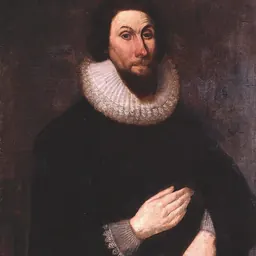


Related people
Same field, nearest in time

Contemporaries
People whose lives overlapped William Phelps's





Frequently asked questions
Who was William Phelps?
English Puritan, a founder of Dorchester, Massachusetts and Windsor, Connecticut
When was William Phelps born?
William Phelps was born in 1599 in Crewkerne.
When did William Phelps die?
William Phelps died on 14 July 1672 in Windsor.
What was William Phelps's occupation?
William Phelps was a civil servant.
What was William Phelps known for?
William Phelps was known for Massachusetts.
What nationality was William Phelps?
William Phelps was American.
Sources & further reading
· DBpedia: William Phelps (colonist)
Cite this page
APA: Biography.guide. (2026). William Phelps. https://biography.guide/william-phelps/
MLA: "William Phelps." Biography.guide, https://biography.guide/william-phelps/.
Chicago: "William Phelps." Biography.guide. https://biography.guide/william-phelps/.
Data last updated: 2026-09-22 · Spot an error? Report a correction.
Page generated 2026-09-27 05:20 UTC