
About William P. Wentworth
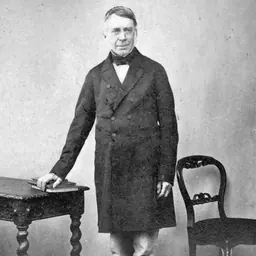
Lived 1839 – 1896 (aged 56–57). William P. Wentworth was an American architect.
St. George's Episcopal Church in Leadville, Colorado, designed by Wentworth in the Stick Style and completed in 1881.
The buildings of Medfield State Hospital, designed by Wentworth, with contributions from S. Edwin Tobey, in a hybrid Queen Anne and Richardsonian Romanesque style and completed in 1896 William P. Wentworth (April 23, 1839 – April 12, 1896), typically abbreviated W. P. Wentworth, was an American architect active in Boston during the second half of the nineteenth century. Wentworth was best known as an architect of churches, which he designed throughout the United States and abroad. Later he developed a second specialty in hospitals, with his career culminating in the Medfield State Hospital.
Life and career William Pitt Wentworth was born April 23, 1839, in Bellows Falls, Vermont. He was the seventh and youngest child of Asa Wentworth Jr., then a Vermont state representative, and Lucy Wentworth, née Warren. His father, a Whig until the American Civil War, presumably named him for William Pitt the Elder, the British Whig statesman. He received his architectural training in New York City, possibly with Richard Upjohn–he was Upjohn's representative in Bellows Falls during the construction of Immanuel Episcopal Church (1867), of which Asa Wentworth was senior warden. He began practice in Boston . He had a general practice but was best-known as an architect of hospitals and churches.
Most of Wentworth's churches were designed for Episcopalian congregations. In Massachusetts, these included the Church of the Good Shepherd (1876) in Dedham and the Church of the Messiah (1889) in Woods Hole and in Vermont, St. Luke's (1871) in Chester and St. Andrew's (1878) in St. Johnsbury. His practice was by no means limited to New England. Elsewhere in the United States, he designed St. Paul's (1879) in Waco, Texas, St. George's (1881) in Leadville, Colorado, St. James (1885) in Port Gibson, Mississippi, St. Lawrence (1889, NRHP-listed) in Alexandria Bay, New York, Trinity (1890, NRHP-listed)–his most elaborate parish church–in Watertown, New York, St. Luke's (1892, burned) in Norfolk, Virginia, St. Luke's (1894, NRHP-listed) in Jamestown, New York, and Trinity Cathedral (1894) in Easton, Maryland. Abroad, he designed the Collegiate Memorial (1884, demolished) of St. John's University in Shanghai and the Irving Memorial (projected 1885, begun 1898) above Robertsport, Liberia.
He designed at least two Catholic churches: St. Patrick's (1880) in Roxbury, Boston, and St. Catherine's (1880) in Charlestown, New Hampshire. All of his known churches are designed in a variation of the Gothic Revival style. When working for an urban or wealthy congregation he built in a monumental, stone English Gothic style, while for rural or poorer congregations he turned to the Carpenter Gothic as developed by Upjohn, Alexander Jackson Davis and vernacular builders.
His hospitals include the Mary Fletcher Hospital (1879) in Burlington, Vermont, Newton-Wellesley Hospital (1886, demolished), Woonsocket Hospital (1887, demolished), Quincy City Hospital (1890, demolished) and the Somerville Hospital (1892, demolished) Other projects include Dean Hall (1874) of Dean College in Franklin, Massachusetts, the Black River Academy (1888, NRHP-listed) in Ludlow, Vermont, and the Town Hall (1890) in Westminster, Vermont. He was not known as an architect of homes, but he designed at least two worth noting: the John G. Johnson house (1887) in Proctor, Vermont, now known as Wilson Castle, and the James W. Hunter house (1894) in Norfolk, Virginia, now the Hunter House Victorian Museum, both designed in an elaborate Richardsonian Romanesque style. Plans and specifications were completed in 1891, with the project only requiring final appropriations to begin. In June governor William E. Russell vetoed the initial bill which would have funded the project. He believed that by delegating the project to a committee of salaried commissioners, those commissioners would extend the project as long as possible in order to keep drawing their salaries, desiring instead to place it in the hands of a board of trustees which would transition to managing the institution after it was completed.
In 1892 the project moved ahead with commissioners who were to receive a fixed, one-time stipend. However, Wentworth had been replaced by S. Edwin Tobey, a somewhat obscure architect, best known for his nonetheless remarkable Hull Yacht Club (1891, destroyed). In February 1893, in the aftermath of a deadly fire at an institution in Dover, New Hampshire, safety concerns were raised over his revised plans. In June he was fired and replaced by Wentworth. Tobey argued that the commission did not have the authority to fire him and continued to superintend construction, apparently without pay; the contractors not recognizing Wentworth's authority. In December, several commissioners were asked to resign and others were removed by governor Russell, at which time it was charged that Tobey had been awarded the project–and contractors selected–as a means to pay off his personal debts to said contractor and possibly a commissioner–he was insolvent within a year. Wentworth's authority on site was not definitely established until February 1894, by which time construction had so advanced that five buildings had been roofed.
It is unclear how much Tobey contributed to the design of the hospital. Reporting in the Boston Globe implies that he prepared his own plans for the buildings, while a letter to the editor of the American Architect and Building News by then ex-governor Russell, responding to that journal's criticism, stated that Wentworth "drafted the plans originally of the asylum and...has since the discharge of Mr. Tobey, had full charge...of the construction of the buildings." This is apparently the last mention of Tobey in relation to the project. Parts of the complex begun after Tobey's final removal, such as the chapel (1897), are definitely by Wentworth alone. Since that time, Wentworth has been considered the architect of the whole work, which was opened less than a month after his death.
According to Clarence H. Blackall, writing in 1915, Wentworth was "a man who in his day was associated with much of the most serious and the best work of Boston." Blackall wrote this in reference to Charles Donagh Maginnis, who had begun his career with Wentworth.
Don’t just read it —
keep it.
Full-length biographies made to live with: read them, listen on the way to work, watch them tonight.
- E-book
- Audio
- Video
Instant download · yours to keep · every purchase keeps this site free
Important facts
People in William P. Wentworth's life
Named in this biography and alive at the same time


Related people
Same field, nearest in time



Contemporaries
People whose lives overlapped William P. Wentworth's
Frequently asked questions
Who was William P. Wentworth?
American architect
When was William P. Wentworth born?
William P. Wentworth was born in 1839 in Bellows Falls.
When did William P. Wentworth die?
William P. Wentworth died in 1896.
What was William P. Wentworth's occupation?
William P. Wentworth was an architect.
What nationality was William P. Wentworth?
William P. Wentworth was American.
Sources & further reading
· Wikipedia: William P. Wentworth
· DBpedia: William P. Wentworth
Cite this page
APA: Biography.guide. (2026). William P. Wentworth. https://biography.guide/william-p-wentworth/
MLA: "William P. Wentworth." Biography.guide, https://biography.guide/william-p-wentworth/.
Chicago: "William P. Wentworth." Biography.guide. https://biography.guide/william-p-wentworth/.
Data last updated: 2026-09-20 · Spot an error? Report a correction.
Page generated 2026-09-27 05:26 UTC