
William P. C. Barton
American surgeon and scientist
About William P. C. Barton
Lived 1786 – 1856 (aged 69). William P. C. Barton was an American botanical illustrator, university teacher, physician, botanist, surgeon and scientific collector.
William Paul Crillon Barton (November 17, 1786 – March 27, 1856), was a medical botanist, medical doctor, professor, naval surgeon, and botanical illustrator.
Biography Barton was born on November 17, 1786, in Philadelphia, Pennsylvania. His father William Barton, a lawyer, was the designer of the Great Seal of the United States. His uncle, Benjamin Smith Barton (1766–1815) was an eminent medical botanist and vice-president of the American Philosophical Society. In 1813, the younger Barton was also elected a member of the American Philosophical Society.
Education
As was customary for the era, Barton pursued a classical education at Princeton University, graduating with a Bachelor of Arts degree in 1805. Barton began studying medicine at the University of Pennsylvania School of Medicine in 1805 under his uncle, Benjamin Smith Barton, who was a renowned botanist and author of the first American text book on botanical science. In these years of study, William Barton's interest in botany and the natural sciences grew into a lifelong passion.
In 1808, upon publication of A Dissertation on Chymical Properties and Exhilarating Effects of Nitrous Oxide Gas and Its Application to Pneumatick Medicine, Barton received his medical degree from the University of Pennsylvania. Complete with an illustration of a giddy man breathing in “laughing gas” from a sheep's bladder, the treatise had great impact on scientific thought when nitrous oxide experiments were “generally derided as extravagant and imaginary.”
U.S. Naval Surgeon
At the age of 23, Barton chose to enter the U.S. Navy as a surgeon. He received his commission on April 10, 1809, and less than week later commissioned the famous Thomas Sully to paint his portrait for a sum of $50. This painting, now in the Wilstach Collection at the Philadelphia Museum of Art, shows a young Barton in uniform – a blue coat with gold braid, and hands gloved. Barton wrote, “I was overwhelmed with the difficulties I had to encounter in the performance of professional duties, where every species of inconvenience and disadvantage that can be imagined was opposed to the exertions of the surgeon.” Ultimately, Barton was not one to accept inadequacies, but rather to fight for reform.
Barton fought to tighten the controls of shipboard medical supplies. He called for the introduction of lemons and limes aboard Navy ships long before the U.S. Navy accepted the importance of an antiscorbutic treatment for vitamin C deficiency or scurvy. Barton went as far as to send a bottle of lime juice to the Secretary of the Navy Paul Hamilton with the instructions to drink it in the form of lemonade. His outspoken manner angered many of his colleagues. Barton, of necessity, became familiar with the administration of hospitals.
In February, 1811, Congress passed an act establishing naval hospitals. Secretary of the Navy Paul Hamilton later asked Barton to compose a set of regulations for governing these hospitals. Barton was well aware of the shortcomings in Navy medical care. Shipboard facilities were primitive, and there were no permanent hospitals ashore, only temporary facilities in Navy yards.
Barton began by drafting rules for governing naval hospitals. In 1812, the Navy Department submitted them to Congress. "Each hospital accommodating at least one hundred men should maintain a staff including a surgeon, who must be a college or university graduate; two surgeon's mates; a steward; a matron; a wardmaster; four permanent nurses; and a variety of servants." The intent of the board was to examine Surgeon's Mates, "preparatory to their promotion to the rank of Surgeons." The board was also authorized to examine applicants for Commissions as Surgeons' Mates and report upon their fitness.
In 1830 he became the commanding officer at Naval Hospital Norfolk, VA. He was involved in the development of the Philadelphia Naval Hospital when it was located in the Naval Asylum. Today, this gothic structure, that also served as the first home of the U.S. Naval Academy, stands in Grays Ferry.
President John Tyler appointed Barton to the office of first head of the Bureau of Medicine and Surgery on September 2, 1842. (The post of Navy Surgeon General was created in March 1871). His time as Chief clerk was active, but short. Among his recommendations were the adoption of a supply table so that drugs and medical supplies could be properly procured and accounted for; the abolition of a venereal fee; uniform standards for recruits; higher professional standards for Navy physicians; standardizations and administrations of naval hospitals; and strict control over the use of liquor on board ships. He was a vehement prohibitionist, and had a “liquor circular” pasted on boxes of whisky identifying the contents as medical supplies which required stringent accounting, a step which was not popular in the fleet.
Treatise on U.S. Navy hospitals
His A Treatise Containing a Plan for the Internal Organization and Government of Marine Hospitals in the United States: Together with A Scheme for Amending and Systematizing the Medical Department of the United States Navy (1814) contained recommendations of reform for the already new Navy hospital system. He urged that U.S. Navy hospitals should be modeled after British medical facilities. One of his many recommendations recommended that all hospital property should be marked “U.S. Naval Hospital” to prevent theft. The mere fact of the book having achieved a second edition three years later, is an indication of the estimation in which it was held. It contained a fund of information collected from various sources, both at home and abroad, and revealed an originality of thought and expression which stamped its author as far in advance of the times.
Pennsylvania academics
On the death of his uncle Benjamin Smith Barton in 1815, William Barton became professor of botany at the University of Pennsylvania, He was a fellow of the college of physicians in Philadelphia, president of the Linnaean Society, and a member of the American Philosophical Society, and other scientific societies.
He died on March 27, 1856, in Philadelphia, Pennsylvania.
Don’t just read it —
keep it.
Full-length biographies made to live with: read them, listen on the way to work, watch them tonight.
- E-book
- Audio
- Video
Instant download · yours to keep · every purchase keeps this site free
Important facts
People in William P. C. Barton's life
Named in this biography and alive at the same time


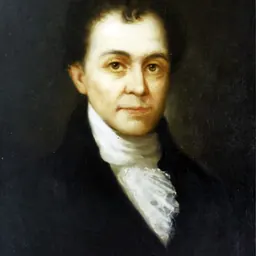
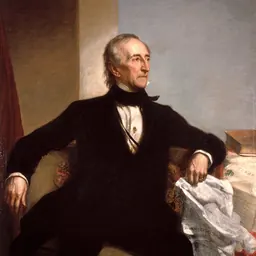

Related people
Same field, nearest in time


Contemporaries
People whose lives overlapped William P. C. Barton's


Frequently asked questions
Who was William P. C. Barton?
American surgeon and scientist (1786-1856)
When was William P. C. Barton born?
William P. C. Barton was born on 17 November 1786 in Philadelphia.
When did William P. C. Barton die?
William P. C. Barton died on 27 March 1856 in Philadelphia.
What was William P. C. Barton's occupation?
William P. C. Barton was a botanical illustrator, university teacher, physician, botanist, surgeon and scientific collector.
What nationality was William P. C. Barton?
William P. C. Barton was American.
Sources & further reading
· Wikipedia: William P. C. Barton
· DBpedia: William P. C. Barton
Cite this page
APA: Biography.guide. (2026). William P. C. Barton. https://biography.guide/william-p-c-barton/
MLA: "William P. C. Barton." Biography.guide, https://biography.guide/william-p-c-barton/.
Chicago: "William P. C. Barton." Biography.guide. https://biography.guide/william-p-c-barton/.
Data last updated: 2026-09-20 · Spot an error? Report a correction.
Page generated 2026-09-27 05:20 UTC