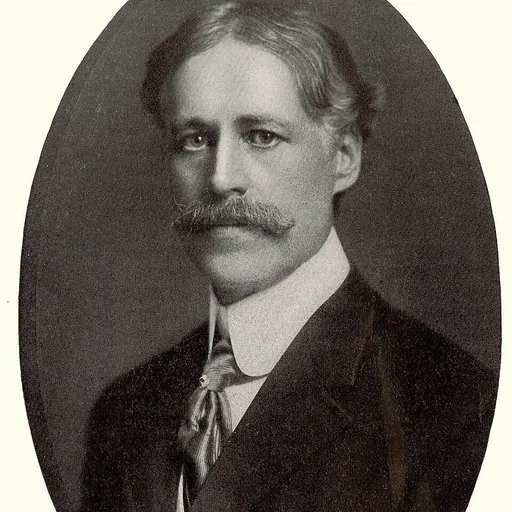
About William Ordway Partridge
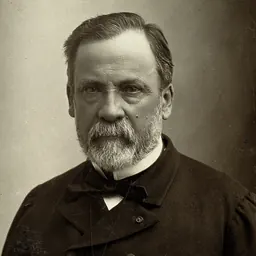
Lived 1861 – 1930 (aged 69). William Ordway Partridge was an American sculptor and writer.
His bronze Shakespeare was installed in Lincoln Park the following spring, and dedicated on April 23, 1894, the Bard's 330th birthday.
The Equestrian Statue of General Ulysses S. Grant (1895–1896) was Partridge's most colossal work. Commissioned by the Union League Club of Brooklyn, it was installed in the center of Bedford Avenue, in front of the Club's headquarters, and dedicated on April 27, 1896. The bronze horse and rider are approximately in height, and stand upon a granite pedestal approximately in height. Partridge initially made two casts of the bronze tablet, one for the gravesite and the other for the nearby Protestant Chapel of the Holy Spirit. He made a third bronze cast in 1898 for Smithson's alma mater, Pembrook College, University of Oxford. The gravesite's bronze tablet was stolen, and the chapel's bronze tablet was used as a model for a marble copy, that was installed at the gravesite in 1900. In 1904, Smithson's remains and grave monument were relocated to the Crypt of the Smithsonian's Castle Building in Washington, D.C. Carved from white Carrara marble, Pietà is located in the Ambulatory behind the High Altar.
Teacher Partridge lectured at the National Social Science Association, the Concord School of Philosophy, and the Brooklyn Institute. Hamilton Grange, Manhattan, New York City. Commissioned by the Hamilton Club of Brooklyn, the plaster of this was exhibited at Chicago's 1893 World's Columbian Exposition, William Shakespeare Monument (1893), Lincoln Park, Chicago, Illinois Equestrian statue of General Ulysses S. Grant (bronze, 1896), Grant Square, Bedford Avenue & Dean Street, Crown Heights, Brooklyn, New York City. Commissioned by the Union Club of Brooklyn, and unveiled April 27, 1896. John Reece Monument (bronze, 1896), Forest Hills Cemetery, Boston, Massachusetts Adin Ballou Memorial (bronze, 1900), Hopewell, Massachusetts Christalan (marble, 1900), Spencer Trask Memorial, Yaddo, Saratoga Springs, New York. "Christalan" was the tile character of Katrina Trask's epic poem about a teenage boy apprenticed to a knight. Pietà (white marble, 1905), Ambulatory, St. Patrick's Cathedral, Manhattan, New York City. Pocahontas (bronze, 1906), Jamestown, Virginia A posthumous 1958 cast of Pocahontas stands near her gravesite at St. George's Church, Gravesend, England. Nathan Hale (bronze, 1907), Nathan Hale Park, Summit & Portland Avenues, St. Paul, Minnesota The commission for a Nathan Hale statue at Yale University went to sculptor Bela Pratt. Alexander Hamilton (bronze, 1908), Hamilton Hall, Columbia University, Manhattan, New York City Joseph Pulitzer Memorial (1913). Woodlawn Cemetery, The Bronx, New York City Thomas Jefferson (bronze, 1914), Pulitzer Hall, Columbia University, Manhattan, New York City Partridge's plaster model (1901) is at the New York Historical Society, Manhattan. Partridge's plaster maquette (1914) is at the Memorial Art Gallery, University of Rochester. Horace Greeley Memorial (bronze, 1914), Sawmill Parkway, Chappaqua, New York Memory (marble, 1914), Memorial Art Gallery, University of Rochester, Rochester, New York. The sculpture's base features a bas relief bust of James G. Avrell, in whose memory the art gallery was founded. Samuel H. Kauffman Memorial (marble & bronze, 1921), Rock Creek Cemetery, Washington, D.C. A bronze figure seated on a granite exedra, with 7 bronze bas-relief panels depicting Shakespeare's Seven Ages of Man. Samuel J. Tilden (bronze, 1926), Riverside Drive at 112th Street, Manhattan, New York City Paris Gibson (bronze, 1928), Gibson Park, Great Falls, Montana Lion Gardiner (bronze, 1930), Fort Saybrook Monument Park, Old Saybrook, Connecticut. Inscription: "In Memory of Lion Gardiner, Builder and Commander of Saybrook Fort, 1635 — 1639." Nearing Home (marble, 1892), Smithsonian American Art Museum, Washington, D.C. Exhibited at the 1893 World's Columbian Exposition in Chicago. Exhibited at the 1893 World's Columbian Exposition in Chicago. Bust of William Wood (bronze, 1895), Pennsylvania Academy of the Fine Arts, Philadelphia, Pennsylvania Head of Peace (marble, 1898), Metropolitan Museum of Art, Manhattan, New York City Bust of Alfred, Lord Tennyson (bronze, by 1899), Smithsonian American Art Museum, Washington, D.C. Bust of Percy Bysshe Shelly (plaster, 1899), Smithsonian American Art Museum, Washington, D.C. Bust of Admiral Robert E. Peary (bronze, 1899), Bowdoin College Museum of Art, Brunswick, Maine Bust of George Washington (bronze, 1900), Metropolitan Republican Club, Manhattan, New York City Bust of Captain William Clark (bronze, 1903-1904), William Clark Memorial, Bellefontaine Cemetery, St. Louis, Missouri Bust of William Colford Schermerhorn (bronze, 1904), Schermerhorn Hall, Columbia University, Manhattan, New York City Bust of Abraham Lincoln (bronze, 1906), Lincoln Club of New York City and Bar Harbor Historical Society, Bar Harbor, Maine. Bust of Rear Admiral Robert E. Peary (bronze, 1912), Bowdoin College Museum of Art, Brunswick, Maine Bust of Chief-Justice Melville W. Fuller (marble, 1914), United States Supreme Court Building, Washington, D.C. A bronze replica is in Fuller Park, Chicago, Illinois. Bust of John Howard Van Amringe (bronze, 1917-1918), Van Amringe Memorial, Columbia University, Manhattan, New York City Bust of Theodore Roosevelt (bronze, 1919), Metropolitan Republican Club, Manhattan, New York City
Bas reliefs Midsummer Night's Dream (marble, 1892), Smithsonian American Art Museum, Washington, D.C. Exhibited at the 1893 World's Columbian Exposition in Chicago. James Smithson Memorial Tablet (bronze, 1896), Smithsonian Institution, Washington, D.C. Created for Smithson's gravesite in Genoa, Italy, the bronze original was stolen, and replaced in 1900 with a marble copy. An 1896 bronze replica was given to the Chapel of the Holy Spirit, Genoa, Italy. This was destroyed during World War II, and replaced in 1963 with a marble copy. An 1898 bronze replica was given Smithson's alma mater, Pembroke College, University of Oxford, England. 8 panels from the life of Christ (marble, 1902-1904), Jordan Font, National Cathedral, Washington, D.C. Elias Boudinot Memorial Tablet (bronze, 1903), Nassau Hall, Princeton University, New Jersey 24 "Hours of the Day" panels (bronze, 1914), Class of 1885 Sundial, College Walk, Columbia University, Manhattan, New York City. The sundial was designed by Charles Follen McKim, of McKim, Mead & White, and featured a 16-ton green granite sphere that cast a shadow on a circular dial. The sphere cracked and was removed in the 1940s. Only the dial's base, encircled by Partridge's decorative panels, survives. Mother and Children (bronze, 1915), Charles T. How Memorial, Woodbury Park, Bar Harbor, Maine Anne's Tablet (bronze, 1916), Constance Fenimore Woolson Memorial, Mackinac Island State Park, Mackinac Island, Michigan
Other works Temporary sculpture: Admiral David Farragut (staff, 1899; demolished 1900), attic figure of Dewey Arch, Madison Square, Manhattan, New York City Group: Homer Reciting the Iliad (bronze, 1900), Art Institute of Chicago, Illinois Width: Statuette: General Grant as President (bronze, 1900), Minneapolis Institute of Art, Minnesota Height: Architectural sculpture: Entrance Portal (marble, 1904), Henry W. Poor House, Tuxedo, New York, T. Henry Randall, architect Poetry: The Song-Life of a Sculptor (1894) Sonnets and Lyrics (1902) Fiction: The Angel of Clay (1900) Nathan Hale: The Ideal Patriot (1902) The Czar's Gift (1906) Non-Fiction: Art for America (1894) Technique of Sculpture (1895) The Works in Sculpture of William Ordway Partridge (1914) Articles and lectures: "Goethe as a Playwright," in F. B. Sanborn, ed., The Life and Genius of Goethe (Boston: Ticknor and Company, 1886) "The True Education and the False," The Arena (magazine), vol. 9, no. 50 (January, 1894), Boston, MA "Thomas Ball," The New England Magazine, vol. 12, no. 3 (May 1895) "John Rogers, The People's Sculptor," The New England Magazine, vol. 13, no. 6 (February 1896) "The Relation of Art to Religion," The Arena (magazine), vol. 17, no. 85 (December 1896), Boston, MA "Sculpture in Its Relation to Architecture," lecture given at the 33rd Annual Convention, American Institute of Architects, Philadelphia, November 1900 "Greek versus Modern Sculpture," Brush and Pencil (magazine), vol. 16, November 1905,
Affiliations
Architectural League of New York National Sculpture Society Sons of the American Revolution Veteran Corps of Artillery, State of New York American Institute of Architects (honorary) Royal Society of Arts, London He was also a member of the literary and artistic Lotos Club, New York
Don’t just read it —
keep it.
Full-length biographies made to live with: read them, listen on the way to work, watch them tonight.
- E-book
- Audio
- Video
Instant download · yours to keep · every purchase keeps this site free
Important facts
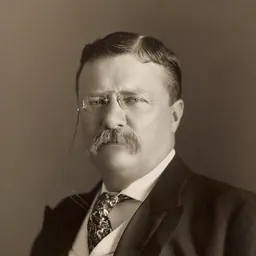
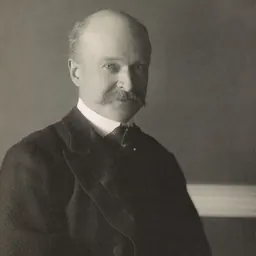
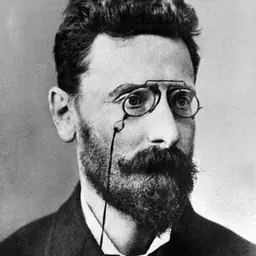
People in William Ordway Partridge's life
Named in this biography and alive at the same time


Related people
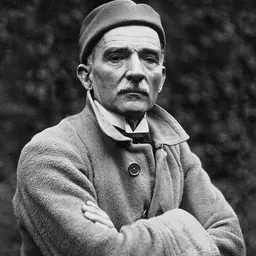
Same field, nearest in time



Contemporaries
People whose lives overlapped William Ordway Partridge's



Frequently asked questions
Who was William Ordway Partridge?
American artist (1861–1930)
When was William Ordway Partridge born?
William Ordway Partridge was born on 11 April 1861 in Paris.
When did William Ordway Partridge die?
William Ordway Partridge died on 22 May 1930 in Manhattan.
What was William Ordway Partridge's occupation?
William Ordway Partridge was a sculptor and writer.
What nationality was William Ordway Partridge?
William Ordway Partridge was American.
Sources & further reading
· Wikipedia: William Ordway Partridge
· DBpedia: William Ordway Partridge
Cite this page
APA: Biography.guide. (2026). William Ordway Partridge. https://biography.guide/william-ordway-partridge/
MLA: "William Ordway Partridge." Biography.guide, https://biography.guide/william-ordway-partridge/.
Chicago: "William Ordway Partridge." Biography.guide. https://biography.guide/william-ordway-partridge/.
Data last updated: 2026-09-22 · Spot an error? Report a correction.
Portrait: Wikimedia Commons · author & licence
Page generated 2026-09-27 05:01 UTC