
William Ogilvie
Scottish classicist, numismatist and author on land reform
About William Ogilvie
Lived 1736 – 1819 (aged 82–83). William Ogilvie was a Scottish economist, philosopher, classical scholar and numismatist.
William Ogilvie of Pittensear FRSE FSA (Scot) (1736–14 February 1819), known as the Rebel Professor and described by his biographer as the "Euclid of Land law Reform", was a Scottish classicist, numismatist and author of an influential historic land reform treatise. Published in London in 1781, An Essay on the Right of Property in Land was issued anonymously, necessarily it seems in a revolutionary age.
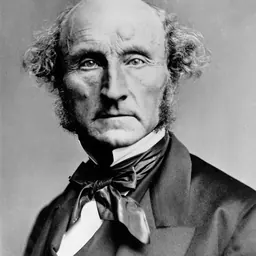
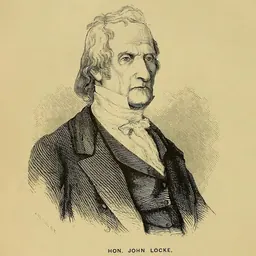
As with John Locke, John Stuart Mill, Thomas Paine, Adam Smith and others—Ogilvie is seen as a leading proto-Georgist thinker. His masterwork was republished in 1838, then in 1891 (reprinted 1970) as the heart and subject of a much larger new work titled Birthright in Land, and in more recent years has been republished twice in modern, further expanded editions, using that same title. Ogilvie is cited as an influence by reformers internationally.
The principal authority and main published source of information on William Ogilvie and his life is his 19th-century biographer DC MacDonald, who says:The facts known about Ogilvie's life are exceedingly scanty, and themselves be of little importance; but when considered along with the conception we form of the man as displayed on every page of his book, the smallest scrap of authentic information will in these days be of some interest, not only to "men of enlarged and inquisitive minds", but also to readers in general. It is in the book, however, and in the book alone, that we meet face to face with the author. Ogilvie instilled his soul into it, and he left us evidence that it was the chief aim of his life. We, therefore, should as soon think of separating the man Isaiah from the Book of Isaiah, as we separating the man Ogilvie from the book of Ogilvie.
Life
Born in 1736, William Ogilvie was the only son of James Ogilvie of Pittensear, Morayshire, and of Marjory Steuart of Tannachy in the neighbouring county of Banff. "A born and bred patrician",
There is no authentic account of Ogilvie's boyhood, according to his biographer, who assumes that until he left home for college he was brought up in the diminutive mansion-house of Pittensear and attended the Grammar School in Elgin, the county town and cathedral city away. One dramatic incident in his childhood may have been defining:
When the so-called Royal Army was passing through Morayshire in 1746 'Butcher' Cumberland's government troops on their way to the Battle of Culloden, a short halt was made at Pittensear House, and three cannon shots were fired at it. One of these shots struck the front wall close to the dining-room window, and, we need not say, caused the inmates much alarm. William Ogilvie, then about ten years of age, in all probability witnessed that scene—a sad example of what even a Whig Government may do at the head of a mercenary army. He, without any doubt, surveyed the wreck after the storm had passed. We have it on the authority of old people still living near Pittensear, that his mother, who happened to be in childbed at the time, never recovered the shock of that day's proceedings, and that shortly thereafter she was laid in a premature grave. And a few years later, when his disconsolate and broken-hearted father had quitted life's stage, he was left alone, in place of both father and mother, as guardian to four orphan girls. Here we may trace the way in which, what we may call a motherly feeling towards all the children of men, was developed in his breast. Ogilvie on 'Grand Tour' would have had good opportunity to survey the broad continent of Europe and witness the condition of its people: his reformer eye would not have missed those circumstances and conditions that were to lead to the French Revolution:
The widow is gathering nettles for her children's dinner; a perfumed seigneur, delicately lounging in the Œil de Bœuf, hath an alchemy whereby he will extract from her the third nettle, and call it rent.
In 1761 Ogilvie was appointed Assistant Professor of Philosophy in King's College, Aberdeen, and Regent in 1764. The following year he exchanged offices with the Professor of Humanity, which class he taught until he retired in 1817. Ogilvie appears to have lived a somewhat reclusive life, remaining unmarried and childless. He is buried in the south transept of St Machar's Cathedral in Old Aberdeen, adjacent to his college: a discreet stone in the wall describes him as "William Ogilvie, Esquire of Pittensear, in the County of Moray, and Professor of Humanity in the University and King's College, Aberdeen, who died on the 14th February 1819, aged 83 years". His Times obituary called him "one of the most accomplished scholars of the age".
The Book of Ogilvie—Birthright in Land
leftThe declared object of An Essay on the Right of Property in Land, according to its original title and introduction, is to show how "property in land might be rendered more beneficial to the lower ranks of mankind".
In his Essay Ogilvie claims the birthright of every citizen to an equal share in the value of property in land, and outlines the practical policy means by which this would progressively be achieved. He asserts "land values as having three parts, the original, the improved, and the improvable values; the first and third of these [belong] to the community and only the second to the landholder". To establish a just combination of these two maxims, at the original foundation of states, so as to render it a fundamental part of their frame and constitution, or to introduce it afterwards, with as little violence as may be, to the actual possessions and supposed rights and interests of various orders of men, ought to be the object of all agrarian laws; and this object being once distinctly conceived, if wise and benevolent men will turn their attention towards it, no doubt need be entertained that very practicable methods of carrying it into execution will in time be discovered, by comparison of projects, or from the result of trials. Ogilvie set out a prototype of the economic policy known as land value taxation, or, as his modern editors style it, community ground rent. However his analysis and proposal are incomplete, says Fillebrown:"His enumeration of the moral benefits to accrue to mankind from a realisation of his fiscal ideal is a brilliant prognostication that no later and greater economic light has sufficed to dim. But Ogilvie's failure to grasp the full significance of economic rent, especially urban rent, as a social product, and the stress laid by him on his proposed agrarian law, a plan devoted to a now admittedly impossible mechanical allotment of land; are responsible for his being relegated from the Authorities to the Appendix [ie. by Fillebrown from the body of his book to its appendix].
thumbMacDonald describes Ogilvie's Essay as "a pastoral prose poem, through which we can realise this beautiful world, with its ample provision for satisfying man's instinctive and rational faculties of enjoyment." Ogilvie wrote his revolutionary masterwork between 1776 (the US declaration of independence) and 1781—eight years before the storming of the Bastille. He presented the work as a warning to the "friends of mankind", he being "well aware that great changes suddenly accomplished are always pregnant with danger".
Despite his so-called 'boycotting', Ogilvie and his work does appear to have had contemporary influence. A copy of his Essay, marked "with the author's compliments", was found in the repositories of the modernising Frederick the Great; and Ogilvie was involved in the land tenure reforms carried out by Lord Cornwallis in lower Bengal in 1793. The ideas it contains were to be taken up and developed a hundred years later by the American social reformer Henry George and definitively presented in own masterpiece, the economics best-seller Progress and Poverty. Thus would Ogilvie's Enlightenment insights be turned into a significant 19th century social and political movement, and become a philosophy that would in turn inspire and inform the modern land reform. and Green movements.
MacDonald delivers a closing paean on Ogilvie's work:
His Essay on the Right of Property in Land, in every line of it, says: suffer little children to come unto me, and I shall teach them that God is no respecter of persons; that all the children of men are entitled indiscriminately to an equal share in the soil, in all wild animals, game, fish, and the whole products of nature, necessary for man's subsistence or enjoyment; and that anything contrary to this doctrine is a gross and blasphemous slander on the Creator, as well as a most iniquitous fraud on the bulk of mankind. Commencing around 1772, Professor Ogilvie beganof his own accord to put together a collection of specimens for a museum of natural history in the King's College, and has now fitted up, and furnished three apartments for their accommodation. [He procured]...an assortment of specimens of fossils, and in the various branches of zoology as might serve to excite the liberal curiosity of youth, and make them, in some measure, acquainted the immense variety of the works of nature.... One is astonished to find so large a collection of birds, fishes, marbles, spars etc., accumulated in so short a space. His collection developed into the Aberdeen University Zoology Museum, one of the oldest in the country.
Educational reformer
During his tenure at Aberdeen Ogilvie was an active educational reformer, helping to sweep aside "a gavelkind system of distributing University honours". Professor Ogilvie held the modern view that Universities were public institutions, and professors public servants (with regard to teaching) and trustees for the public (with regard to endowments, buildings, libraries, etc). The 18th century Masters of King's College collectively were of a different view.
MacDonald records that during Ogilvie's time as a member of King's Collegehis colleagues not only alienated some of the lands belonging to the college, but they misapplied and 'misappropriated' College funds. They also disposed of the patronage of no less than fifteen churches, and, worse still, the right of presentation to twenty bursaries. The great landlords were the purchasers of these saleable commodities, and in this way they became the private owners of rights and duties which, until then, were held by the Professors in trust for the public. The money received for Church patronage has been accounted for, but the price of the other articles of commerce was appropriated by the Masters as their own private property. It became 'money in their purse'.
A contemporary printed paper titled 'Outlines of a Plan for Uniting the King's and Marischal Universities of Aberdeen, With a View to Render the System of Education More Complete' is believed to have been authored by Ogilvie. Its reform proposals were rejected by his own College, with seven out of Ogilvie's ten Professor colleagues opposing it—the "seven wise Masters" as they became known. It was not until 1860 finally that the 1786 plans were implemented.
In 1764, Ogilvie's name was connected with a scheme for a Public Library in Aberdeen. This, like much of his work educational reform, was another large public project that would remain unrealized in his lifetime, but has since been achieved. His greatest proposition for the public good—the equitable sharing of nature's bounty among all citizens—remains unfulfilled.
Don’t just read it —
keep it.
Full-length biographies made to live with: read them, listen on the way to work, watch them tonight.
- E-book
- Audio
- Video
Instant download · yours to keep · every purchase keeps this site free
Important facts
People in William Ogilvie's life
Named in this biography and alive at the same time

Related people
Same field, nearest in time


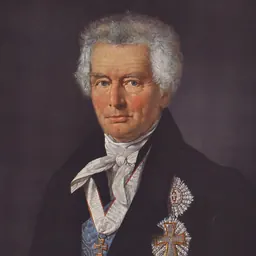

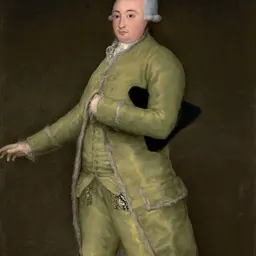
Contemporaries
People whose lives overlapped William Ogilvie's


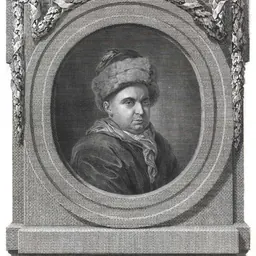



Frequently asked questions
Who was William Ogilvie?
Scottish classicist, numismatist and author on land reform
When was William Ogilvie born?
William Ogilvie was born in 1736.
When did William Ogilvie die?
William Ogilvie died in 1819.
What was William Ogilvie's occupation?
William Ogilvie was an economist, philosopher, classical scholar and numismatist.
What nationality was William Ogilvie?
William Ogilvie was Scottish.
Sources & further reading
· DBpedia: William Ogilvie of Pittensear
Cite this page
APA: Biography.guide. (2026). William Ogilvie. https://biography.guide/william-ogilvie-economist/
MLA: "William Ogilvie." Biography.guide, https://biography.guide/william-ogilvie-economist/.
Chicago: "William Ogilvie." Biography.guide. https://biography.guide/william-ogilvie-economist/.
Data last updated: 2026-09-20 · Spot an error? Report a correction.
Page generated 2026-09-27 05:26 UTC