
About William Newton
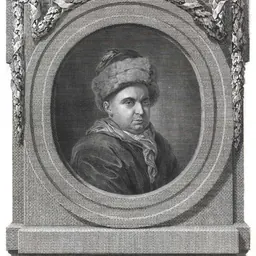
Lived 1730 – 1798 (aged 67–68). William Newton was an architect.
The Castle, Castle Eden, by William Newton. Photo by Les Hull William Newton (1730–1798) was an English architect who worked mainly in Newcastle upon Tyne and Northumberland. His work shows a conventional but elegant classical style, influenced by Adam and Paine, and with a strong Palladian feel typical of late 18th-century architecture. Most of his buildings are stately homes in rural Northumberland, but he also created some interesting public works in Newcastle: The Assembly Rooms, St Anne's Church, the refaced Guildhall, and elegant private housing in Charlotte Square.
He was the son of Robert Newton, a builder. He married Dorothy Bell and lived for 28 years at 1, Charlotte Square, Newcastle. His big break came when he was appointed architect for The Assembly Rooms in Newcastle in 1774; as a result he became favoured by the Northumbrian élite. He has been described as 'the first truly Nothumbrian architect'.
List of notable works
The Infirmary, Newcastle 1751-2 (demolished 1954) Capheaton Hall (North front) 1758 St Mungo, Simonburn (rebuilding of aisles) 1763 St Ann's Church, Newcastle 1764 Charlotte Square, Newcastle 1770 Kielder Castle 1772 Assembly Rooms, Newcastle 1774-6 Killingworth House (probably added wings) 1770s (demolished 1954) The Castle, Castle Eden c1775 Shawdon Hall 1779 (probable attribution) Backworth Hall 1780 Acton House 1781 Charlton Hall 1782 Howick Hall 1782 Heaton Hall (refronting) 1783 (demolished 1933) The Temple, Heaton Hall (now at Blagdon Hall) 1783 St Nicholas Cathedral, Newcastle 1783-7, (internal restoration), with David Stephenson Whitfield Hall 1785 Hebburn Hall 1790 St Bartholomew's Church, Longbenton 1790 Dissington Hall 1794 Guildhall, Newcastle upon Tyne 1794, (refronting), with David Stephenson Hesleyside Hall (East front) 1796 Lemmington Hall (alterations) Fenham Hall (attribution and date uncertain) Rathfarnham Castle, Dublin, Ireland (1769) - various works
McCombie and Grundy have used stylistic evidence to suggest some additional attributions: The Lodge, Capheaton village Craster Tower (South wing) 1769 Close House 1779 Newton Hall Togston Hall
Faulkner and Lowery make one additional suggestion:
Broome Park, Edlingham (demolished 1953)
Don’t just read it —
keep it.
Full-length biographies made to live with: read them, listen on the way to work, watch them tonight.
- E-book
- Audio
- Video
Instant download · yours to keep · every purchase keeps this site free
Important facts
People in William Newton's life
Named in this biography and alive at the same time

Related people
Same field, nearest in time


Contemporaries
People whose lives overlapped William Newton's




Frequently asked questions
Who was William Newton?
English architect
When was William Newton born?
William Newton was born in 1730.
When did William Newton die?
William Newton died in 1798.
What was William Newton's occupation?
William Newton was an architect.
Sources & further reading
· DBpedia: William Newton (architect, 1730–1798)
Cite this page
APA: Biography.guide. (2026). William Newton. https://biography.guide/william-newton-architect/
MLA: "William Newton." Biography.guide, https://biography.guide/william-newton-architect/.
Chicago: "William Newton." Biography.guide. https://biography.guide/william-newton-architect/.
Data last updated: 2026-09-20 · Spot an error? Report a correction.
Page generated 2026-09-27 05:11 UTC