
About William Nairne, Lord Dunsinane
Lived 1731 – 1811 (aged 79–80). William Nairne, Lord Dunsinane was a judge.
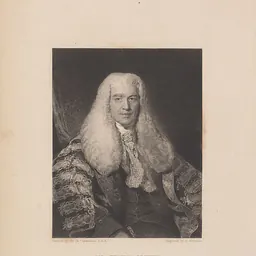
Sir William Nairne, Lord Dunsinane, 5th Baronet of Nairne (c. 1731–1811) was a Scottish advocate and judge, and the uncle of Katherine Ogilvie.
The title of Lord Dunsinane was taken from Dunsinane Hill, a ruined fort near Collace, Perthshire, the family seat of the Nairne family. Dunsinane Hill is referenced in Shakespeare's play, Macbeth. The alternative Gaelic spelling of the term Dunsinane is Dunsinnan, meaning "The hill of ants"; probably a reference to the large number of people it took to build the fortress.
Early life
William Nairne was born in Perthshire, Scotland in about 1731. He was the son of Sir William Nairne, 2nd Baronet and his wife, Emilia Graham of Fintry, Forfarshire. He was admitted as an advocate on 11 March 1755, and in 1758 was appointed joint Commissary Clerk of Edinburgh with Alexander Nairne, a distant relative.
Connection to Katherine Ogilvie
Nairne was the uncle of Katherine Ogilvie, née Nairne, known as "Kitty". Anne, before her marriage, was employed as a house-servant in an Edinburgh "lewd house". Alexander may have harboured a desire to succeed to the estate of Thomas Ogilvie over his brother Patrick.
In 1783 he was a joint founder of the Royal Society of Edinburgh. He served as the society's vice president from 1789 to 1796.
Sir Walter Scott described Nairne as "a man of unscrupulous integrity." When Nairne, who at the time was serving as Sheriff of Perthshire, determined that he had incorrectly found an innocent man guilty of a crime, he privately provided the litigant with the necessary funds to bring the case forward to the Court of Session, where his earlier judgement was reversed. After his death the property was subdivided as rental property, and eventually demolished in the 1870s. A lifelong bachelor, the Nairne baronetcy became extinct upon his death. The heir to his estate was James Mellis, the son of Nairne's niece, who later assumed the surname of Nairne.
Don’t just read it —
keep it.
Full-length biographies made to live with: read them, listen on the way to work, watch them tonight.
- E-book
- Audio
- Video
Instant download · yours to keep · every purchase keeps this site free
Important facts
People in William Nairne, Lord Dunsinane's life
Named in this biography and alive at the same time
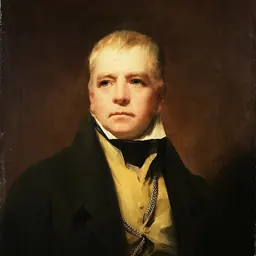

Related people
Same field, nearest in time

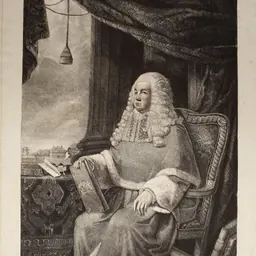

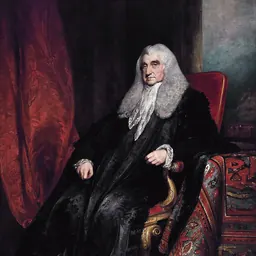
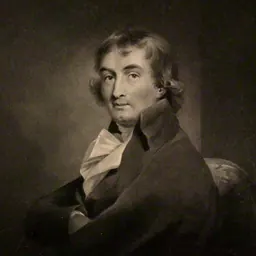
Contemporaries
People whose lives overlapped William Nairne, Lord Dunsinane's





Frequently asked questions
Who was William Nairne, Lord Dunsinane?
Scottish advocate and judge
When was William Nairne, Lord Dunsinane born?
William Nairne, Lord Dunsinane was born in 1731 in Perthshire.
When did William Nairne, Lord Dunsinane die?
William Nairne, Lord Dunsinane died on 23 March 1811 in Collace.
What was William Nairne, Lord Dunsinane's occupation?
William Nairne, Lord Dunsinane was a judge.
What nationality was William Nairne, Lord Dunsinane?
William Nairne, Lord Dunsinane's recorded nationality: Scottish culture.
Sources & further reading
· Wikipedia: William Nairne, Lord Dunsinane
· DBpedia: William Nairne, Lord Dunsinane
Cite this page
APA: Biography.guide. (2026). William Nairne, Lord Dunsinane. https://biography.guide/william-nairne-lord-dunsinane/
MLA: "William Nairne, Lord Dunsinane." Biography.guide, https://biography.guide/william-nairne-lord-dunsinane/.
Chicago: "William Nairne, Lord Dunsinane." Biography.guide. https://biography.guide/william-nairne-lord-dunsinane/.
Data last updated: 2026-09-20 · Spot an error? Report a correction.
Page generated 2026-09-27 05:14 UTC