
About William Mylne
Lived 1734 – 1790 (aged 55–56). William Mylne was an engineer and architect.
William Mylne (1734–1790) was a Scottish architect and engineer. He is best known as the builder of the North Bridge, which links the Old and New Towns of Edinburgh, Scotland. He was the younger brother of Robert Mylne, architect and designer of Blackfriars Bridge in London.
Early life William was descended from the Mylne family of stonemasons and architects. He was the second son of Thomas Mylne, Deacon of the mason's guild, who built the original Edinburgh Royal Infirmary to designs by William Adam. Like his elder brother Robert, William attended the Royal High School. He then served time as an apprentice stonemason.
Grand tour In autumn 1753 he left Edinburgh for Paris, where he studied at the École des Arts under the architect Jacques-François Blondel. As well as part-time study, he also undertook paid work, learning the art of marble carving, to supplement the minimal allowance from his father. The following year, at the suggestion of James Nevay, a fellow Scot in France, Mylne proposed to his father that he be allowed to go on to Rome to study architecture, with a view to eventually setting up practice in London. The result was that his elder brother Robert joined him in Paris, and they travelled to Rome together. Robert had recently completed his apprenticeship and was preparing to take over the family business. He arrived in France by the end of November 1754, and the brothers set off a few days later. Travelling mostly by foot, due to lack of funds, they visited Avignon and Marseille, where they took a boat to Civitavecchia, and arrived at Rome in early 1755.
The brothers lodged on the Via del Condotti, although they were continually short of funds. They encountered Robert Adam, a fellow Scot also studying architecture, although Adam was disdainful of the Mylnes' poor situation; the Mylnes had a joint allowance of just £45 a year, compared to Adam's annual expenditure of around £800. They visited Naples in May 1756, but William was planning to leave by September, on account of his dislike of the hot weather. Leaving Robert at Rome the following spring, William travelled north, spending several months visiting Pisa, Florence, and Venice. Here he met Robert Adam again, also travelling home, although the latter did not offer him a lift in his coach. William also visited several of Palladio's villas in the area, making measured drawings and sketches.
His journey home during the winter of 1757-1758 was fraught with difficulty due to the weather, politics, and his own finances. The Seven Years' War had broken out between England and France, and their respective allies, forcing a journey through Germany. Mylne was obliged to burn all his papers to hide his British identity,
Edinburgh
William returned to his home city, where he established himself as a mason and architect in the family tradition. By 1758 he was a member of the Incorporation of St Mary's Chapel, the guild of masons and carpenters in Edinburgh, and began to take on the running of his father's business. and then with his younger sister Anne.
He was appointed Surveyor to the city in 1759. In 1759, he designed the Yair Bridge, over the River Tweed at Fairnilee, which he built between 1760 and 1764, and which still stands. Between 1768 and 1772, William and Robert were jointly responsible for designing and supervising construction, of the New Bridge over the River Clyde in Glasgow. This bridge, carrying Jamaica Street, was replaced by a larger structure in 1836.
In 1765, Mylne submitted his plans for a new bridge to link Edinburgh's Old Town with the area to the north, which was to become the New Town. The North Bridge comprised three stone arches and was long, and high, although much of the length was solid abutment. Robert Mylne acted as financial surety to the scheme. William repaired the damage, and completed the bridge in 1772, but the collapse led him into financial difficulties. Willy was raised in the Mylne household, and William paid for his education at the Royal High School.
Don’t just read it —
keep it.
Full-length biographies made to live with: read them, listen on the way to work, watch them tonight.
- E-book
- Audio
- Video
Instant download · yours to keep · every purchase keeps this site free
Important facts
People in William Mylne's life
Named in this biography and alive at the same time
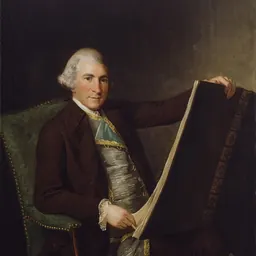

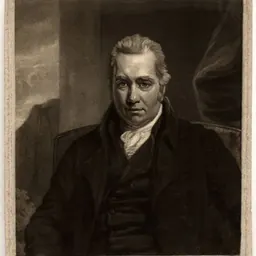
Related people
Same field, nearest in time

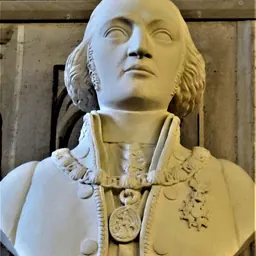

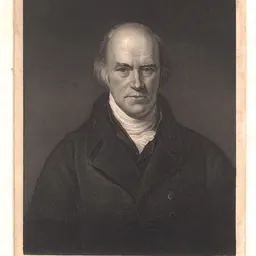

Contemporaries
People whose lives overlapped William Mylne's






Frequently asked questions
Who was William Mylne?
Scottish architect and engineer
When was William Mylne born?
William Mylne was born in 1734.
When did William Mylne die?
William Mylne died in 1790.
What was William Mylne's occupation?
William Mylne was an engineer and architect.
Sources & further reading
Cite this page
APA: Biography.guide. (2026). William Mylne. https://biography.guide/william-mylne/
MLA: "William Mylne." Biography.guide, https://biography.guide/william-mylne/.
Chicago: "William Mylne." Biography.guide. https://biography.guide/william-mylne/.
Data last updated: 2026-09-20 · Spot an error? Report a correction.
Page generated 2026-09-27 05:21 UTC