
About William Morris
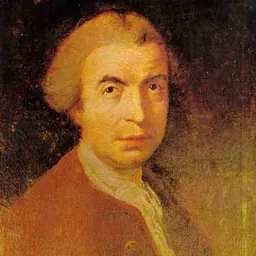
Lived 1746 – 1802 (aged 55). William Morris was an American politician.
William Morris Jr. (December 17, 1746 – November 6, 1802) was a Virginia military officer, ranger, spy, attorney, and politician who served in the Virginia House of Delegates representing in Kanawha County, Virginia from 1792 - 1801. Morris served alongside Daniel Boone during the American Revolution and during the Northwest Indian War. He is best known as the first permanent European settler in the Kanawha Valley, and often misrepresented for his father. In 1800, Morris was appointed as one of the commissioners for supervising the Presidential Election between Thomas Jefferson and John Adams. He was also associated to James Monroe, who Morris exchanged letters with during his time in the Virginia House during Monroe's tenure as governor.
Family William Morris Jr. is the son of William Morris, English-born merchant, and Elizabeth Stapp from Orange County, Virginia. Stapp was the daughter of tobacco Planter Joshua Stapp whose family is a descendant of William Powell. William Morris Sr. and Elizabeth Stapp had 10 children, eight sons and two daughters: William, Henry, Leonard, Joshua, John, Achilles, Levi, Elizabeth, Benjamin and Frances.
The Morris (Morriss) family in London were a longstanding merchant family. With some of the extended family relocating to the new English Colonies. William Morris Sr. came to Philadelphia at the age of twelve aboard a merchant ship from London. His intentions unknown. William Sr.'s cousin was Anthony Morris (II), a Philadelphia merchant at the time and later politician who was also from London. Anthony Morris, like William and his children have been known to spell Morris with a traditional double 's' - Morriss, which is of Welsh origin.
In 1745, Morris Sr. accompanied Rev. William Dean (son of Joseph Dean) to Virginia where William married Elizabeth Stapp, perhaps as a way to expand the Morris family wealth in the tobacco industry. At the age of 23, Morris Sr. had already amassed a sizable fortune and purchased a 392-acre from the Crown Surveyor for Orange County, George Hume, and received the deed on August 27, 1745. Hume, was George Washington's mentor. Hume was the first cousin of Alexander Spotswood, who the tract was originally patented by. When Hume purchased the land in 1741, Capt. Robert McClanahan, was one of the overseers of the transaction. Robert McClanahan's daughter Agnes (1735–1794) married John Dean (1723–1810), first cousin of Joseph Dean. John Dean's sister Margaret married Henry Morris (brother of William).
William Morris was a cousin by marriage to Daniel Boone, through brother's Leonard's wife Margaret Lykin (a descendant of Sven Gunnarsson).
William's children include notably William Morris (b.1775), an inventor and politician who served in the Virginia House of Delegates from 1805 to 1807; Jane (b.1770) who married Major John Hansford who also served in the Virginia House from 1811 to 1818; Carroll Morris (b.1779) who served in the Virginia House in 1804.
William's notable nephews include United States House of Representatives Calvary Morris, bishop Thomas Asbury Morris, Illinois House Representative Lt. Col. Achilles Morris (who defeated Abraham Lincoln in 1832), and Edmund Morris who served in the Virginia House in 1808.
Early life and Surveys William Morris Jr., married Catherine Carroll on May 10, 1768, in Orange, Virginia. Catherine's sister Mary wed Rev. John Alderson (March 5, 1738 - March 1821). The two moved their family to Augusta County, Virginia near Muddy Creek alongside William's brothers John, and Leonard Morris, and John Jones (brother in law).
In February 1773 William Morris, John Morris, John Jones, Walter Kelly, John Herd, James Campbell, James Pauley, Peter Shoemaker, Curtis Alderson (brother of John Alderson), John Alderson, Archibald Taylor and Philip Cooper set out from Muddy Creek, part of the New River settlements, to make land improvements in the Kanawha Valley. According to testimony in 1800, William and John Morris were identified as brothers.
Simultaneously, the Bullitt Expedition was occurring two months later, also departing the New River in April 1773. This group included approximately 40 men, Joshua Morris (brother of William), Captain Matthew Arbuckle, Rev. John Alderson, John Van Bibber, Peter Van Bibber, John Field and others. A separate and unrelated William Morris served in Major Haynes company from Bedford County. While the commander of the operation was Andrew Lewis, his brother Colonel Charles Lewis, commanding a regiment the southern division composed of men from Augusta, and surrounding counties. At the time of the Battle of Point Pleasant in 1774, Andrew Lewis held the rank of colonel but is often regarded as "General" due to his post 1774 military title.
Capt. Arbuckle's company, part of the Botetourt militia. His company was composed of noted frontiersman and rangers who had previously served on expeditions in the Kanawha. Capt. Robert McClanahan's company was also from Botetourt.
Henry Morris would serve in Capt. John Lewis's company, the son of Andrew Lewis. Leonard would remain at Kelly's post, and would not officially serve in the engagement.
During the American Revolutionary War William would serve as a regular soldier in Continental Army in various regiments under Andrew Lewis throughout Greenbrier and Augusta Counties. In 1778, William was promoted to captain in the Greenbrier County militia. His brother Leonard and brother in law John Jones would receive a commission from the Virginia General Assembly signed by Patrick Henry as spies. Both Leonard and Jones would serve under William, but their payment would not come from military salaries.
In March 1783, William commissioned John Young as a Lieutenant and assigned him as a spy. Lieutenant Young's principal role was to lead troops in surveilling, engaging, and reporting on Indian movements throughout the Greenbrier and Kanawha region. William's unit garrison was at Morris Fort (also known as Kelly's Post) from 1784 until 1786.
Morris was promoted to Major in 1786, serving in the Northwest Indian Wars and Whiskey Rebellion in the Ohio. William led a company of rangers whose primary mission was to track and report hostile Indian movements of the Mingo, Shawnee and Six Nations who aligned with the loyalists to include Simon Girty's aligned tribes who frequently attacked in the Kanawha, Ohio, and Kentucky regions.
In 1786, Morris received 5,000 acres of land for his military service, 2,800 of those acres were in Fayette County.
Post War Career In 1792, William Morris was elected alongside Daniel Boone as a Representative to Kanawha County in the Virginia House of Delegates where he was subsequently re-elected until the decline of his health in 1801. He was a member of the Federalist party.
On November 11, 1792, Rep. William Morris wrote a letter to Governor Beverley Randolph for additional troops and a company to be added at Coal River. He also requested in the region, four additional scouts and 12 additional men at Point Pleasant, amongst other areas.
On December 27, 1794, Rep. William Morris wrote a letter to Governor Robert Brooke stating that he had provided rations and provisions for two of Col. John Steele's companies in February 1792 where he acted as a contractor to the state and requested compensation for his services.
In the October Session of 1794, William was appointed as a trustee of the newly incorporated town of Charleston (now the capital city of West Virginia) along with Ruben Slaughter, Andrew Donnally Sr, William Clendenin, John Morris, Leonard Morris, George Alderson, Abraham Baker, and John Young. William's surname is listed as "Morriss" and likewise his son's who served after him as "William Morriss Jr". William took over for Daniel Boone as a member of the Virginia House of Delegates for Kanawha County who held the post in 1791. From 1792 until 1801, William served in the House of Delegates as a member of the Federalist Party. After finishing his final term in 1801, William briefly became Sheriff of Kanawha County until his death in 1802, temporarily replacing his brother Leonard Morris.
Don’t just read it —
keep it.
Full-length biographies made to live with: read them, listen on the way to work, watch them tonight.
- E-book
- Audio
- Video
Instant download · yours to keep · every purchase keeps this site free
Important facts
People in William Morris's life
Named in this biography and alive at the same time


Related people
Same field, nearest in time



Contemporaries
People whose lives overlapped William Morris's



Frequently asked questions
Who was William Morris?
American politician and soldier (1746–1802)
When was William Morris born?
William Morris was born on 17 December 1746 in Colony of Virginia.
When did William Morris die?
William Morris died on 6 November 1802 in Kanawha County.
What was William Morris's occupation?
William Morris was a politician.
What nationality was William Morris?
William Morris was American.
Sources & further reading
· DBpedia: William Morris (Virginia politician)
Cite this page
APA: Biography.guide. (2026). William Morris. https://biography.guide/william-morris-politician/
MLA: "William Morris." Biography.guide, https://biography.guide/william-morris-politician/.
Chicago: "William Morris." Biography.guide. https://biography.guide/william-morris-politician/.
Data last updated: 2026-09-20 · Spot an error? Report a correction.
Page generated 2026-09-27 05:28 UTC