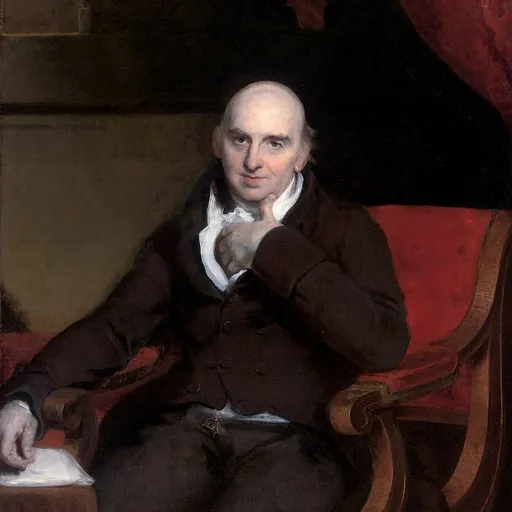
About William Morgan
Lived 1750 – 1833 (aged 82). William Morgan was a British and Welsh actuary, physician and physicist.
William Morgan, FRS (26 May (O.S.) 1750 – 4 May 1833) physician, physicist and statistician, who is considered the father of modern actuarial science. He is also credited with being the first to record the "invisible light" produced when a current is passed through a partly evacuated glass tube: "the first x-ray tube".
Life He was born in Bridgend, Glamorgan, Wales, son to physician William Morgan and Sarah (sister of Richard Price). William's brother was George Cadogan Morgan. At eighteen he received medical training at Guy's Hospital, London, working also as an apothecary to pay his way. He did not complete his training, but after one year returned to Bridgend to join his father's practice. He was not popular with his father's patients: they thought him inexperienced and they resented receiving treatment from someone with a deformity—Morgan suffered from a club foot. After his father's death he left medicine and in 1774, on the recommendation of his mother's brother, the renowned Richard Price, he was appointed Assistant Actuary of the Equitable Life Assurance Society. In February 1775, after the death of John Pocock, he was elected Actuary. By the time he retired on 2 December 1830, 56 years later at the age of 80, he had laid the foundations of the actuarial profession —in fact the term "actuarial" became attached to the profession because of his title.
He won the Copley Medal in 1789, for his two papers on the values of Reversions and Survivorships, printed in the last two volumes of the Philosophical Transactions of the Royal Society, in the field of actuarial science: "On the Probabilities of Survivorships Between Two Persons of Any Given Ages, and the Method of Determining the Values of Reversions Depending on those Survivorships", 1788–1794 "On the Method of Determining, from the Real Probabilities of Life, the Value of a Contingent Reversion in Which Three Lives are Involved in the Survivorship". Philosophical Transactions of the Royal Society of London, vol. 79 (1789) pp. 40–54
He was elected a Fellow of the Society, in May of the following year.
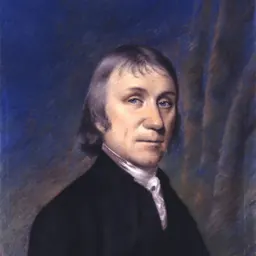
Advised by Joseph Priestley, a family friend, he developed an interest in scientific experimentation and is credited with being the first to record the "invisible light" produced when a current is passed through a partly evacuated glass tube: "the first x-ray tube".
Later in life, through his uncle, Richard Price, he became friends with noted radicals, including Tom Paine and Francis Burdett. He escaped with only a warning when in 1794, the authorities rounded up members of the movement and charged them with treason.
He died at Stamford Hill on 4 May 1833, and was buried at Hornsey.
Other publications: The Doctrine of Annuities and Assurances on Lives and Survivorships, 1779 (Discusses the work of Adair Crawford) – translation into Italian Computation of Premiums for Life Assurance on the Basis of the Northampton Table of Mortality, manuscript Valuation (Individually) of the Assurance Contracts in Force in 1786, manuscript Yearly Computation of Expected Deaths and Accounts Showing the State of the Equitable Life Assurance Society According to the Plan Suggested by Richard Price, manuscript Nine Addresses to the General Court of the Equitable Society Covering the Years 1793 to 1830, 1833
Don’t just read it —
keep it.
Full-length biographies made to live with: read them, listen on the way to work, watch them tonight.
- E-book
- Audio
- Video
Instant download · yours to keep · every purchase keeps this site free
Important facts
People in William Morgan's life
Named in this biography and alive at the same time




Related people
Same field, nearest in time


Contemporaries
People whose lives overlapped William Morgan's



Frequently asked questions
Who was William Morgan?
Welsh physician, physicist, statistician and actuary
When was William Morgan born?
William Morgan was born on 26 May 1750 in Bridgend.
When did William Morgan die?
William Morgan died on 4 May 1833 in London.
What was William Morgan's occupation?
William Morgan was an actuary, physician and physicist.
What nationality was William Morgan?
William Morgan was British and Welsh.
Sources & further reading
· DBpedia: William Morgan (actuary)
Cite this page
APA: Biography.guide. (2026). William Morgan. https://biography.guide/william-morgan-actuary/
MLA: "William Morgan." Biography.guide, https://biography.guide/william-morgan-actuary/.
Chicago: "William Morgan." Biography.guide. https://biography.guide/william-morgan-actuary/.
Data last updated: 2026-09-20 · Spot an error? Report a correction.
Page generated 2026-09-27 05:09 UTC