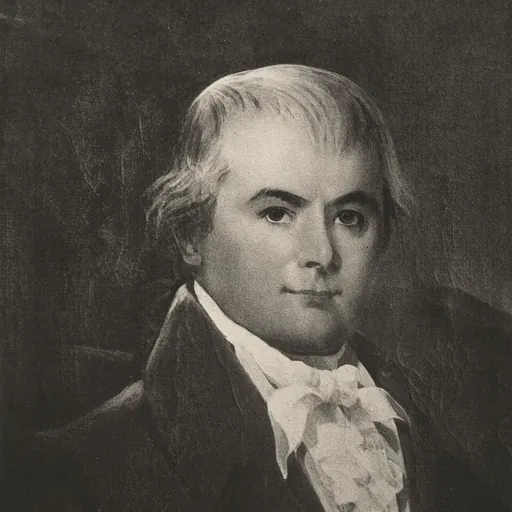
About William Montgomery
Lived 1736 – 1816 (aged 79). William Montgomery was an American politician and judge.
William Montgomery (August 3, 1736 – May 1, 1816) was a colonial-American patriot, pioneer, soldier, public servant, and abolitionist.
As a revolutionary patriot, he helped the Province of Pennsylvania declare independence from the British Empire, establish the Commonwealth of Pennsylvania, and save the American Revolution during the Ten Crucial Days. As a soldier, he served a total of 34 years, including 14 years as major general and division commander. As a public servant, he was elected or appointed to 16 different offices, including the Continental Congress, Pennsylvania Congress, and United States Congress, and co-authorized the creation of the United States Navy's first six frigates. As an abolitionist, he helped pass: a resolution to prohibit the future import of slaves into the Province of Pennsylvania in 1775, An Act for the Gradual Abolition of Slavery (the first law adopted by a democracy to end slavery in world history) in 1780, and the Slave Trade Act in 1794. He was one of seven congressmen who voted against the Fugitive Slave Act in 1793.
Early life William Montgomery descends from Roger de Montgomery of Normandy via Arnulf de Montgomery through the Montgomery Clan. His grandparents, Major John (aka "Boyne Water") and Margaret (née Dunbar) Montgomery, immigrated from County Armagh, Ireland to the Delaware Colony in 1722. They acquired extensive lands in Mill Creek Hundred of the Twelve-Mile Circle. John was a founding elder in the White Clay Creek Presbyterian Church.
William's parents, Alexander and Mary (née McCullough) Montgomery, followed them to Mill Creek Hundred in 1730 and inherited a plantation and gristmill of 400 acres upon John's death. William Montgomery was born in Mill Creek Hundred on August 3, 1736, the third of six children, and spent his childhood working the plantation and gristmill. In 1743, Alexander and his partner, William Nevin (William's future father-in-law), purchased 650 acres adjacent to Faggs Manor in Londonderry Township, Chester County, Province of Pennsylvania. In 1747, at age 11, William and his 5 minor siblings were orphaned when their parents died. Their cause of death is unknown. Their guardians, Evan Rice and Robert Kirkwood, were from the White Clay Creek Presbyterian Church, but they were raised by their aunt and uncles (Thomas and Robert) who had also settled in Delaware and Pennsylvania. In his adolescence, William was educated in surveying, milling, trade, and management. He was taught by Samuel Blair and mentored by Dr. David Stewart. He dropped out of the College of William & Mary.
In 1756, William married Margaret Nevin and settled on the 822 acres he inherited (and acquired) in Londonderry Township. Over the next 14 years, they had six children, including Daniel Montgomery, and made it the most prosperous farm in Chester County. It primarily produced wheat. Margaret died in 1770 and William married Isabella Evans in 1772. They welcomed their first of four children in April 1773. In November 1773 he began acquiring land in Northumberland County from J. Cummings. On November 26, 1774 he acquired 180 acres along Mahoning Creek and Susquehanna River known as "Karkaase" from J. Simpson. Originally referred to as "Montgomery's Landing", it would become Danville, Pennsylvania after his son, Daniel Montgomery.
Political service On December 20, 1774, Montgomery is nominated to the Chester County Committee of Inspection to enforce the trade boycott established by the First Continental Congress. The following month, he is nominated as a Chester County delegate to the Convention for the Province of Pennsylvania (January 23–28, 1775) where they pass 27 resolutions to "restore harmony with Great Britain" while logistically preparing for war. Eighty-six days later, the "shot heard round the world" ignites the American Revolutionary War and Siege of Boston. On June 30, 1775 the Pennsylvania Committee of Safety was established, essentially displacing the governing Provincial Assembly until the Pennsylvania Constitution of 1776, and William was re-commissioned a colonel in command of the 4th [Elk] Battalion, comprising 450 infantry in eight companies. In February 1776, the Chester County Committee of Inspection tasked Montgomery, along with two others, with safeguarding the county's gunpowder magazine.
On June 18, 1776, Montgomery is nominated as a Chester County delegate to the Pennsylvania Provincial Conference at Carpenters' Hall. Their proceedings ("Provincial Conference of Committees of the Province of Pennsylvania") officially declare the Province of Pennsylvania's independence from the British Empire, establish the Commonwealth of Pennsylvania,
William was nominated as a Chester County delegate to the Pennsylvania Provincial Convention for establishing the Commonwealth constitution, but his battalion was deployed to New Jersey and he was unable to attend. His daughter-in-law's father, Thomas Strawbridge, went in his place.
Military service After defeating the British Army in the Boston, General Washington anticipated General Howe would next seek control of New York City and relocated the Continental Army to fortify the area. With an indefensible number of potential invasion sites around New York Harbor and depleted ranks, Washington divided Continental forces between Manhattan and Brooklyn. On June 3, 1776, the Continental Congress granted Washington's request to stand up a Flying Camp of militia-based reserves. Montgomery's battalion was re-designated the 1st [Pennsylvania] Regiment and mobilized for the fortification of New Jersey. They arrived at Perth Amboy in mid-July, establishing a command post at the Proprietary House, and conducted rotating patrols along the 35-mile strait to Fort Lee. Within days, they were horrified by the arrival of the British Navy off the coast of Staten Island—340 transport ships carrying 32,000 infantry, 35 frigates, and 25 ships of the line bearing 64 cannons each with a range of 2 miles. Five of the latter alone had more collective firepower than the entire Continental Army. Each cost the equivalent of a modern aircraft carrier. It was the largest, most advanced, and most powerful amphibious invasion in world history until Operation Neptune 168 years later.
While repulsing British reconnaissance efforts into New Jersey, the 1st Regiment overheard the defeat of the Continental Army in the Battle of Long Island. After peace talks failed, Montgomery ordered four companies to Fort Lee and four companies to Fort Washington to buffer General Howe's landing at Kip's Bay Manhattan. When Fort Lee and Fort Washington are defeated (along with Montgomery's four companies who are taken prisoner and sent to prison "ships of hell"), Montgomery and his remaining companies, along with General Washington and the remaining Continental Army, retreated to Pennsylvania as they were pursued by General Cornwallis.
By December 1, 1776, Montgomery's regiment is stationed in Philadelphia to stifle Loyalist uprising. He is joined by his son, William Jr., who enlisted upon his 14th birthday, and is serving in Captain James McDowell's company as drummer. General Washington has encamped 30 miles northeast in Taylorsville. Ninety percent of Continental forces have been killed, captured, or deserted—believing the American Revolution is now a lost cause. With their term of enlistment now expired, most of the Flying Camp reserves have returned home. Washington's supplies are also depleted and General Cornwallis is bearing down on his position with 8,000 British and 2,000 Hessian infantry, outnumbering him 3 to 1. The revolution is hanging-on by a single fiber of the last thread. On December 18, Washington writes to his brother: "I think the game is pretty near up...You can form no idea of the perplexity of my situation. No man, I believe, ever had a greater choice of difficulties and less means to extricate himself from them. However under a full persuasion of the justice of our Cause I cannot but think the prospect will brighten, although for a wise purpose it is, at present hid under a cloud." On December 19, Thomas Paine echoes into eternity: "These are the times that try men's souls".
On the night of December 25–26, 1776—in the middle of a snowstorm—General Washington gathers the last of his men and launches operation "Victory or Death" across the Delaware River. Following their subsequent victory at the Battle of Trenton, Montgomery receives General Cadwalader's dispatch for militia reinforcements. Along with 1,800 militia, the 1st Regiment arrives in Crosswicks, New Jersey on January 1, then marches to Trenton where General Washington's army is now engaged with General Cornwallis at the Battle of Assunpink Creek. Rather than retreating back to safety (with his element of surprise now gone and two victories under his belt), Washington attacks Cornwallis' headquarters in the Battle of Princeton—defeating him and establishing his position to wage the Forage War for the next 3 months. Montgomery's regiment, among others, provided the vital diversion, which deceived Cornwallis that Washington's forces were still encamped, and simultaneously removed their supplies to Burlington, New Jersey.
Pioneer In November 1773, William began acquiring land in Northumberland County from J. Cummings. On November 26, 1774 he acquired 180 acres along Mahoning Creek and Susquehanna River known as "Karkaase" from J. Simpson. Following his service in the New York and New Jersey Campaign, William re-settled his family from Chester County to Northumberland. Originally referred to as "Montgomery's Landing", it would become known as Danville after his son, Daniel Montgomery.
Public servant In addition to his military service, which began at age 21, Montgomery was in continuous public service from age 38 to 72. In total, he was elected, appointed, or nominated to 16 different county, state, and federal offices.
(1774–1776) Elected Assessor Chester County (1774) Nominated Delegate (Patriot), Chester County, Committee of Inspection Enforced the trade boycott established by the First Continental Congress (1775) Nominated Delegate (Patriot), Chester County, Convention for the Province of Pennsylvania Passed 27 resolutions to "restore harmony with Great Britain" while logistically preparing for war and voted in favor of a resolution for the Provincial Assembly to "prohibit the future import of slaves into the Province of Pennsylvania." Served in the Fourth, Fifth, Sixth, and Seventh legislative sessions. Voted in favor of An Act for the Gradual Abolition of Slavery, the first law adopted by a democracy to end slavery in world history. Chair of the Armed Services Committee – "devised ways and means for the support of the [ Continental] army and keeping the ranks full" and "adjust a plan proposed for the greater case of the militia service" Sixteenth, Seventeenth, and Eighteenth legislative sessions. Chair of the Appropriations Committee (1791–1793) Elected Member (Anti-Federalist), Pennsylvania's 6th District, U.S. House of Representatives Voted in favor of the Militia Acts of 1792 One of seven Representatives who voted against the Fugitive Slave Act. He was previously a candidate for this seat in 1791, finishing last of five candidates, and a candidate in 1788 for the at-large district. (1793–1795) Elected Member (Anti-Administration), Pennsylvania's at-large district, U.S. House of Representatives Voted in favor of the Slave Trade Act of 1794 Voted in favor of the Naval Act of 1794 (1804) Elected Elector, Pennsylvania, 1804 United States presidential election (1808) Elected Elector, Pennsylvania, 1808 United States presidential election
Abolitionist
(1756–1816) Extensively used indentured servants in lieu of slave labor on his farms, plantations, and businesses. and is now a museum operated by the Montour County Historical Society. 151 years after William's regiment retreated across the Hudson River from Fort Washington to Fort Lee, his 3rd great-grandson, Montgomery Case, erected the George Washington Bridge in the same location. It was the longest main span bridge in the world upon completion, and is the busiest motor vehicle bridge in the world; transiting over one billion vehicles from 2008 to 2018.
Don’t just read it —
keep it.
Full-length biographies made to live with: read them, listen on the way to work, watch them tonight.
- E-book
- Audio
- Video
Instant download · yours to keep · every purchase keeps this site free
Important facts
Family & relationships
People in William Montgomery's life
Named in this biography and alive at the same time
Related people
Same field, nearest in time
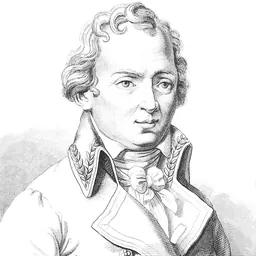
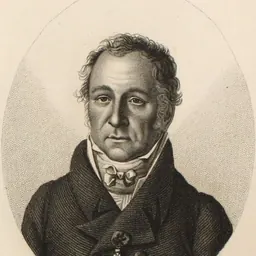
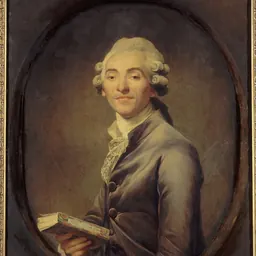
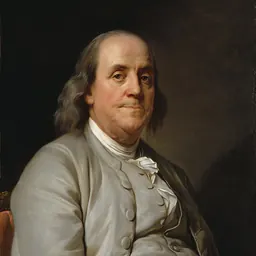
Contemporaries
People whose lives overlapped William Montgomery's




Frequently asked questions
Who was William Montgomery?
American general and politician 1736-1816
When was William Montgomery born?
William Montgomery was born on 3 August 1736 in Mill Creek Hundred.
When did William Montgomery die?
William Montgomery died on 1 May 1816 in Danville.
What was William Montgomery's occupation?
William Montgomery was a politician and judge.
What nationality was William Montgomery?
William Montgomery was American.
Sources & further reading
· Wikipedia: William Montgomery
· DBpedia: William Montgomery (Pennsylvania soldier)
Cite this page
APA: Biography.guide. (2026). William Montgomery. https://biography.guide/william-montgomery-politician-1736/
MLA: "William Montgomery." Biography.guide, https://biography.guide/william-montgomery-politician-1736/.
Chicago: "William Montgomery." Biography.guide. https://biography.guide/william-montgomery-politician-1736/.
Data last updated: 2026-09-29 · Spot an error? Report a correction.
Portrait: Wikimedia Commons · author & licence
Page generated 2026-10-04 13:47 UTC