
About William Maclure
Lived 1763 – 1840 (aged 76). William Maclure was a British geologist, botanist and entomologist, known for New Harmony, Indiana.
William Maclure (27 October 176323 March 1840) was an Americanized Scottish geologist, cartographer and philanthropist. He is known as the 'father of American geology'. As a social experimenter on new types of community life, he collaborated with British social reformer Robert Owen, (1771–1854), in the utopian settlement of New Harmony in Indiana, United States.
Maclure had a highly successful mercantile career, making a fortune that allowed him to retire in 1797 at the early age of 34 to pursue his scientific, geological and other interests. In 1809 he made the earliest attempt at a geological map of the United States of America.
Biography
Early life, business, and education Maclure was born in 1763 in Ayr, Scotland.
After a brief visit to New York City in 1782, he began work with the merchants Miller, Hart & Co, who traded and shipped goods to and from America. Maclure was based in the London office but regularly travelled to France and Ireland on business. In 1796 business affairs took him to Virginia, which he thereafter made his home. In 1803 he visited France as one of the commissioners appointed to settle the claims of American citizens on the French government; and during the few years then spent in Europe he applied himself with enthusiasm to the study of geology. While residing in Switzerland, he became impressed with what is now called the Pestalozzi School System, from Swiss pedagogist Johann Heinrich Pestalozzi (1746–1827).
Geological map Maclure visit to Spain in 1808; this visit ended abruptly by the outbreak of the Peninsular War. After his return home in 1808 he commenced the self-imposed task of making a geological survey of the United States. Almost every state in the Union was traversed and mapped by him, the Allegheny Mountains being crossed and recrossed some 50 times. The results of his unaided labours were submitted to the American Philosophical Society in a memoir entitled Observations on the Geology of the United States explanatory of a Geological Map, and published in the Society's Transactions, together with the first geological map of that country, This antedates William Smith's geological map of England and Wales (with part of Scotland) by six years, although it was constructed using a different classification of rocks.
In 1812, while in France, Maclure became a member of the newly founded Academy of Natural Sciences of Philadelphia (ANSP). In 1817 Maclure became president of the ANSP, a post he held for the next 22 years.
In 1817, while residing in Europe, Maclure brought before the same society a revised edition of his map, and his great geological memoir, which he had issued separately, with some additional matter, under the title Observations on the Geology of the United States of America. Subsequent surveys have corroborated the general accuracy of Maclure's observations.
Summary of the second phase of Maclure's life (after Moore 1947)
Date Event1778–1797 Mercantile career, based in London but with regular contact and travel to America1796 Emigrated to the United States, settling in Philadelphia and became an American citizen.1797 Retirement from business (Silliman claims this was 1799, Monroe claims 1803)1799 Elected to American Philosophical Society. Council 1818–1829. 1803 Member of Spoliation Commission in France. 1803–1805 and subsequent years Visits to Pestalozzi and other schools and travels and geological work in Europe. 1805 Brought Joseph Neef to Philadelphia to establish first Pestalozzian schools.1805–1817 One-man geological survey. First report and geological map published 1809, extended and revised 1817. 1812 Member of Academy of Natural Sciences (President 1817–1840). 1817–1819 Exploring trips to Georgia, Florida, and the Lesser Antilles Islands.1819 First President of American Geological Society1819–1824 Agricultural and industrial schools at Alicante, Spain. 1824–1828 With a body of teachers and scientists joined Robert Owen's colony at New Harmony. Established Pestalozzian, manual training and industrial schools and scientific center and library. 1826 Established New Harmony Educational Society and night-school for adults. 1827 With Thomas Say spent winter in Mexico.1828 Health failing. Attended meeting of American Geological Society for the last time.1828 Founded New Harmony Disseminator of Useful Knowledge at Industrial School. 1828–1840 Residence in Mexico. 1831 Publication of Opinions on Various Subjects. 1836 Serious illness. Elected a member of the American Antiquarian Society1837 Rejuvenated Workingmen's Institute and library.1840 Death in Mexico, 23 March. Will provided for a trust fund of most of his property under which160 workingmen's libraries were established.
New Harmony
The New Harmony commune in Indiana was a short-lived utopian community. Even after its collapse, it became home to geologists, naturalists, and botanists who were influenced by Maclure. This included the siblings Robert Dale Owen (1801–1877), social reformer; David Dale Owen (1807–1860), geologist, artist; Jane Dale Owen Fauntleroy (1806–1861), educator; and Richard Dale Owen (1810–1890) geologist, first president of Purdue University, Lafayette, Indiana. A formidable group of geologists, social reformers, botanists, paleobotanists, ethnologists and civil engineers interacted at New Harmony.
Published works
Maclure, W. 1817. Observations on the geology of the West India Islands, from Barbadoes to Santa Cruz, inclusive. Journal of the Academy of Natural Sciences of Philadelphia 1(6), 134–149. (BHL link) Maclure, W. 1818. Essay on the formation of rocks, or an inquiry into the probable origin of their present form and structure. Part 1. Journal of the Academy of Natural Sciences of Philadelphia 1(7), 261–276. (BHL link) Maclure, W. 1818. Essay on the formation of rocks, or an inquiry into the probable origin of their present form and structure. Part 2. Journal of the Academy of Natural Sciences of Philadelphia 1(7), 285–310. (BHL link) Maclure, W. 1818. Essay on the formation of rocks, or an inquiry into the probable origin of their present form and structure. Part 3. Journal of the Academy of Natural Sciences of Philadelphia 1(7), 327–345. (BHL link) Maclure, W. 1818. On the geology of the United States of North America, with remarks on the probable effects that may be produced by the decomposition of the different classes of rocks, on the nature and fertility of soils: applied to the different states of the Union agreeably to the accompanying geological map. Transactions of the American Philosophical Society new series 1, 1–92. (BHL link)
Primary sources The European Journals of William Maclure was a monumental book, describing, charting, and chronicling much of the features of Europe.
Taxonomic eponyms
Charles Alexandre Lesueur described a genus of fossil gastropods, Maclurites, in honor of Maclure. It is the type genus of Macluritidae, an extinct family of relatively large gastropods known from the Lower Ordovician to Devonian periods. Two other members of the family, Maclurina and Macluritella, also honor Maclure. Maclura, a genus of flowering plants in the mulberry family, Moraceae is named in honor of Maclure. The genus includes the inedible Osage-orange, which is used as mosquito repellent and grown throughout the United States as a hedging plant.
Geological eponyms Mount Maclure in Yosemite National Park. Maclure Glacier, one of the last remaining glaciers in Yosemite National Park.
Don’t just read it —
keep it.
Full-length biographies made to live with: read them, listen on the way to work, watch them tonight.
- E-book
- Audio
- Video
Instant download · yours to keep · every purchase keeps this site free
Important facts
People in William Maclure's life
Named in this biography and alive at the same time
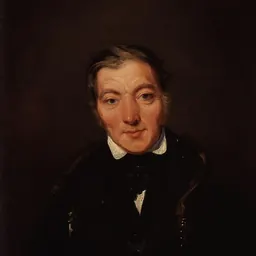
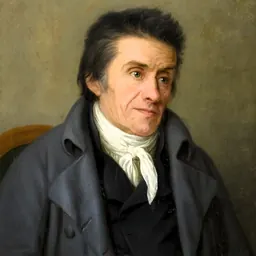

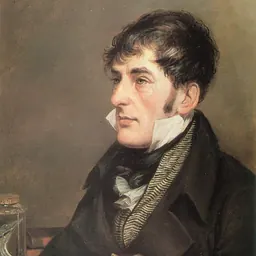

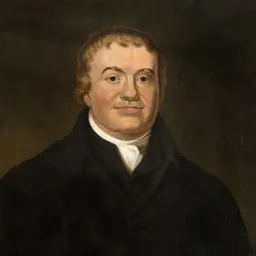

Related people
Same field, nearest in time


Contemporaries
People whose lives overlapped William Maclure's





Frequently asked questions
Who was William Maclure?
geologist, cartographer, social theorist (1763-1840)
When was William Maclure born?
William Maclure was born on 27 October 1763 in Ayr.
When did William Maclure die?
William Maclure died on 23 March 1840 in Mexico.
What was William Maclure's occupation?
William Maclure was a geologist, botanist and entomologist.
What was William Maclure known for?
William Maclure was known for New Harmony, Indiana.
What nationality was William Maclure?
William Maclure was British.
Sources & further reading
Cite this page
APA: Biography.guide. (2026). William Maclure. https://biography.guide/william-maclure/
MLA: "William Maclure." Biography.guide, https://biography.guide/william-maclure/.
Chicago: "William Maclure." Biography.guide. https://biography.guide/william-maclure/.
Data last updated: 2026-09-25 · Spot an error? Report a correction.
Page generated 2026-09-27 05:12 UTC