
About William Lobb
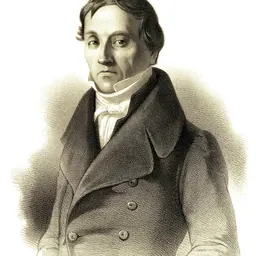
Lived 1809 – 1864 (aged 54–55). William Lobb was an explorer, botanist, botanical collector, scientific collector and plant collector, known for Monkey-puzzle tree.
William Lobb (1809 – 3 May 1864) was a British plant collector, employed by Veitch Nurseries of Exeter, who was responsible for introducing to commercial growers Britain Araucaria araucana (the monkey-puzzle tree) from Chile and the massive Sequoiadendron giganteum (Wellingtonia) from North America.
He and his brother, Thomas Lobb, were the first collectors to be sent out by the Veitch nursery business, with the primary commercial aim of obtaining new species and large quantities of seed. His introductions of the monkey-puzzle tree, Wellingtonia and many other conifers to Europe earned him the sobriquet "messenger of the big tree". In addition to his arboreal introductions, he also introduced many garden shrubs and greenhouse plants to Victorian Europe, including Desfontainia spinosa and Berberis darwinii, which are still grown today.
Early life Lobb was born in 1809 at Lane End, Washaway near Bodmin Cornwall and spent his early life at Egloshayle, near Wadebridge. He had four brothers and two sisters. Two of the brothers, Henry and James, became managers of gunpowder plants in south-west England. His father, John Lobb, was the estate carpenter at nearby Pencarrow where a notable garden had been developed by Sir William Molesworth. John developed a love of gardening and, after losing his place at Pencarrow, he took up employment at Carclew House, near Falmouth, the home of Sir Charles Lemon. From there, he moved on to become gardener to the Williams family at Scorrier House, near Falmouth. He gained a reputation as a keen amateur botanist and assembled a fine collection of dried specimens of British plants, particularly Cornish ferns, but had an increasing desire to travel abroad and to discover unknown "vegetation". After correspondence with the eminent botanist Sir William Hooker about the most suitable destination, Veitch decided to employ his own plant hunter to gather exotic plants from South America exclusively for his nursery.
Before his departure, Lobb visited Kew Gardens where he was taught how to make herbarium specimens by placing plant material between special papers.
Following his arrival at Rio de Janeiro, Lobb spent 1841 exploring the Serra dos Órgãos (Organ Mountains) also included a new species of Alstroemeria, an Oncidium, O. curtum (with yellow flowers and cinnamon-brown markings), and a new red Salvia. There were also several species of the beautiful pink-flowered climber Mandevilla, including M. splendens, which would become highly sought after for cultivation in England, and the small shrub Hindsia violacea, with its clusters of ultramarine flowers, which quickly became popular in Victorian greenhouses.
Lobb then travelled overland to Chile via Mendoza and the Uspallata Pass over the Andes, thus avoiding the perilous sea voyage around Cape Horn. Lobb collected over 3,000 seeds where a plantation of monkey-puzzle trees was grown.
During 1842, Lobb collected from the Valparaíso area and sent back seeds of a purple nasturtium climber, Tropaeolum azureum, which he located at "Cuesta Dormeda, about sixteen leagues (50 miles) from Valparaíso".
Lobb's travels then continued through northern Chile, where he discovered Desfontainia spinosa, and the delicate Calceolaria amplexicaulis.
In the spring of 1843, he took four cases of plants, which he had collected on the slopes of the Peruvian Andes, by sea to the Ecuadorian port of Guayaquil. While he was there, an epidemic of yellow fever broke out and, along with other European residents, he was forced to move to Puná Island until the epidemic was over, leaving his cases with a shipping agent to send to England. On leaving Puná, Lobb hired mules and a guide and travelled inland to Quito and on into southwestern Colombia.
It has been suggested that it was William Lobb who in 1844 brought the knowledge that gunpowder could be made with sodium nitrate from Peru to Cornwall, in England. Until then, gunpowder in Britain and the rest of Europe had been made only with potassium nitrate.
On his travels Lobb would undoubtedly have met and talked to his fellow Cornishmen living in Peru/Chile and employed by the mines. There were significant numbers there. Lobb was familiar with the use and manufacture of gunpowder for mining, having grown up near the two gunpowder plants at Ponsanooth, Cornwall. Also, as a professional gardener, he would have known about sodium nitrate, which was widely used as a fertilizer in Britain at that time.
The 1841 census shows that while William was in South America, his brother, Henry Lobb, was living at Cosawes Woods (a local gunpowder plant) where he worked as a labourer. Another brother, James Lobb, lived at nearby Perranwharf. He worked as a cooper.
Within two years of William's return, two additional plants had been built in Devon/Cornwall to make blasting powder. These were at Herodsfoot, Cornwall and at Powdermills on Dartmoor. Sodium nitrate was suitable for blasting powder, which was used in the mines and quarries of the region. The sodium nitrate as received from Peru was of sufficient purity to be used without further treatment. This accounts for the absence at these two plants of the usual facilities for upgrading the potassium nitrate that came from India, which had a purity of only 65-70%. The manufacturing know-how probably came from the Perran Foundry. Barclay Fox, the owner of the Perran Foundry, certainly had some commercial interest in the second plant and a connection through the Quakers to the owners of the first.
The 1851 census shows that fortune smiled on the Lobb family in the years after 1846. Henry Lobb became the manager of the Herodsfoot plant and had a 1/6 share in the venture. His brother-in-law and former neighbour, James Martin, became the manager of Dartmoor Powdermills; James Lobb was appointed its agent and, by 1861, its manager.
Was some sort of deal struck? Because of his background as a 'local', William Lobb would have had access to the right people at Perran Foundry, giving him the opportunity to pass on his valuable information about Peruvian gunpowder. The advancement of his brothers could have been William Lobb's reward.
South America (1845–1848)
After a period of rest and recuperation, Lobb returned to work in the Exeter glasshouses planting out and nurturing his introductions. By April 1845, his health had fully recovered and he was again despatched to South America with instructions to collect hardy and half-hardy trees and shrubs. After sending home from Rio Janeiro a consignment of plants collected in southern Brazil, he travelled by sea to Valparaíso in Chile from where he initially visited the montane forests of the Colombian Andes before visiting the extreme south of Chile from the shores of Tierra del Fuego to the southern coastal islands. – the Guaitecas cypress (Pilgerodendron uviferum), the Patagonian cypress (Fitzroya cupressoides), Prince Albert's yew (Saxegothaea conspicua) and Podocarpus nubigenus as well as seeds of the hardy Antarctic beech (Nothofagus antarctica) and several other shrubs including Escallonia macrantha. One glasshouse at the Exeter nursery was reserved exclusively for William Lobb's discoveries, where James Veitch would tend the new plants and identify those that would become a commercial success and those that would be merely of botanical interest. Amongst the plants sent back by Lobb were two species of Cantua which he found growing in Bolivia, Chile and the Peruvian Andes; C. buxifolia (the magic-flower) which was the first to flower in May 1848 and the bushy C. bicolor, with its large golden-red trumpet flowers. Thomas in the meantime had also been despatched by Veitch to collect plants in Malaysia and Indonesia and had returned a few months earlier.
North America (1849–1853) In 1849, Veitch decided to send William Lobb to collect in the cooler climate of North America in order to find conifers and hardy shrubs in Oregon, Nevada and California, "with a view of obtaining seeds of all the most important kinds known, and, if possible, discover others."
He spent the autumn of 1849 through to early 1851 in the Monterey area, including the Santa Lucia Mountains, later described by Hooker as "among the most remarkable of all true pines". where he collected a new species of lupin, Lupinus cervinus (deer lupine) which he sold to the California Academy of Sciences. In 1862, Dr Albert Kellogg recognized this as a taxon hitherto unknown to science. Kellogg noted that this was "a very marked [distinct], fine [attractive], robust species, worthy of cultivation". On this expedition he collected seeds of the noble fir (Abies procera) and the Douglas fir (Pseudotsuga menziesii) as well as three conifers that had been overlooked by Douglas, the Colorado white fir (Abies concolor), the red fir (Abies magnifica) and the western red cedar (Thuja plicata). the amount of viable seed he sent to Exeter enabled Veitch & Sons to grow thousands of seedling trees. At the meeting, Dr Albert Kellogg (the academy's founder and a keen amateur botanist) introduced a hunter named Augustus T. Dowd who had brought to him a story of a "Big Tree".
Lobb immediately realised the impact such a tree would have on British gardens and the importance that his employers would attach to being the first nursery to offer it for sale. He collected as many seeds, cones, vegetative shoots and seedlings as he could carry back to San Francisco, including two small living trees. a year earlier than expected. Lobb had taken a gamble cutting short his contract, knowing that, at the risk of angering his employer, he had to get the seeds to England before anyone else could get back first. The gamble paid off as Veitch was delighted, abandoning all other projects to concentrate on raising the seedlings in commercial quantities. had taken some seed to Scotland four months earlier although he only distributed the seed among a few friends. Thomas was sent back to the far East, to Java and North Borneo in search of Nepenthes pitcher plants.
William had been suffering from persistent ill-health for some time – James Veitch remarked that there was "a sort of restlessness about him" – and was exhibiting the symptoms of syphilis, probably contracted in the ports of South America. He sent back a small number of seeds to private collectors and to the Low nursery at Clapton, including a new variety of white fir (Abies concolor subsp. lowiana) (popularly known as "Low's white fir" after them) and the rare Torrey pine (Pinus torreyana).
On 3 May 1864, Lobb died forgotten and alone at St Mary's Hospital in San Francisco. The cause of death was recorded as "paralysis", but was probably as a result of syphilis. He had no mourners at his burial (on 5 May)
In her history of the Veitch family, Seeds of Fortune – A Gardening Dynasty, Sue Shephard adds:William was arguably one of the finest but least–known of collectors who gave gardeners some of the most remarkable trees and loveliest plants ever grown. It has deep purple flowers between three and four inches across with a strong scent.
Amongst the many other plants named after William Lobb are: Eriogonum lobbii, a species of wild buckwheat known by the common name Lobb's buckwheat, native to the mountain ranges of northern California and their extensions into Oregon and Nevada. Eschscholzia lobbii, a species of Papaveraceae known by the common name frying pans, endemic to California, where it grows in the Central Valley and adjacent Sierra Nevada foothills. Palicourea lobbii, a species in the family Rubiaceae, endemic to Ecuador. Ribes lobbii, the gummy gooseberry found in Northern California. Salvia lobbii, a species of flowering plant in the family Lamiaceae, endemic to Ecuador.
William Lobb is a character in Tracy Chevalier's novel At the Edge of the Orchard (Penguin Books, 2016).
Don’t just read it —
keep it.
Full-length biographies made to live with: read them, listen on the way to work, watch them tonight.
- E-book
- Audio
- Video
Instant download · yours to keep · every purchase keeps this site free
Important facts
People in William Lobb's life
Named in this biography and alive at the same time






Related people
Same field, nearest in time

Contemporaries
People whose lives overlapped William Lobb's




Frequently asked questions
Who was William Lobb?
Cornish plant collector (1809-1864)
When was William Lobb born?
William Lobb was born in 1809 in Bodmin.
When did William Lobb die?
William Lobb died on 3 May 1864 in San Francisco.
What was William Lobb's occupation?
William Lobb was an explorer, botanist, botanical collector, scientific collector and plant collector.
What was William Lobb known for?
William Lobb was known for Monkey-puzzle tree.
Sources & further reading
Cite this page
APA: Biography.guide. (2026). William Lobb. https://biography.guide/william-lobb/
MLA: "William Lobb." Biography.guide, https://biography.guide/william-lobb/.
Chicago: "William Lobb." Biography.guide. https://biography.guide/william-lobb/.
Data last updated: 2026-09-22 · Spot an error? Report a correction.
Page generated 2026-09-27 05:11 UTC